China's Time Line in 12 Days: Beijing, Luoyang, Pingyao, Xi'an, and Dunhuang
Walk China's history backward and westward: the Ming-Qing imperial capital in Beijing, the Tang dynasty's Buddhist cliff art at Luoyang's Longmen Grottoes, the intact merchant walls of Pingyao, the Qin and Tang treasures of Xi'an, and the Silk Road oasis of Dunhuang with the Mogao Caves. A day-by-day route by high-speed rail and one short flight, built around the reservation clocks that govern it — the Forbidden City and Terracotta Warriors at 7 days, and the Mogao Caves at 30 days, which you book first.
Route: Beijing Luoyang Pingyao Xi'an Dunhuang
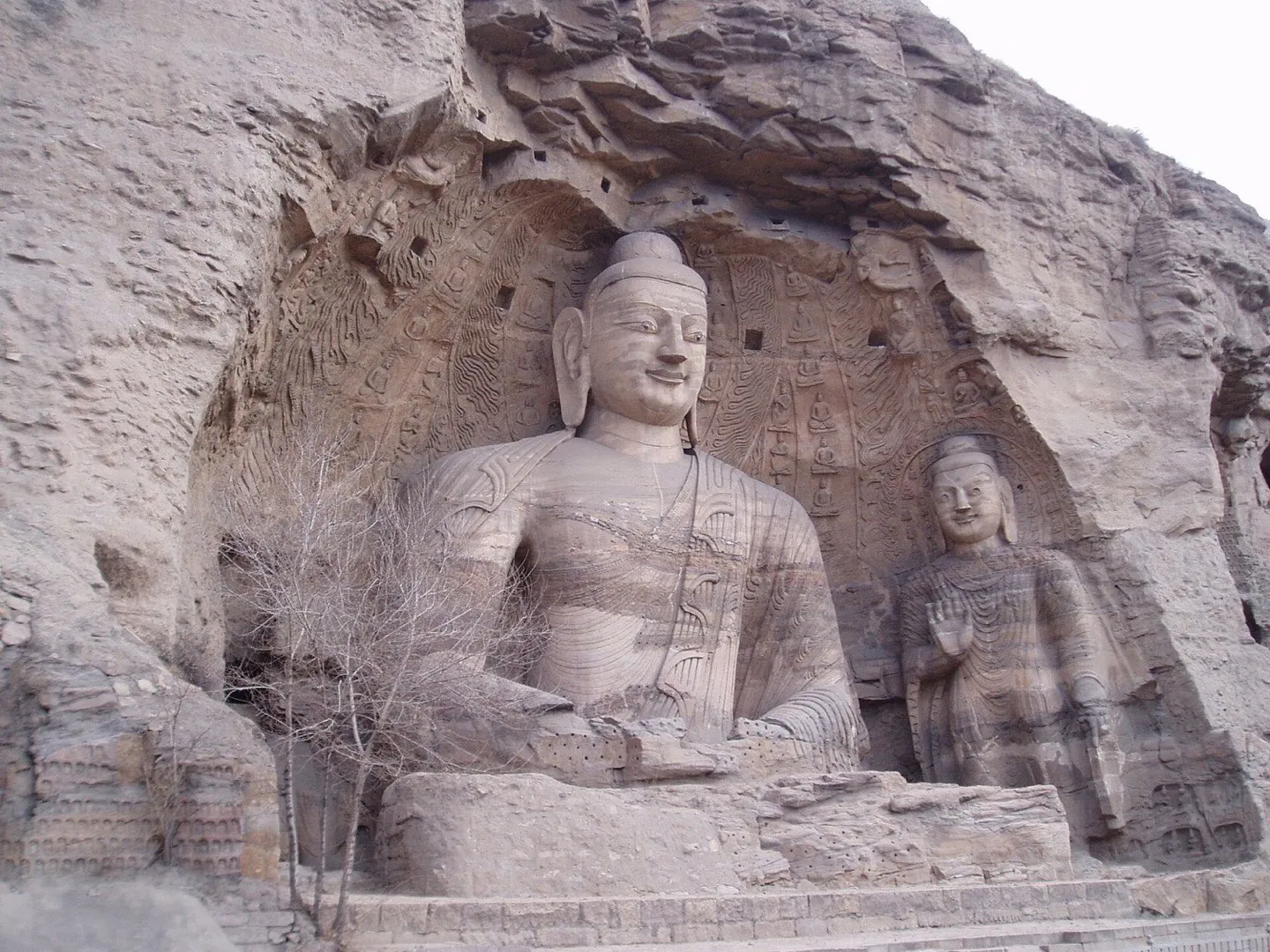
Twelve days, fifteen centuries. This route runs China’s history in the order it layers: the Ming-Qing imperial north in Beijing, the Tang dynasty’s golden age around Luoyang and Xi’an, and finally the Silk Road frontier at Dunhuang, where Han garrisons and Buddhist cave painters kept the far west. It is built for travelers who want depth over breadth — five places, each with one unmissable anchor — and it runs on two clocks: high-speed rail for the connections, and the reservation systems for the headliners, because in 2026 the hardest booking on this trip is not the train but the caves. Pair this with the visa guide and the city pages for Beijing, Xi’an, and Dunhuang.
Day 1: Arrive in Beijing — Temple of Heaven
Land, drop bags, and take it easy at the Temple of Heaven: the triple-gabled hall where Ming emperors prayed for harvests, ringed by a cypress park full of tai chi and kite fliers. Walk Qianmen’s restored street south of Tiananmen as the lanterns come on. Tomorrow, the palace.
Practical tip: Set your first alarm tonight: Forbidden City tickets go on sale at 20:00 Beijing time, exactly 7 days ahead, on the official mini-program or website. They sell out within minutes in season — book the Day 2 slot now if your dates allow.
Day 2: The Forbidden City
The world’s largest palace complex, 980 buildings deep. Enter from the south through Meridian Gate, work north hall by hall, and exit through the north gate into Jingshan Park, where a short climb buys the classic sunset panorama of golden roofs. Reserve half a day minimum; the Treasure Gallery and Clock Exhibition wing are worth the small add-ons if your feet agree.
Practical tip: Peak-season entry is ¥60 (¥40 off-season), released 7 days ahead at 20:00, real-name with your passport; the palace closes Mondays (except holidays). Bring the exact passport you booked with — guards check.
Day 3: The Great Wall at Mutianyu
A day trip east to Mutianyu, the Ming-era wall section that delivers the ridge-line fantasy with a fraction of Badaling’s crowds: watchtowers stair-stepping over forested hills, cable car up, and a toboggan run back down. Walk east toward the higher towers for the best views, lunch in the village below, back in the city by late afternoon.
Practical tip: Budget the stack: around ¥40 entrance, ¥15 compulsory shuttle, ¥140 round-trip cable car, plus the direct tourist shuttle from the city (~¥80 round trip, about 1.5 hours each way). Go early — tour coaches land by 11 a.m. (Prices as of September 2026.)
Day 4: Summer Palace, Then the Rails South — Luoyang
Morning at the Summer Palace — Kunming Lake, the Long Corridor, Longevity Hill — imperial Beijing at its most relaxed. Afternoon G train from Beijing West (or Fengtai) to Luoyang Longmen station, 2–4 hours depending on the service (second class roughly ¥300–440 with floating pricing). Evening: if the seasonal night session is running, see the Longmen Grottoes floodlit — Buddha by lamplight is a different museum.
Practical tip: Night tours at Longmen run seasonally with separate, limited booking — check availability for your dates when you book the day ticket, not after you arrive.
Day 5: The Longmen Grottoes and Luoyang Museum
Full morning at Longmen, the 1,300-year-old cliff gallery of some 100,000 Buddhist figures: work the west hill up to Fengxian Temple, where the 17-meter Vairocana Buddha has watched over the Yi River since 675 AD, then cross the bridge for the east-hill perspective back. Afternoon at the Luoyang Museum for the context — Tang gold, Tang camels, Tang faces — that makes the stones read like text.
Practical tip: Tickets are ¥90, open 8:00–18:00 from March to October (closing an hour earlier in winter). Go at opening: the west hill’s staircases funnel crowds badly by mid-morning.
Day 6: White Horse Temple, Then North to Pingyao
Morning at White Horse Temple, traditionally dated to 68 AD and counted as China’s first Buddhist monastery — a working complex where the sounds are chanting, not tour guides. Afternoon train north to Pingyao: a few direct services (around 4 hours), otherwise one change, usually at Zhengzhou East or Xi’an North. Arrive by evening and walk the lantern-lit Ming walls after dinner.
Practical tip: Use Pingyao Ancient City station for high-speed rail — the old in-town station serves slow trains only. From the HSR station it is about 10 km to the old town by taxi or local bus.
Day 7: Pingyao — the Merchant City, Whole
Pingyao is the best-preserved walled city in China, a Qing-dynasty banking capital where the courtyards still keep their old faces. With the combined pass, do the highlights at walking pace: the walls’ full perimeter or a good stretch of it, Rishengchang (China’s first draft bank, the ancestor of modern banking), the county yamen with its staged court sessions, and an escort-agency museum — armed guards who moved silver, the heist film made stone.
Practical tip: The ¥125 pass covers 22 sites and stays valid 3 days; pick four or five highlights instead of marching through all of them. Walking the lanes themselves is free.
Day 8: Shuanglin Temple, Then the Rails to Xi’an
Morning cab out to Shuanglin Temple, just outside the walls: its Ming-era painted clay sculptures — 2,000-odd figures coiled across several halls — are the finest of their kind anywhere, and the visitor numbers are a fraction of Pingyao’s. Midday G train from Pingyao Ancient City to Xi’an North (about 2–2.5 hours). Evening: first taste of the Muslim Quarter’s gridded lanes and lamb skewers.
Practical tip: Book tonight for tomorrow: Terracotta Warriors tickets are released up to 7 days ahead through the museum’s official website and WeChat accounts, real-name with your passport — in season they vanish early, so set the alarm like you did in Beijing.
Day 9: The Terracotta Army and Lishan Garden
The reason Xi’an anchors any history route: Pit 1’s army of life-size terra-cotta soldiers and horses, mustered in excavation-shed light, each face a different man. Give the pits two unhurried hours, then take the free shuttle to Lishan Garden — the mausoleum mound most visitors skip, where the emperor actually lies — before rolling back to the city. Evening: the Tang-era Big Wild Goose Pagoda and its fountain square.
Practical tip: Entry is ¥120 year-round (the through ticket includes Lishan Garden). Getting there: a Didi runs roughly ¥60–80 each way; tourist bus 5 (306) from Xi’an station is the budget route. Book days ahead, never day-of.
Day 10: Xi’an’s Archives — Then Fly West
Morning choice: the Beilin Museum (the Forest of Steles — a library of stone-carved classics and calligraphy under old cypresses, walk-in friendly) or the Shaanxi History Museum, the province’s greatest-hits hall (free but reservation-gated, days ahead, so plan backward from your flight). Afternoon on the Ming city wall by bicycle, 13.7 km on top of the towers. Evening flight to Dunhuang — about 2 hours 10 minutes, with around six direct departures daily.
Practical tip: Shaanxi History Museum reservations open days ahead on its official channels and are gone fast; if your slot eludes you, the Beilin Museum is the unbookable backup and no compromise.
Day 11: The Mogao Caves — and the Dunes at Dusk
The trip’s summit. Morning at the Mogao Caves visitor center for the orientation films, then the shuttle to the cliff face: with an A-ticket, a guide walks you through roughly 8 painted caves — a thousand years of silk-road pigment, from Northern Wei austerity to Tang opulence. Late afternoon at Mingsha Shan, the singing dunes: climb for sunset, then Crescent Lake, the crescent of water the dunes have refused to bury for centuries. Night market dinner back in town.
Practical tip: This is the booking that sets your whole trip: A-tickets (¥238) go on sale 30 days ahead on the official Mogao mini-program/website and sell out quickly in season. If they are gone, B emergency tickets (~¥100) still get you 4 caves. Real-name with passport; bring the same document.
Day 12: The Frontier, and Out
Half day before departure. Close options: the Dunhuang Museum’s Silk Road galleries (quiet, excellent, free), or a half-day run west to Yumen Pass and the Han-dynasty beacon towers — the literary end of the road, where exiles once turned back. Fly out in the evening to Xi’an or Lanzhou for your international connection.
Practical tip: Book your onward flight before you fix the Mogao slot — Dunhuang’s evening flights fill first in season, and the caves have no same-day walk-up tickets at all.
Practical Notes
Intercity transport
| Leg | Mode | Time | Second-class fare (approx.) |
|---|---|---|---|
| Beijing → Luoyang | G train, Beijing West/Fengtai to Luoyang Longmen | 2–4 hours | ¥300–440 (US$42–61) |
| Luoyang → Pingyao | Direct G/D (~4 hours) or 1 change via Zhengzhou East/Xi’an North | 3.5–5 hours | ¥200–300 (US$28–42) |
| Pingyao → Xi’an | G train, Pingyao Ancient City to Xi’an North | 2–2.5 hours | ~¥180–230 (US$25–32) |
| Xi’an → Dunhuang | Flight (direct, ~6 daily) — the 20-hour sleeper is a relic | 2 hours 10 minutes | US$100–180 |
Book trains at the 15-day release on 12306; flights via Trip.com. Fares approximate as of September 2026; many trains use floating pricing.
The booking cascade — do it in this order
- Mogao Caves A-tickets: 30 days out, official mini-program (this fixes Days 11–12)
- Forbidden City: 7 days out, 20:00, official mini-program (¥60 peak; closed Mondays)
- Terracotta Warriors: up to 7 days out, official website/WeChat (¥120)
- Shaanxi History Museum: days ahead, official channels (free, limited)
- Longmen (¥90) and Pingyao pass (¥125/3 days): at the gate or online, no rush
Budget estimate (per person, excluding international flights)
- Lean: US$950–1,250 — hostels and courtyard guesthouses, public buses, all reservation tickets
- Mid-range: US$1,500–1,900 — 3–4-star hotels, Didi transfers, the Mutianyu stack, all flights and trains
- Comfort: US$2,300–3,100 — boutique courtyard stays, private guides at the big sites, business-class rail
See the budget guide for the itemized math, and the payments guide — every reservation above runs on Alipay or WeChat Pay.