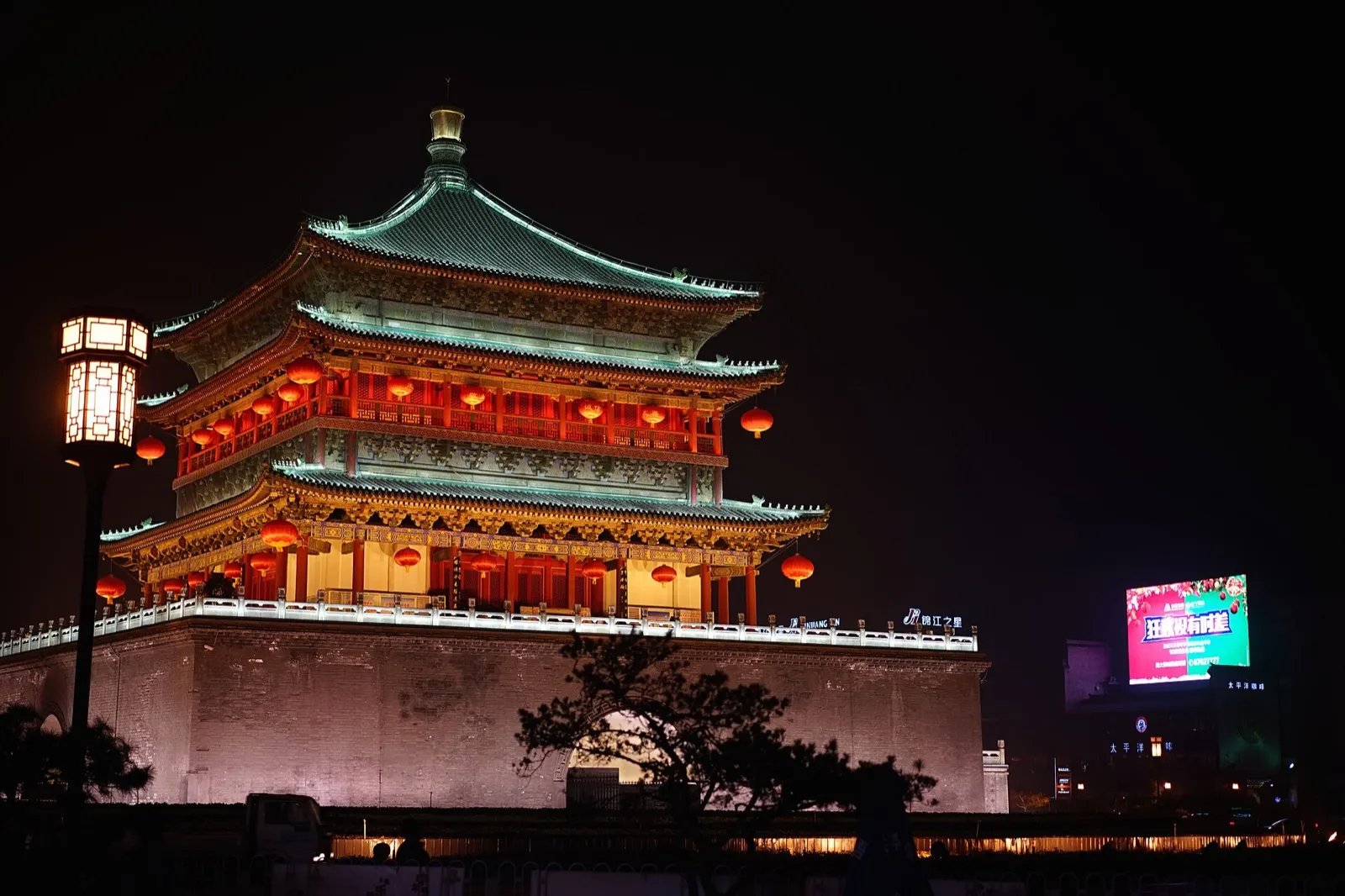
Xi'an is where the story of a unified China begins. Called Chang'an when it stood at the eastern end of the Silk Road and ranked among the largest cities on earth, it served as capital for more than a dozen dynasties across roughly 1,100 years. The sights run correspondingly deep: the Terracotta Army guarding the tomb of Qin Shi Huang, a complete Ming dynasty city wall you can cycle on top of, a pagoda built for a famous monk's Silk Road haul, and the Muslim Quarter, one of China's great street food neighborhoods. More compact and noticeably cheaper than Beijing or Shanghai, with most sights on the metro, Xi'an suits history lovers, eaters, and anyone fitting China into two or three fast weeks.
Top sights at a glance
No. 1
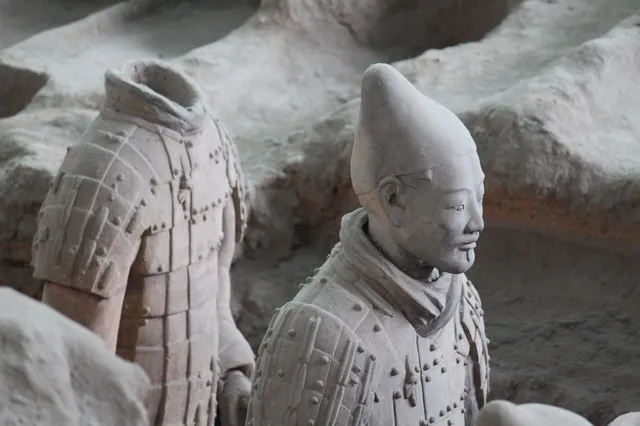
Terracotta Army
More than 8,000 life-sized clay soldiers, horses, and chariots, buried 2,200 years ago to guard Qin Shi Huang, the emperor who first unified China. Pit 1, with ranks of infantry standing in excavated bays, delivers one of the great wow moments in travel. The site sits out in Lintong district, about an hour from downtown, and rewards a guide or good audio commentary far more than most attractions do.
Good to know · Entry is 120 yuan as a combined ticket including Lishan Garden, as of September 2026; book ahead via the museum's official WeChat account using your passport. Take Metro Line 9 to Huaqingchi and transfer to the shuttle, or ride a DiDi for about an hour. Go early, and hire or share a guide at the entrance.
No. 2
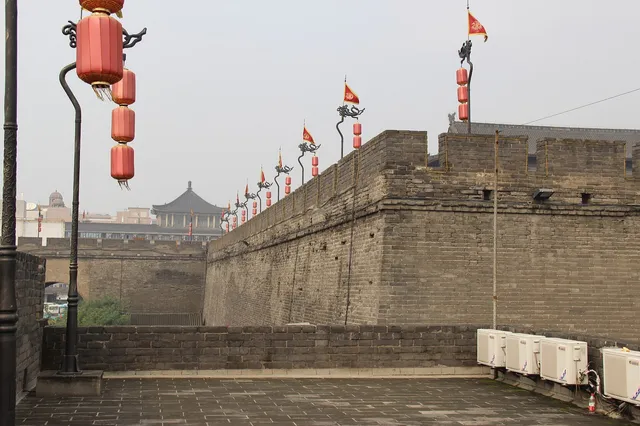
Xi'an City Wall
One of the few complete city walls left in China: a 14-kilometer Ming dynasty rectangle, wide enough on top for a proper bicycle path, with gates, ramparts, and corner towers the whole way around. Cycling the full circuit takes about two hours and is the single best activity in the city at sunset, when the lanterns come on and the old town glows inside the parapets.
Good to know · Entry is 54 yuan; bike rental runs around 45 yuan for three hours as of September 2026, with rental stands at the main gates including South Gate. Start near sunset from South Gate, ride clockwise, and slow down at the ramp entrances — the bricks do not forgive.
No. 3
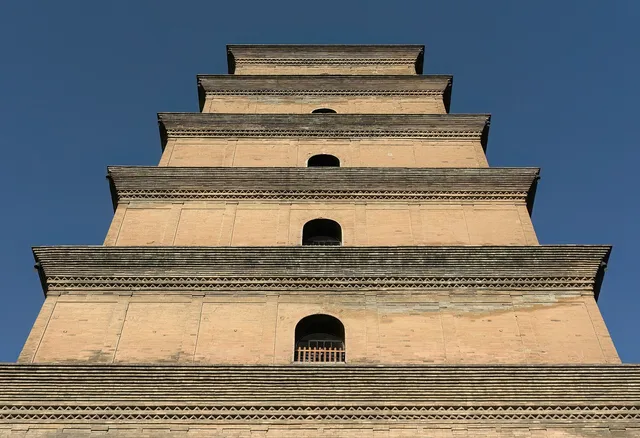
Giant Wild Goose Pagoda
Built in 652 to house the Buddhist sutras Xuanzang carried back from India — the monk whose journey inspired Journey to the West — this brick pagoda is Xi'an's symbol and the Tang dynasty's most enduring landmark here. The surrounding Da Ci'en Temple, the free fountain show on North Square, and the neon spectacle of the Tang-themed pedestrian quarter next door make this an easy half day.
Good to know · The temple ticket is around 35 yuan, with a small extra fee to climb the pagoda itself, as of September 2026. The North Square fountain show is free, typically midday and evenings, though schedules change — arrive early for a front spot. Metro Line 3 or 4 to Dayanta.
No. 4
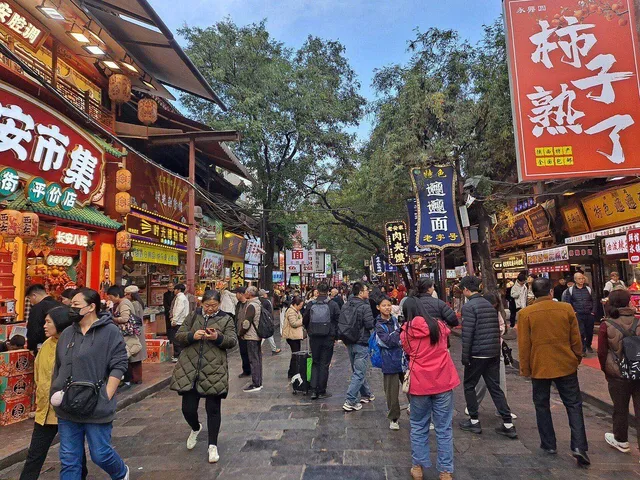
Muslim Quarter
Behind the Drum Tower lies a living neighborhood of Hui Muslim families whose ancestors arrived along the Silk Road centuries ago. The main drag, Beiyuanmen, is a carnival of lamb skewers, roujiamo, persimmon cakes, and pomegranate juice; the side streets — Dapiyuan, Xiyangshi — are where locals actually eat. Come hungry and treat the whole quarter as one long evening meal.
Good to know · The quarter is free and liveliest from late afternoon into the night; mornings around 7 to 8 are calm and best for photos of the architecture. Pay with Alipay or WeChat Pay, wander past Beiyuanmen into the side alleys, and expect serious weekend crowds.
No. 5
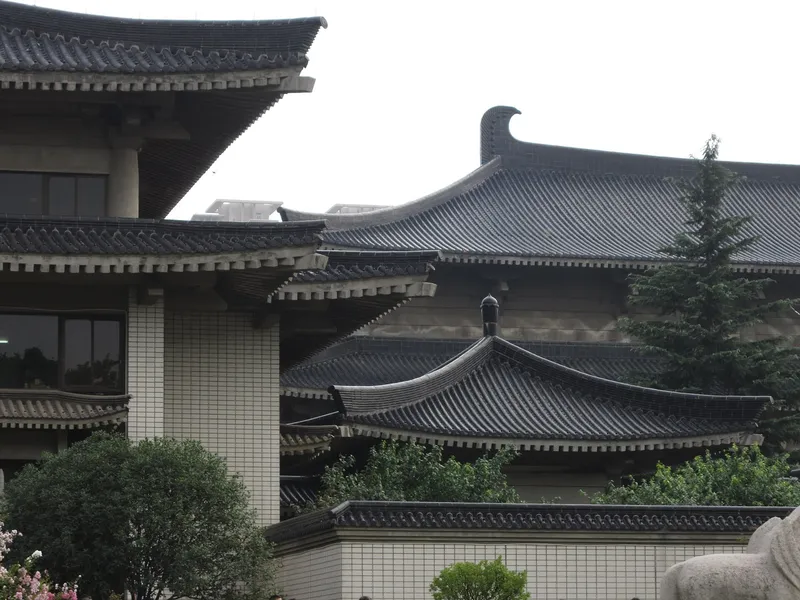
Shaanxi History Museum
One of China's very best museums, holding the pick of Shaanxi's imperial treasures: Tang dynasty gold and silver, tomb murals, Shang and Zhou bronzes, and Silk Road artifacts, displayed in a purpose-built Tang-style hall. General admission is free — which makes it the hardest ticket in Xi'an. Reservations vanish almost as fast as they open, so this museum needs a plan.
Good to know · Reserve free tickets on the museum's official WeChat account with your passport the moment they open — several days ahead, instantly for weekends, as of September 2026. It typically closes Mondays; check when booking. If free slots are gone, the 30 yuan Treasures Gallery ticket is a reliable fallback.
Xi’an is the answer to a question most first-time visitors do not know to ask: where did China begin? The reply is written in the city’s full name history — Chang’an, “permanent peace,” capital for the Qin, Han, and Tang dynasties, the eras that made China China. Today it is a provincial megacity of some 13 million people with an astonishing core: a walled old city you can ride a bike across, a street-food quarter that justifies the train ticket on its own, and, an hour east, an army of clay soldiers that has no rival anywhere. Xi’an is cheaper, smaller, and slower than Beijing or Shanghai, which makes it the most relaxing big stop on a first China trip.
A Bit of History
Start with the number locals love: Xi’an area served as capital for 13 dynasties over more than 1,100 years. The story gets going in 221 BC, when Qin Shi Huang conquered the rival states, declared himself First Emperor, and standardized money, script, and axle widths across what became China. His tomb compound lies about 40 kilometers east of the modern city, guarded by the Terracotta Army that farmers stumbled onto while digging a well in 1974 — one of the greatest archaeological finds of the twentieth century.
The Han dynasty that followed the Qin kept its capital nearby, and Han Chang’an became the eastern terminus of the Silk Road, the caravan network that carried silk west and brought Buddhism, glass, and horses east. But the city peaked under the Tang, around the seventh and eighth centuries, when Tang Chang’an held close to a million people — quite possibly the largest city on earth — laid out in a vast checkerboard of walled wards, with merchants from Persia and Sogdiana, students from Japan and Korea, and a Buddhist establishment that included the monk Xuanzang, just back from India with hundreds of scrolls that went into a pagoda built for them in 652.
Tang glory ended in decline and rebellion; the capital moved east for good, and the city shrank hard. What you see today is mostly Ming: the wall, rebuilt in the 1370s on the footprint of the Tang imperial city, and the Bell and Drum Towers that still mark the center. The name changed too — Xi’an means “western peace.” In 1936 the Xi’an Incident, the kidnapping of Chiang Kai-shek at the hot springs of Huaqing Palace, forced the uneasy alliance against Japan that shaped modern China. Layer count: imperial, Silk Road cosmopolitan, Ming garrison, and modern metro — all within a few square kilometers.
Culture & Daily Life
There is a saying Chinese travelers like to repeat: fifty years of China is in Shanghai, five hundred in Beijing, and three thousand in Xi’an. Locals take quiet pride in being the origin story, and the city leans into it — Tang-style facades, Tang-themed neon streets, warrior figurines in every souvenir window. Underneath the theme-parking is a genuinely lived-in place: university students on bikes, retirement-age swimmers in the moat-adjacent parks, and a Hui Muslim community that has traded and prayed here for centuries.
Daily life plays out the way it does across urban China — on the phone. Alipay and WeChat Pay work everywhere, from noodle stalls to museum bookings (see /guides/payments/ if you have not set them up yet), and reservations for anything worth seeing run through WeChat mini-programs with your passport number. Sort this out before you arrive; Xi’an is friendlier than Beijing but no less app-driven.
The city’s public life happens outside. In the mornings, parks fill with tai chi groups and amateur singers of qinqiang, the loud, raw local opera that Shaanxi people adore. By evening, the squares belong to line-dancing grandmothers and the food streets. The pace is noticeably gentler than Beijing’s: distances are shorter, taxi fares smaller, queues more forgiving.
Etiquette is simple. No tipping anywhere. Queues exist but flex — hold your place gently. People will ask your age, salary, and opinions on the food with total innocence, and the correct response is honesty about the food. Carry your passport daily: every ticketed sight, including the free ones, is tied to a real-name booking.
Nature & Day Trips
Xi’an’s scenery is about escape valves, and the best known has global rank: Mount Hua (Huashan), one of China’s five sacred peaks, is roughly 30 to 40 minutes away by high-speed train to Huashan North — a full, strenuous day of granite cliffs, chain handrails, and, if you dare, the famous plank walk bolted to a vertical face. Book the mountain entry ahead in peak season and start early; this is not a casual stroll.
Closer in, the Qinling mountains rise immediately south of the city, with temple hikes and valley walks around Zhongnan Mountain, while Lishan hill behind the Huaqing Palace hot springs makes a natural add-on to a Terracotta day. Inside the city, the ring park along the foot of the City Wall gives you green shade and straight sightlines under the battlements, and Tang Paradise re-creates a Tang garden beside the Big Wild Goose Pagoda, best after dark.
Realistically, most visitors use one day trip — the Terracotta Army, or Huashan if they are hikers — and spend the rest of their time inside the walls, where the city’s real density of things-to-do lives. Two full days cover the essentials; three let you eat properly.
Food & Drink
Xi’an is, flatly, one of the best eating cities in China, and its food is wheat, lamb, and vinegar rather than rice and stir-fry. The signature move is the roujiamo — slow-braised, chopped meat packed into crisp flatbread, the dish everyone calls a Chinese hamburger (10 to 15 yuan and a full meal). The noodle of record is biangbiang mian, belts of hand-pulled dough slapped onto the counter, served hot with chili, pork, and greens; the character for “biang” is so complicated it appears in no standard dictionary. Liangpi, cold ribbons of wheat or rice noodle in chili oil, handles the hot afternoons.
Then there is yangrou paomo, the Muslim Quarter’s ceremonial dish: you are handed an unleavened round and tear it into fingernail bits yourself — a test of patience — before the kitchen turns it into a rich lamb soup with glass noodles (roughly 35 to 50 yuan). In autumn, Lintong pomegranates get pressed into fresh juice on every corner, and persimmon cakes fried to order are the sweet of choice.
The Muslim Quarter is the eating neighborhood, but calibrate: Beiyuanmen, the main pedestrian drag, is a thrill but heavy on tourist traffic. The locals’ advice — repeated by every food writer who has been — is to walk five minutes deeper to Dapiyuan or Xiyangshi streets, where the skewers are fatter and the prices honest. Street snacks run 10 to 30 yuan; a sit-down lamb feast with beer barely reaches 100 yuan per person. Hours skew early-to-late rather than all-night; stall hygiene is generally fine, but follow the queues.
Top Sights
Terracotta Army
This is why you came, and it delivers. In 1974, farmers drilling a well east of the city hit the edge of a buried army: some 8,000 terracotta soldiers, horses, and chariots, each face individually modeled, massed in vaults to guard the First Emperor’s tomb. Pit 1 is the icon — a hangar-sized excavation with ranked infantry — and the first sight of it stops conversation. Plan on three to four hours for the whole museum complex, which includes bronze-chariot galleries and Lishan Garden at the actual tomb mound, all covered by one 120 yuan ticket as of September 2026.
Practicalities matter here because the site is out in Lintong, about 40 kilometers and roughly an hour from downtown. Book ahead through the museum’s official WeChat account with your passport — peak-season slots sell out — and get there for opening, around 8:30, before the tour buses. Take Metro Line 9 to Huaqingchi and transfer to the shuttle, or simply DiDi out. The site is excavation without much storytelling, which is why guides matter: a licensed guide at the entrance, shared with another couple, will cost a fraction of the experience they add, decoding the ranks, the weapons, the paint traces, and the mausoleum’s still-unopened main tomb. Combine it with the Huaqing Palace hot springs nearby for a full day east.
Xi’an City Wall
Most Chinese cities lost their walls; Xi’an kept a complete set. The Ming wall, rebuilt in the 1370s, runs nearly 14 kilometers around the old city — a broad, crenellated rectangle with gates, ramparts, and corner towers, restored but authentic in scale. Walking it is pleasant; riding it is the move. Bike rental stands at the main gates, including the South Gate (Yongningmen), rent standard bikes for around 45 yuan for three hours as of September 2026, and the flat, brick-paved circuit takes most riders about two hours.
Entry is 54 yuan, and South Gate is the best access point — the grandest gate, longest hours, and usually evening light shows under the battlements. Time your ride for the hour before sunset: you get the old rooftops in gold light going one direction and the neon skyline coming back. Slow down near the ramp edges and watch for the occasional bump where bricks meet; rented bikes are sturdy rather than sprightly. If two hours sounds long, ride a half circuit and walk a stretch — either way, the wall gives you the whole shape of the city in one go, and it doubles as the best orientation exercise in China.
Giant Wild Goose Pagoda
South of the wall, the Yanta district holds Xi’an’s most elegant landmark. The Giant Wild Goose Pagoda went up in 652 inside the Da Ci’en Temple to store the sutras and relics Xuanzang hauled back from seventeen years on the road to India — the journey that, novelized centuries later, became Journey to the West. The brick tower, rebuilt taller in its history and standing about 64 meters today, anchors a complex of Tang-style halls, incense smoke, and courtyard ginkgos.
The temple entry runs around 35 yuan, with a small extra charge to climb the pagoda’s internal stairs for views over the district, as of September 2026. Outside the gates, the neighborhood does its own show: the North Square claims one of Asia’s largest fountain displays — free, typically at midday and in the evening, check locally for times — and the Great Tang All Day Mall pedestrian street stretches south in a blaze of neon pagodas, costumed performers, and crowds that peak after dark. Do the temple by day, the fountain and neon street by night, and ride Line 3 or 4 to Dayanta for both.
Muslim Quarter
Calling it a “quarter” undersells the maze. Behind the Drum Tower, in the lanes of the old Hui district, centuries of Silk Road settlement turned into a neighborhood that eats from morning to midnight: halal beef and lamb done dozens of ways, breads hammered and baked, nuts and dried fruit piled in pyramids. Beiyuanmen, the main pedestrian street, is the famous stretch — loud, fragrant, and crammed with stalls selling roujiamo, lamb skewers, persimmon cakes, pomegranate juice, and candy-pulled nougat.
Two pieces of advice make the visit. First, go twice: once around 7 or 8 in the morning, when the lanes are quiet, delivery scooters outnumber tourists, and the architecture is photographable; and once in the evening, when the quarter is at full volume and every grill is lit. Second, push past Beiyuanmen into the side streets — Dapiyuan and Xiyangshi — where portion sizes grow and prices drop back to local reality. The Great Mosque, hidden down an alley in classical Chinese garden style, remains an active place of worship; modest dress applies and there is a small entry fee. Bring small change or rather, small Alipay taps, an empty stomach, and no itinerary.
Shaanxi History Museum
Beijing has the imperial collections, but Shaanxi has what came out of the ground here — and that means the museum’s free main exhibition is arguably China’s finest survey of early civilization: Shang and Zhou bronzes, Qin-era artifacts, Han figurines, and room after room of Tang gold, silver, and tomb murals, the era when this city ran the world. The building itself, a purpose-built Tang-style hall from the early 1990s, is part of the appeal.
The catch is the ticket. General admission is free, but everything operates on real-name reservation through the museum’s official WeChat account, booked with your passport number; free slots open several days ahead and disappear within minutes, weekends fastest — as of September 2026 this remains the hardest free ticket in China. Book the instant your date allows, try repeatedly for released holds, and if you strike out, the paid Treasures Gallery ticket (around 30 yuan) is a dependable workaround that also gets you in. The museum typically closes Mondays, and the lavish Tang mural exhibition costs far more. Give it three hours, go rested, and consider an audio guide — the labels translate, but the context is what makes the cases sing.
Getting There & Around
Xi’an Xianyang International Airport sits about 40 kilometers northwest of downtown; a DiDi or taxi takes roughly an hour, and airport trains plus shuttle buses run into the city as alternatives. Most visitors arrive by rail, though: Xi’an North station is a major high-speed hub on metro Lines 2 and 4, with G trains from Beijing West in 4.5 to 6 hours (second class from around 515 yuan as of September 2026), and fast links to Chengdu, Zhengzhou, and Shanghai. Book through the official 12306 app up to about 15 days ahead using your passport.
The metro is the best way around — clean, cheap (a few yuan by distance), English-signed, and it reaches every sight in this guide except the Terracotta Army, which runs off Line 9 plus a shuttle. Xi’an was among the first Chinese cities to accept foreign passports at subway gates consistently, but a transport QR code in Alipay or WeChat still speeds things up. DiDi rides across town typically cost 15 to 40 yuan. Traffic is real at rush hour, the wall-enclosed old city is compact enough to walk between the Drum Tower, the Muslim Quarter, and South Gate, and shared bikes fill every gap.
Where to Stay
Three bases work for everyone. Around the South Gate (Yongningmen) is the charm pick: restored courtyard hotels and boutique conversions in the old lanes, with the wall itself at your doorstep and the Muslim Quarter a 15-minute walk. This suits couples and anyone who wants evening atmosphere out the front door.
The Bell Tower and Drum Tower area, dead center, is the logistics pick: every metro line interchange nearby, the food streets within a few minutes, and first-timer-friendly hotels at every level. It is the no-brainer for short two-day visits.
For a more modern stay, the Big Wild Goose Pagoda district south of the wall puts you next to the Tang-themed neon streets, the fountain square, and bigger international hotels — good for families and second-night comfort, with Line 3 or 4 connecting north in fifteen minutes. Wherever you book, staying inside or near the wall keeps everything walkable; Xi’an’s sights cluster tightly, and that compactness is half the city’s appeal.