Bringing Medications Into China: Rules and Real-World Advice
Whether your daily prescription survives Chinese customs is not a question to improvise at the airport. Some medicines that are routine at home fall under China's controlled-substance rules, and customs officers at the red channel have heard every version of 'but it's my prescription.' This guide explains the one principle that matters — legality is decided by Chinese law, not your doctor — then walks through the packing checklist (original packaging, prescription paperwork, sensible quantities), the medication categories that need an embassy check before you fly, how the green and red channels work, and how to buy medicine legally inside China, from pharmacy counters to hotel assistance. All rules are as of September 2026; verify your specific medications with the Chinese embassy before departure.
The short version
- Legality is decided by Chinese law, not your home prescription — verify every medication with the Chinese embassy before you fly
- Keep medicines in original labeled packaging, in your carry-on, with prescription copies and a doctor's letter
- Cannabis and CBD products are strictly prohibited; China's drug penalties include heavy fines and long prison terms
- If in doubt at the airport, take the red declaration channel and show your paperwork — the cost of asking is zero
- Common fever and pain relievers are easy to buy in Chinese pharmacies — go by the generic name, not the brand
For most travelers, bringing medication into China is a non-event: you pack your pills, you walk through the green channel, and nobody looks twice. But the exceptions are genuinely serious. A small set of medicines that sit in kitchen cabinets and bathroom bags across Europe and North America fall under Chinese controlled-substance rules, and the traveler who discovers this at the inspection table is in for a bad first hour in the country. The good news is that the compliant path is short and obvious — check your medicines against a few categories, carry the right paperwork, and know which channel to walk through. Here is the practical version, as of September 2026.
The One Rule That Matters: Legal at Home Is Not Legal in China
Start by deleting the most dangerous assumption in the whole topic: I have a prescription, so it’s fine. A prescription from your doctor at home proves your medication is legal where it was prescribed. It says nothing about China, where a different agency maintains a different list of controlled substances. The US CDC’s China travel page is blunt about this: some prescription drugs may be illegal in other countries, and travelers should call China’s embassy to verify that all of their prescriptions are legal to bring. The UK’s Foreign Office makes the same point — the legal status of medicines prescribed or bought in the UK can be different in China, and some medicines may not be allowed into the country at all.
How seriously should you take this? Very. Canadian government travel advice for China notes that penalties for possession of illegal drugs include heavy fines, jail sentences, and in serious cases the death penalty — and that Chinese authorities can conduct random drug tests and prosecute drug offenses regardless of where the substance was consumed. This is not a regime where “the pharmacist at home said it was fine” moves the needle.
The structure of the compliant approach fits in one sentence: your medication should be clearly personal, clearly documented, and clearly a reasonable quantity. Concretely, that means the original, labeled packaging; prescription paperwork that ties the medicine to you; and an amount that matches a trip, not a mail-order warehouse. Every rule below is a variation on those three elements.
The Three-Part Packing Checklist
This is the checklist Canada’s official travel-medication guidance gives its own travelers, and it maps cleanly onto China:
- Original containers, no decanting. Keep everything in its original, labeled packaging — the box with the pharmacy sticker and your name, not a tidy weekly pill organizer. If a pill looks like an unidentified white tablet, that is exactly what it is to a customs officer.
- Paperwork that names you and the drug. Carry a copy of the original prescription showing both the generic and brand names, plus a short doctor’s letter explaining what you take and why. The CDC adds a useful habit: carry a card listing the generic names of any medications you take, since brand names differ between countries — your inhaler’s Chinese equivalent will not be called what it’s called in Chicago.
- A sensible quantity. Bring enough for the trip plus a cushion for delays — the CDC’s advice is to pack all the medicine you might need, including extra in case travel goes sideways. There is no single published “days allowed” number to design around; if you need to travel with a large supply, say more than a month’s worth, that is precisely the situation to raise with the Chinese embassy before you fly rather than defend at the border.
One logistics rule that matters as much as the paperwork: medication goes in your carry-on, not your checked bag. Luggage gets lost, and a separated traveler and his insulin is a medical emergency, not a baggage claim ticket.
Medication Categories That Need a Second Look
For the categories below, the honest status line is “verify before you fly.” China maintains its own controlled-substances lists, and this guide will not invent rulings that we could not confirm from public sources — the actionable fact is that multiple governments’ official travel advice tells you to check these medicine types with the Chinese embassy in advance, by name.
| Category | Common examples | What to do |
|---|---|---|
| Cannabis-derived products | CBD oil, THC/CBD gummies, hemp cosmetics | Do not bring them. Cannabis is an illegal drug in China and penalties are severe. Canada’s medication guidance flatly states cannabis and CBD products cannot cross borders without authorization. |
| Opioid painkillers | Codeine combinations, tramadol, oxycodone | Verify with the Chinese embassy before travel; carry prescription and doctor’s letter; declare on arrival. |
| ADHD stimulants | Amphetamine- or methylphenidate-based medicines | A classic gray zone — the CDC’s advice is to call China’s embassy and verify each prescription by name. |
| Sedatives and sleeping pills | Benzodiazepines, “Z-drug” sleep aids | Same as above: verify by generic name before you fly. |
| Cold, flu, and cough remedies | Combination products with codeine or pseudoephedrine | Formulas differ by country and some ingredients sit on controlled lists; check each product’s ingredient list and verify anything you are unsure of. |
| Injectable and biological medicines | Insulin, injectable biologics, blood-derived products | Biological products are on China’s declare-at-entry lists; carry documentation and be prepared to declare. |
Two notes on reading that table. First, “verify” is not a brush-off — embassies answer these questions routinely, and the five minutes of email beats a confiscation. Second, if a medication you depend on turns out to be restricted, the correct move is to leave it home and arrange legitimate treatment inside China, which is covered below.
Declaring at the Border: The Red Channel Exists for This
Arrivals at Chinese airports split into two lanes: a green channel if you have nothing to declare and a red channel if you do. UK government advice summarizes the underlying obligation — there are strict rules on goods taken into or out of China, and you must declare anything that may be prohibited or subject to duty. Medication is not a duty item, but “prohibited or restricted” is exactly the box a controlled medicine lives in.
The decision rule is simple and comes from the practical side: when you are uncertain which channel to take, take the red one. Declaring a legal medicine costs you a conversation; failing to declare a restricted one costs you the medicine and possibly worse. Walk up, present the medication and your prescription paperwork, and let the officer make the ruling. If it’s genuinely personal-use medicine with documentation, the overwhelmingly common outcome is a nod and a stamp.
If You Are Pulled Aside for Questions
If an officer asks about your medication, the script is short: be polite, show the prescription and doctor’s letter, and answer what is asked. A translation app on your phone screen bridges most language gaps, and your hotel can often relay a call if things get complicated. Do not argue that the medicine is over-the-counter in your home country — under Chinese law, that fact is irrelevant, and Canadian travel advice reminds travelers that consular officials cannot extract you from local legal trouble. If medication is confiscated, ask for the seizure to be documented and contact your embassy’s consular line; that is what it is for.
Buying Medicine Legally Inside China Instead
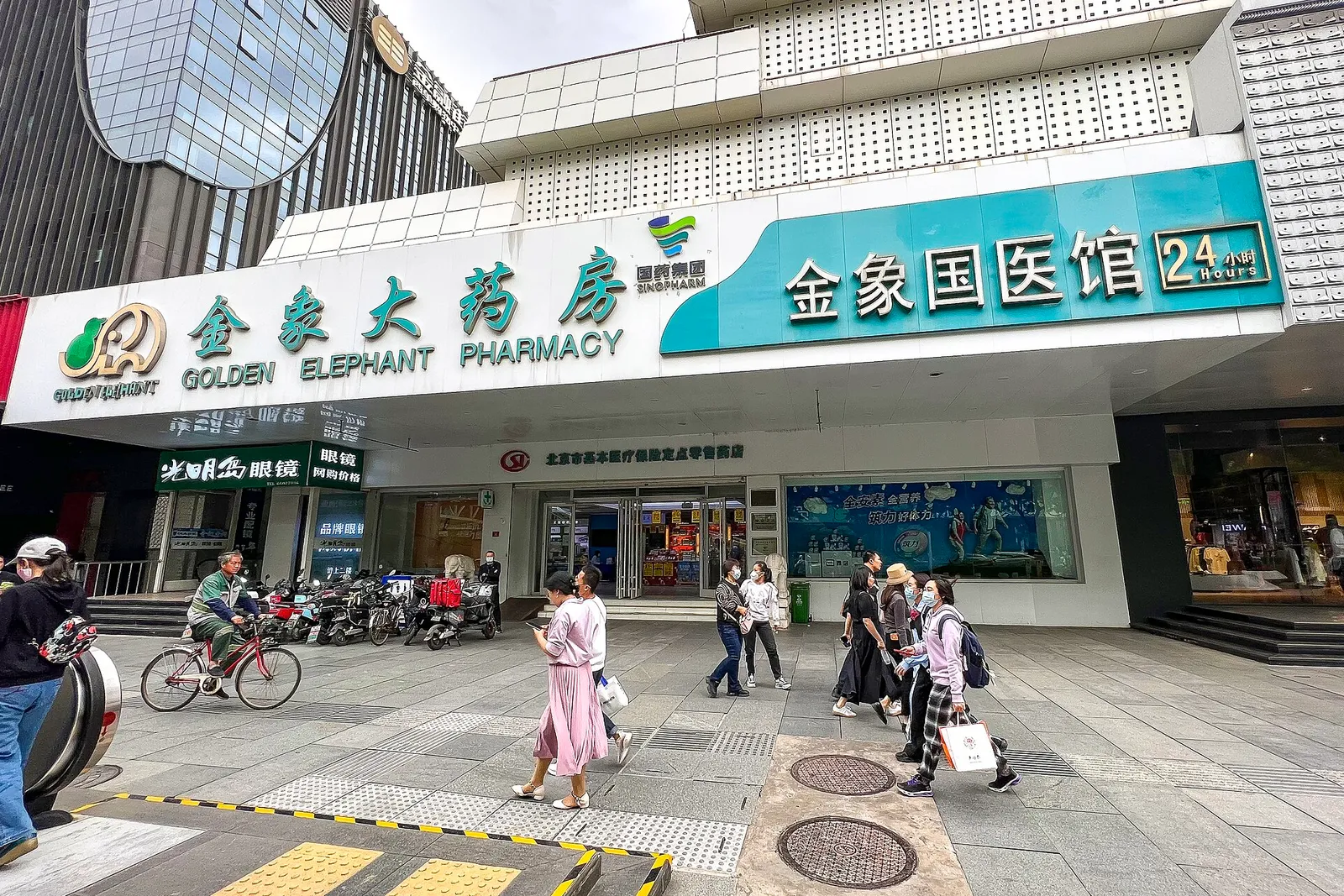
Here is the part most worried travelers don’t expect: for everyday needs, China is an easy place to be a patient. Pharmacies are dense in Chinese cities and inexpensive for minor self-treatment — the staples such as fever reducers and painkillers (acetaminophen, ibuprofen) are stocked under local brand names, which is why the useful skill is shopping by generic name rather than by the box you know. Photograph your medicine boxes at home, note the generic names, and let a translation app do the rest.
Three practical paths, in order:
- Neighborhood pharmacies for standard over-the-counter needs. Staff are used to customers pointing at body parts and symptoms; a translation app showing the generic name works better than pantomime.
- A hospital visit for anything requiring a prescription. Foreign visitors can be treated at public hospitals or, in major cities, at international departments with English-speaking staff — our safety and health guide walks through how those visits work and what they cost.
- Your hotel front desk as the accelerator. Most four- and five-star hotels have an infirmary for minor issues, and reception can direct you to a nearby pharmacy or arrange for a physician — front-desk staff make these calls daily.
One caution the CDC attaches to buying medicine abroad: pharmaceutical quality and availability vary, and some products may be hard to find or substandard. Buy from proper licensed pharmacies and hospital pharmacies rather than informal vendors, check that packaging is intact and sealed, and you inherit none of that risk.
Common Mistakes
- Assuming your own prescription settles the question. It proves legality at home, nowhere else. The CDC and UK guidance both say to verify your specific medicines with the Chinese embassy before departure.
- Decanting pills into unlabeled organizers to save space. Unidentified loose tablets are the single fastest way to turn a routine entry into an inspection. Keep original packaging.
- Checking medication into hold luggage. It leaves you stranded if the bag does, and it separates you from the paperwork at exactly the moment it may be requested. Carry-on, always.
- Packing exactly enough and no more. A three-day flight delay should not become a medication crisis. Bring a cushion, as the CDC advises.
- Treating CBD oils and hemp products as harmless wellness items. In China they are cannabis products, and cannabis is an illegal drug with severe penalties.
- Taking the green channel to save two minutes while unsure. The red channel exists precisely for your situation. Declare first, argue never.
- Assuming China stocks your exact brand. Brands differ; ingredients match. Go by generic name, and if the medicine is prescription-only at home, expect it to require a doctor’s visit in China too.
Sources & verification (7)
- https://www.gov.uk/foreign-travel-advice/china/health
- https://www.gov.uk/foreign-travel-advice/china/entry-requirements
- https://travel.gc.ca/destinations/china
- https://travel.gc.ca/travelling/health-safety/medication
- https://wwwnc.cdc.gov/travel/destinations/traveler/none/china
- https://www.travelchinaguide.com/essential/customs.htm
- https://www.travelchinaguide.com/essential/medical-service.htm