The Best Time to Visit China: Seasons, Holidays, and When to Book
China is a year-round destination, but the difference between a great first trip and a frustrating one often comes down to timing. This guide breaks down the best windows by season and region — spring in the south, autumn in the north, Harbin's ice festival and Hainan's beaches in winter — and explains the one thing guidebooks undersell: Chinese public holidays. On Golden Week and Spring Festival, domestic travel surges multiply crowds and can double flight and hotel prices. Includes a month-by-month climate cheat sheet for major cities, the 2026–2027 holiday dates to avoid, and what peak season actually does to your budget as of September 2026.
The short version
- The best windows for a first-time trip are mid-April to late May and mid-September to late October: mild weather across most regions and no major holiday crowds
- Avoid China's own mass-travel holidays: Spring Festival (Feb 15–23, 2026), May Day (May 1–5), and National Day Golden Week (Oct 1–7) — crowds multiply and flight/hotel prices can double
- Winter is a genuine value play: Harbin's ice festival runs roughly late December through February, and Hainan is beach weather while the north freezes
- Train fares are fixed year-round (they sell out instead of surging); flights and hotels are where peak-season prices spike
- Many headline attractions drop off-peak prices in winter — the Forbidden City falls from 60 to 40 yuan
China is too big and too varied for a single “best month.” The north has four sharp seasons, the subtropical south barely has a winter, and Harbin turns itself into an ice city precisely when Sanya is at its beach-best. Timing a first trip is therefore two separate decisions: picking the season that suits the region you want to see, and — just as important — dodging the weeks when a few hundred million Chinese travelers move at once. This guide covers both, with the holiday dates and climate tables you need to commit to dates as of September 2026.
The Short Answer: Two Windows Most First-Timers Should Aim For
For the classic first itinerary — Beijing, Xi’an, Shanghai, maybe Chengdu or Guilin — the sweet spots are mid-April to late May and mid-September to late October. In both windows, daytime temperatures are comfortable in the north and the south, rainfall is comparatively low, and skies are at their clearest for photography. Crucially, neither window overlaps with a major Chinese holiday week, so you get normal prices and normal crowd levels.
If you must travel in summer (school holidays), aim for high-altitude and far western regions — Yunnan, the Tibetan plateau foothills, Qinghai — where elevation keeps summer mild while the eastern cities bake. If winter is your only option, embrace it: the north is cold but dry and atmospheric, and a snow-dusted Forbidden City is a special sight — prices drop across the board.
Season by Season, Region by Region
Spring (March–May): the south blooms first
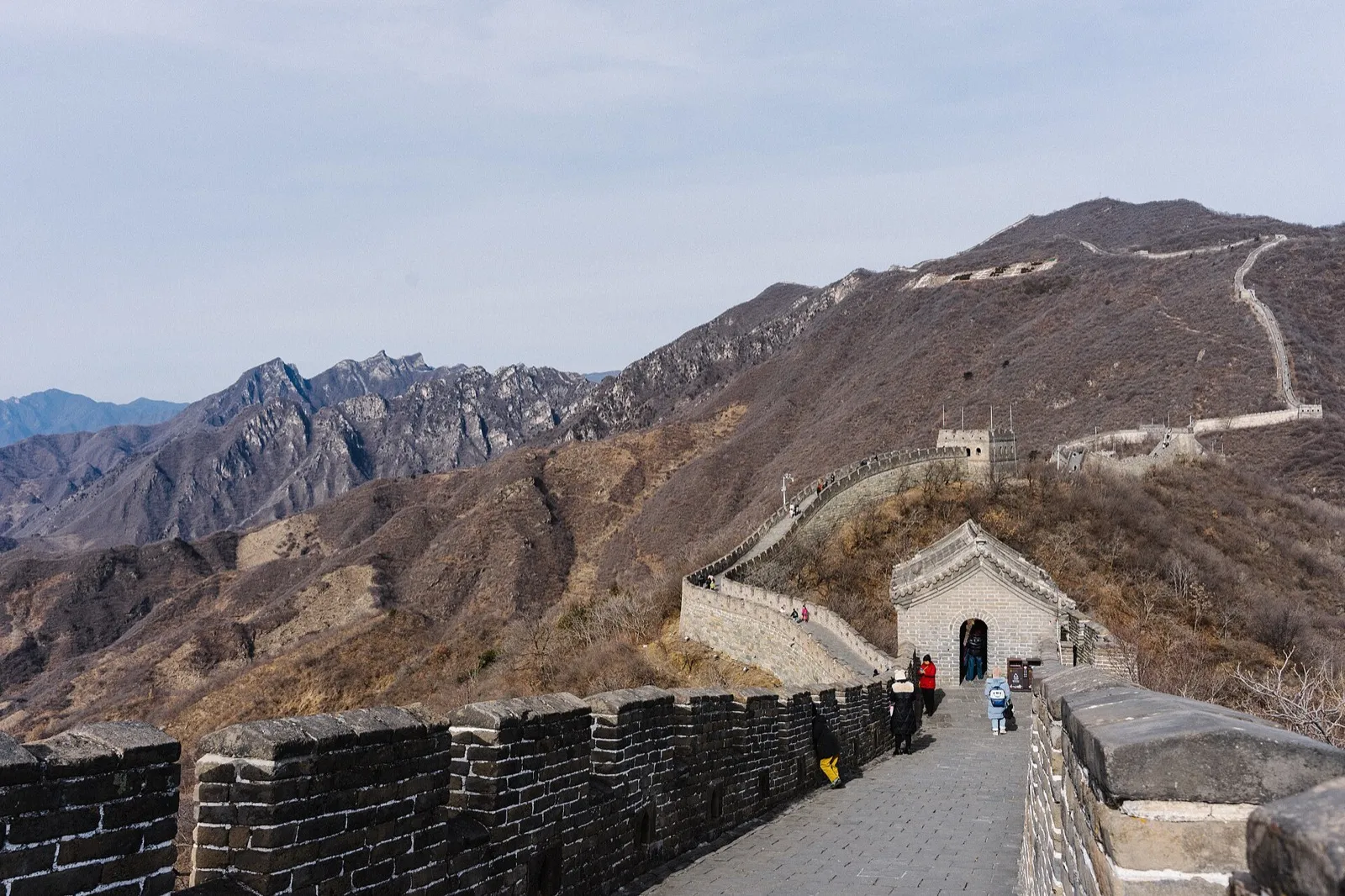
Spring arrives in the south weeks before the north. March and April are prime time for the Jiangnan water towns and the lakes of Hangzhou and Suzhou — mild, green, and photogenic, though March can be cool and showery. By mid-April, Beijing and Xi’an warm up nicely, and this is one of the best stretches of the year for the Great Wall: green hills, thin crowds on weekdays. Two cautions: northern spring can bring dust and the occasional sandstorm from the Gobi (April is peak risk), and the south’s rainy spell starts in May. May Day (May 1–5) puts a domestic-travel surge right at the end of this window — travel in late April or after May 6 and you are fine.
Summer (June–August): hot, wet, and for heading uphill
East-coast cities like Shanghai and Beijing are hot and humid, with July highs routinely above 30°C (86°F) and frequent downpours; the southwest is in its wettest season, which at least fills Guilin’s karst rivers for the classic scenery. This is the season for elevation: Yunnan (Kunming, Dali, Lijiang) sits at 1,900–2,400 meters and stays pleasantly mild, while the far west and high plateau areas are at their most accessible. Domestic tourism peaks in July–August with school vacations, so attractions like the Forbidden City feel busy even on weekdays — book everything well ahead.
Autumn (September–October): the north’s best season
After the summer monsoon retreats in September, northern China gets its most reliable weather: dry, sunny days around 15–22°C (59–72°F) in Beijing and Xi’an, crisp nights, and the year’s best visibility on the Great Wall, with Beijing foliage peaking late October into early November. The big caveat is the calendar: National Day Golden Week (October 1–7) floods every major site in the country with domestic crowds. Early-to-mid September or from October 8 onward are the smart versions of this window. The south dries out and cools to near-perfect by late October — Hong Kong, Guilin, and Guangzhou are all excellent.
Winter (November–February): cold in the north, value everywhere
Winter splits the country in two. North of roughly Beijing, it is genuinely cold — Beijing hovers around freezing, and Harbin spends January between −15°C and −5°C (5–23°F). That is the point for one of China’s signature experiences: the Harbin Ice and Snow World, expected to open around December 20 and run through late February for the 2026–27 season, with the festival’s official opening ceremony traditionally on January 5 (confirm dates before booking — they shift with ice-harvesting progress; see our Harbin guide). Meanwhile the tropical south does the opposite: Hainan and Sanya sit at 22–27°C (72–81°F), and Hong Kong is cool and dry.
Winter is also the low season for price and crowds almost everywhere else: the Forbidden City drops from 60 to 40 yuan (November 1–March 31), and hotels outside the Harbin/Sanya bubbles are at their cheapest — just plan around Spring Festival (see below), when the entire country travels.
Chinese Public Holidays: When Not to Go
This is the single most underrated trip-planning fact about China. Several times a year the whole country takes the same days off, and hundreds of millions of people travel simultaneously: trains sell out in minutes, flights and hotels can double or triple, and headline attractions hit capacity by mid-morning. As a foreign tourist, there is no upside to overlapping your trip with these dates.
The confirmed dates for 2026 (per the State Council’s official notice) and what is known about 2027:
| Holiday | 2026 dates | Notes for travelers |
|---|---|---|
| New Year’s Day | Jan 1–3 | Minor impact; city breaks only |
| Spring Festival (Chinese New Year) | Feb 15–23 (9 days) | CNY Day falls Feb 17, 2026. The year’s biggest migration; many family-run businesses close. In 2027, CNY Day falls Saturday Feb 6 — expect a long break around it, but the official 2027 schedule had not been published as of September 2026 |
| Qingming | Apr 4–6 | Three-day weekend; moderate crowds at scenic sites |
| Labor Day (May 1) | May 1–5 (5 days) | A full-blown domestic travel rush at popular sites |
| Dragon Boat Festival | Jun 19–21 | Three-day weekend; manageable |
| Mid-Autumn Festival | Sep 25–27 | Three-day weekend; moderate |
| National Day (Golden Week) | Oct 1–7 (7 days) | The single busiest week of the year for tourism. Avoid if at all possible |
The 2027 public-holiday schedule is normally announced by the State Council around November 2026 — if your trip falls in early 2027, check the official notice before locking in flights, and treat any 2027 dates seen elsewhere as provisional until then.
Month-by-Month Climate Cheat Sheet
Approximate average daily low/high temperatures, rounded, compiled from climate normals (verify your specific destinations closer to travel):
| City | Jan | Apr | Jul | Oct |
|---|---|---|---|---|
| Beijing | −8/2°C (18/36°F) | 8/20°C (46/68°F) | 22/31°C (72/88°F) | 7/19°C (45/66°F) |
| Shanghai | 1/8°C (34/46°F) | 11/19°C (52/66°F) | 25/32°C (77/90°F) | 14/22°C (57/72°F) |
| Xi’an | −4/5°C (25/41°F) | 9/21°C (48/70°F) | 22/33°C (72/91°F) | 9/20°C (48/68°F) |
| Chengdu | 5/10°C (41/50°F) | 13/23°C (55/73°F) | 23/31°C (73/88°F) | 14/22°C (57/72°F) |
| Guilin | 6/12°C (43/54°F) | 15/23°C (59/73°F) | 25/33°C (77/91°F) | 15/25°C (59/77°F) |
| Hong Kong | 15/19°C (59/66°F) | 21/26°C (70/79°F) | 26/31°C (79/88°F) | 22/28°C (72/82°F) |
| Harbin | −24/−12°C (−11/10°F) | 1/13°C (34/55°F) | 18/28°C (64/82°F) | 0/12°C (32/54°F) |
Read the table less for precision than for shape: January and July are the extremes almost everywhere, and April/October are the mild middle the “best season” advice is built on. Rainfall follows the monsoon — the south is wettest April–June, the north peaks in July–August, and winter is dry nearly everywhere except the far south.
What Peak Season Does to Prices
China’s pricing behaves differently from most countries’. The pattern:
- Train tickets do not surge. Rail fares are fixed by the state year-round — the Beijing–Shanghai high-speed train costs the same on October 1 as on a quiet Tuesday in February. The peak-season problem is availability: tickets go on sale about 15 days before departure and holiday trains sell out within minutes, so book the moment sales open (see our trains guide for how).
- Flights surge hard. Domestic airfares routinely double around Golden Week and Spring Festival, then fall sharply a few days in. International fares follow the same curve.
- Hotels surge even harder. Rates in major destinations commonly double or more during holiday weeks, and budget options sell out entirely.
- Attractions charge seasonal prices instead. Many state-run sites have official peak and off-season tariffs — the Forbidden City’s 60-yuan peak ticket drops to 40 yuan from November 1 — so traveling in the off season genuinely saves money at the gate, on top of cheaper hotels.
- Harbin and Sanya are inverted. Their high season is winter (ice festival, beach escapes), so their hotels are most expensive in December–February and cheapest in summer.
The practical playbook: pick shoulder-season dates first, avoid the three big holiday weeks unless the festival itself (Harbin at New Year, temple fairs at Spring Festival) is your reason for going, and if a holiday overlap is unavoidable, book flights and hotels months ahead and reserve attraction tickets the minute the booking window opens. Once dates are set, sort entry paperwork — start with our visa-free entry guide to see whether you need a visa at all — and budget with our budget guide. For a ready-made first trip built around good timing, see the classic 10-day itinerary.
Common Mistakes
- Underestimating Golden Week. October 1–7 is not “a bit busier” — it is the largest coordinated human migration on the calendar layered on top of normal tourism. Flights, hotels, and trains sell out; the Great Wall and the Forbidden City hit capacity. Do not build a first trip around these dates.
- Assuming Spring Festival is a good time to “see the culture.” The lanterns are real, but so are closed family businesses, sold-out trains, and a week or two of disruption beyond the official days off. The 2027 break will center on February 6; wait for the official November 2026 notice.
- Booking 2027 holidays off a blog’s guess. Official holiday arrangements are announced roughly two months ahead (the 2026 notice came in November 2025). Anything you read about 2027 dates before then is provisional.
- Confusing weather seasons with crowd seasons. Early October has great weather — and the worst crowds; mid-October, slightly cooler, is far calmer. Optimize for both.
- Skipping winter entirely. Travelers who can only go December–February often have a better time than they fear: dry cold in the north, t-shirt weather in Sanya and Hong Kong, off-peak admission prices, and the year’s cheapest hotels — provided they pack for it and plan around Spring Festival.
- Trusting summer for the east coast. July–August in Shanghai or Xi’an means 33°C+ (91°F+) with humidity and crowds of domestic school-holiday travelers. If summer is your only window, point the trip at Yunnan or the high west instead.
Sources & verification (8)
- https://www.travelchinaguide.com/essential/public-holiday.htm
- https://www.chinahighlights.com/festivals/harbin-ice-and-snow-festival.htm
- https://www.chinadiscovery.com/beijing/forbidden-city.html
- https://www.travelchinaguide.com/climate
- https://weatherspark.com/countries/CN
- https://course.chinaculture.org/section/18367
- https://www.chinadiscovery.com/weather/winter/china-weather-january.html
- https://www.dpm.org.cn/