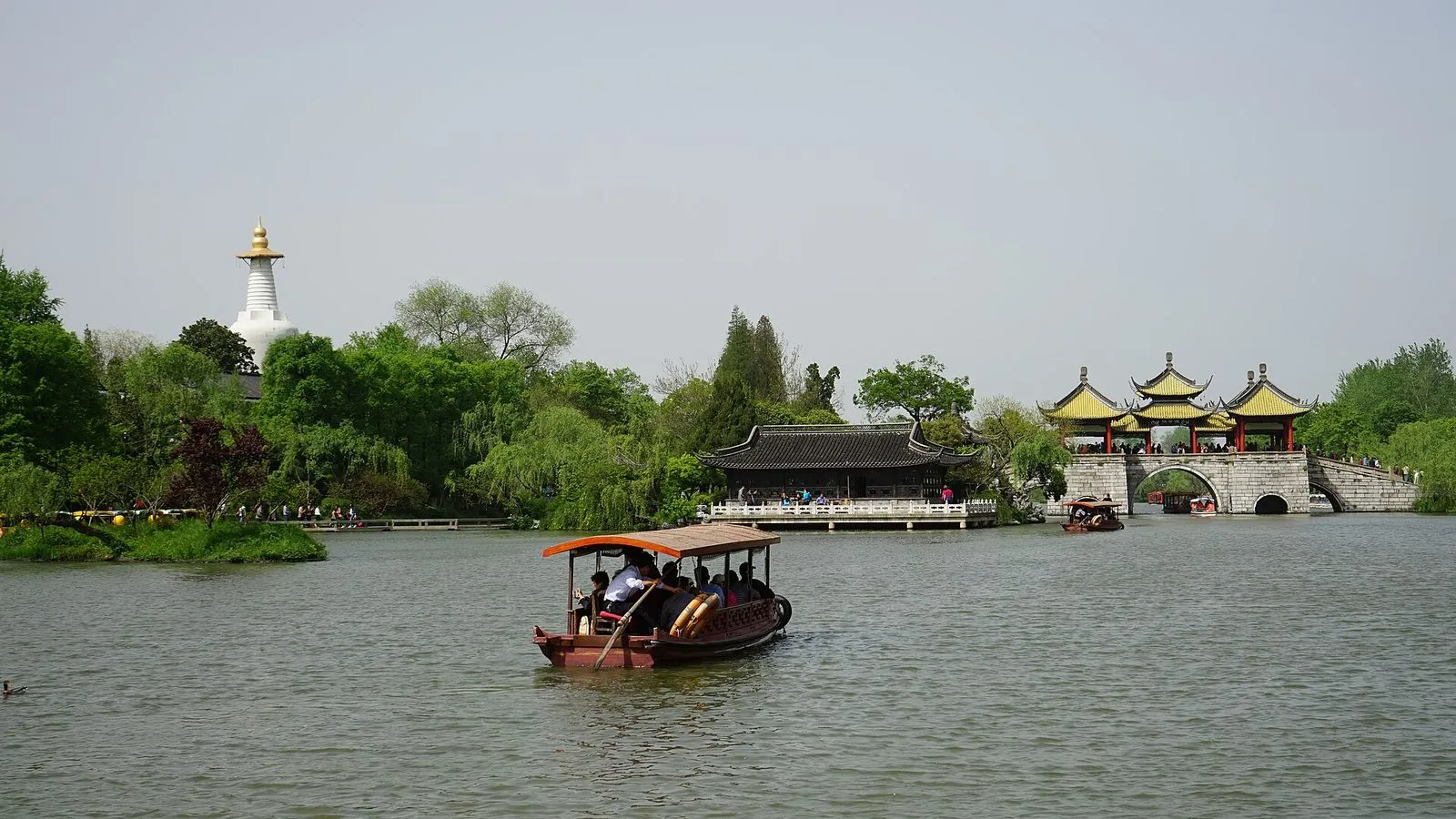
Yangzhou owes everything to water: the Grand Canal turned this modest Jiangsu city into one of the richest places in imperial China, and the legacy is a compact, unhurried old town of willow-lined lakes and salt-merchant gardens. Slender West Lake — the classical Chinese landscape in miniature, all arched bridges, pavilions and a white pagoda — anchors the sightseeing, while Ge Garden's four-seasons rockery and He Garden's double-deck corridors show what merchant money did with landscape design. The deepest pleasure here is domestic: a long Huaiyang breakfast of paper-thin shredded tofu and soup dumplings served with ceremonious calm in century-old teahouses, then an evening stroll down lantern-lit Dongguan Street. Linked to Nanjing in under an hour by train and still crossed by working canal barges, Yangzhou suits travelers who have done the big-name cities and want refined small-city China at a slower pace.
Top sights at a glance
No. 1
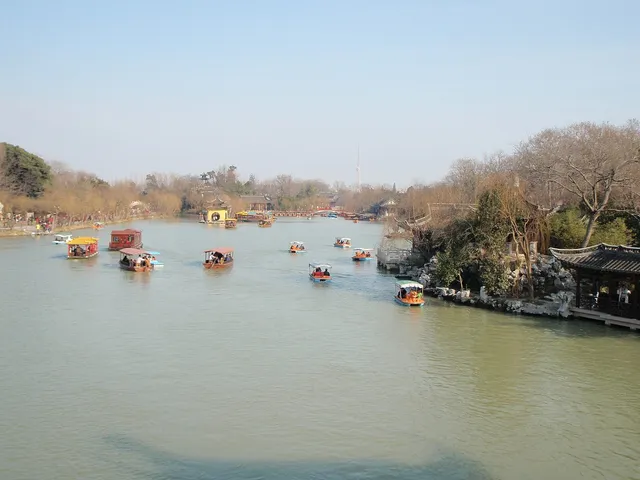
Slender West Lake
The classical Chinese landscape in miniature: a long, narrow lake strung with willows, arched bridges, pavilions and the 1757 Five-Pavilion Bridge, built by Yangzhou's salt merchants to welcome the Qianlong Emperor on his southern tour. Salt money built nearly everything along this water — including, by legend, the Tibetan-style White Pagoda raised overnight to satisfy an imperial whim. UNESCO counts it a key component of the Grand Canal World Heritage listing.
Good to know · Entry runs about RMB 60–100 by season, with a separate night session around RMB 120 (as of September 2026). Buy timed tickets via Trip.com or the official WeChat channel and carry your passport; go on a weekday or at opening. Two to four hours; boat rides cost extra.
No. 2
Ge Garden
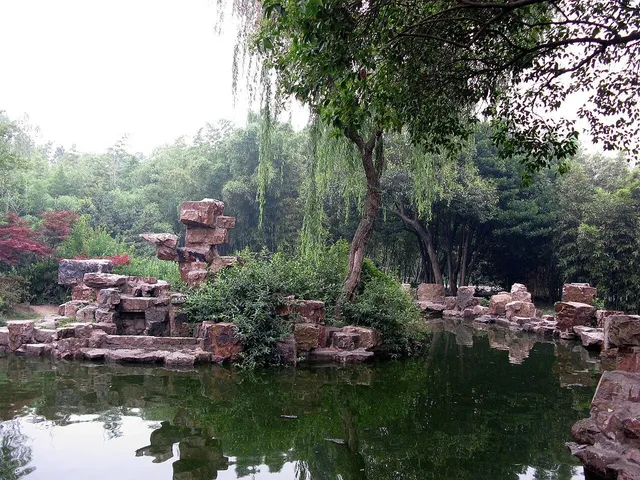
The finest expression of Yangzhou's salt-merchant garden art: built in 1818 by merchant Huang Zhiyun, whose beloved bamboo gives the garden its name — the character ge resembles a bamboo leaf. Its masterpiece is the Four Seasons Rockery, a sequence of four landscapes in four different stones, from spring bamboo to a snow-white winter grove. There is genuinely nothing else like it in Chinese garden design.
Good to know · Tickets run roughly RMB 30–48 depending on season and channel; the garden opens around 7:15 am and sits at the east end of Dongguan Street, so pair them naturally (as of September 2026). Allow about an hour and a half. Walk the rockery in order — spring to winter — the way it was designed.
No. 3
He Garden
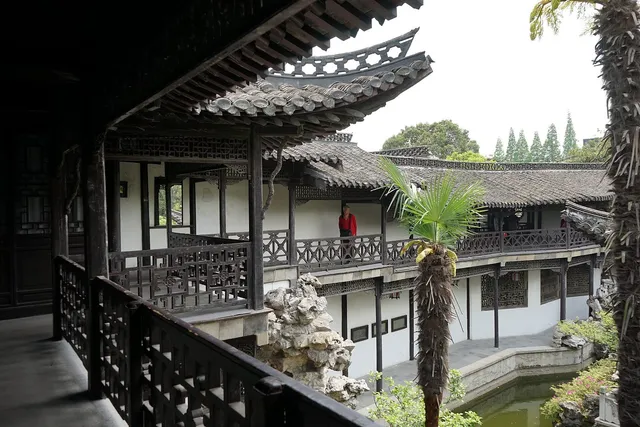
A late-Qing official's retirement project with one foot in the West: begun in 1883 by He Zhidao after thirteen years of construction, it wraps a two-story, 1,500-meter covered corridor around courtyards of French fireplaces, imported shutters and traditional rockery — early modern architecture wearing a garden. The corridor is called the ancestor of China's flyovers, and walking its loops is half the fun.
Good to know · Entry runs about RMB 30–48; hours run roughly 7:30 am–5:15 pm (as of September 2026). It sits south of the old town — buses and a short taxi ride from Dongguan Street. Go in the morning light, and look up: the second-story views over the gray tiled roofs are the best in the city.
No. 4
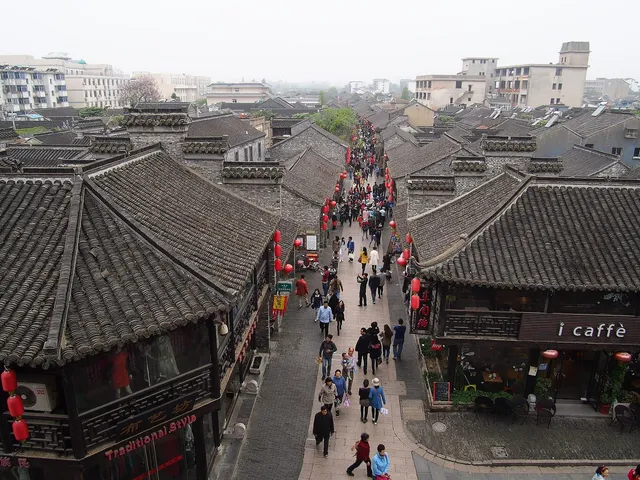
Dongguan Street
Yangzhou's thousand-year-old commercial spine and one of China's celebrated historic streets: a stone-paved lane of old shopfronts running from the canal gate at the east end of the old town deep toward its center, with Ge Garden at one end. Salt-merchant courtyards hide behind the facades, snack counters sell the Huaiyang classics, and the whole street lanterns up after dark. Free, and best taken slowly, twice.
Good to know · No ticket, no reservation — the street is open at all hours and liveliest in the evening (as of September 2026). Come once by day for the lanes and courtyards, once after dinner for the lanterns. The side alleys north of the main drag hold the quieter teahouses and better snack prices.
No. 5
The Grand Canal
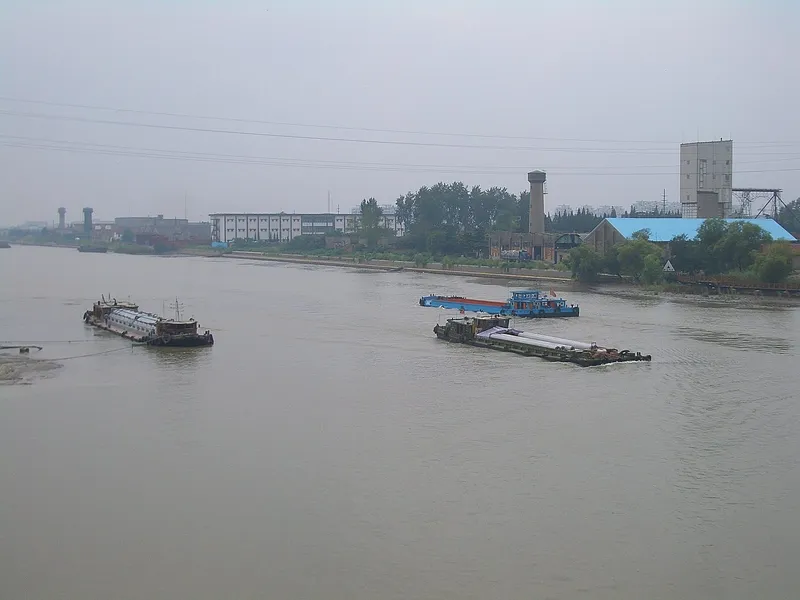
The reason Yangzhou exists: the canal that stitched the Yangtze to the north made this city the transshipment point of the empire's grain and salt, and the waterway outside the old town is still a working river with coal barges churning past Ming-era gates. UNESCO inscribed the Grand Canal as World Heritage in 2014 with Yangzhou at its heart, and the superb Grand Canal Museum explains the whole system.
Good to know · The riverside walks and canal gates are free; the China Grand Canal Museum is free but strictly reservation-based via its WeChat mini-program — book with your passport several days ahead (as of September 2026). For atmosphere, take an evening cruise on the old city canal or watch the barges from the river gate at dusk.
Give Yangzhou one honest afternoon and it will look plain; give it one full day and it becomes one of the most quietly rewarding stops in eastern China. This is not a city of monuments. It is a city of water and manners — a canal town where the imperial past survives as a lake strung with pavilions, two garden masterpieces, and a breakfast culture the city takes more seriously than most countries take dinner. The old town is compact and mostly low-rise, the canals still carry working barges, and the pace makes Shanghai feel like another country. It is the right add-on for a Nanjing loop, and the right overnight for anyone who wants to hear what China sounded like before the megacities.
A Bit of History
Yangzhou counts its history in canals. More than two millennia ago — tradition fixes the date at 486 BC — the King of Wu cut the Han Gou canal through this marshland at the Yangtze’s north bank, and the town that grew at its junction never stopped trading on the water. When the Sui dynasty stitched the full Grand Canal from the rice south to the political north in the seventh century, Yangzhou sat at the hinge of the system, and its first golden age arrived with the Tang: grain, salt and silk flowed north through its docks, poets made the city a synonym for pleasure and prosperity, and the claim that the finest month to arrive was the third — the month of “blooming flowers” — is the one every visitor still quotes.
The second golden age was built on salt. Under the Ming and Qing, the state ran its salt monopoly through licensed merchant houses headquartered in Yangzhou, men who bought their concessions at auction and grew spectacularly rich moving a staple every household in the empire needed. The wealth was immense, conspicuous, and legally anxious — fortunes could be revoked — and it had to be converted into something permanent. The salt merchants of Huizhou origin chose gardens, teahouses, opera patronage and the most refined kitchen in China. The Qianlong Emperor’s six southern tours made the city a stage, and the lake-and-pavilion landscapes along Slender West Lake were built, quite literally, to be seen from an imperial barge.
Decline came the same way, through transport: railroads and steamships made the canal a backwater in the late nineteenth century, and Yangzhou sat out most of the twentieth as a modest prefecture, too unimportant to redevelop aggressively. That pause is now its advantage. The old town kept its scale, the canal was inscribed by UNESCO as World Heritage in 2014 with Yangzhou among its key sections, and UNESCO named the city a Creative City of Gastronomy in 2019. The barges still run, and the city wears its inheritance with quiet confidence rather than billboard slogans.
Culture & Daily Life
Yangzhou’s daily culture has two pillars, and both involve water. The first is the bathhouse proverb — “in the morning, skin wrapped in water; in the evening, water wrapped in skin” — which means morning tea and an evening soak, the two rituals that defined civilized life here for centuries. Morning tea is not a beverage; it is a slow, dim-sum-style breakfast of steamed buns, shredded tofu and soups, taken over an hour or two in teahouses that have been doing this for generations. Tables are shared, pots are refilled without asking, and the city still organizes its weekends around it.
The second pillar is the knife. Yangzhou cooks claim Huaiyang cuisine, one of China’s four great culinary traditions, and its foundation is knife work of almost unreasonable precision — the famous wensi tofu is a block of soft tofu cut into hundreds of threads, done at table speed by line cooks everywhere in town. Beyond the kitchen, the city’s “three knives” — chef’s knife, barber’s razor, pedicurist’s blade — made Yangzhou synonymous with good grooming; its pedicure tradition is recognized as national intangible heritage, and a foot-soak-and-trim session remains a perfectly respectable evening activity. Ask at your guesthouse which neighborhood bathhouse does the full treatment; evening slots fill with local regulars, which is exactly the point.
There is a performing-arts layer too: Yangzhou qingqu, a 600-year-old ballad-singing tradition listed as national intangible heritage in 2006, still surfaces in teahouse sets, and puppet shows and storytelling evenings fill the calendar around the old town. Daily logistics are easy — Alipay and WeChat Pay cover everything from tea trays to boat tickets, the old town is flat and walkable, and English is thin, so keep a translation app handy. What Yangzhou asks of you is tempo: sit down, order the set breakfast, and let it run long.
Nature & Day Trips
Yangzhou’s nature is hydraulic, and its best outdoor hours are spent along water. Slender West Lake itself is the headliner (covered below), but the old canal and the river gates give away for free what the lake charges for: willow banks, brick gates, and barge traffic sliding through at all hours. The Canal Sanwan scenic area to the south, where the waterway bends through a park of bridges and boardwalks, is the locals’ favorite walk and costs nothing.
For green and gravity, Daming Temple on the ridge northwest of the lake combines a working monastery, the tomb of a Sui emperor, and a tower with views toward the Yangtze — entry around RMB 45. It is also the temple of Jianzhen, the monk whose repeated attempts to sail to Japan finally succeeded in 753, making him a national hero in two countries; Japanese pilgrims still come in quiet numbers.
As day trips go, geography does the work. Zhenjiang, with its hill-temple of Jinshan, sits across the Yangtze — under half an hour by the few daily direct trains, or an easy hop via Nanjing. Nanjing itself is the natural partner city, under an hour by frequent trains, and most visitors weave Yangzhou into a Jiangsu loop rather than treating it as a standalone destination.
Food & Drink
Huaiyang cuisine — one of China’s four canonical cooking traditions, with some 2,500 years of local lineage — reaches its courtly form here, and Yangzhou eats it daily. Start with the ritual that defines the city: morning tea. The canon includes three-delicacy steamed buns (pork, chicken and bamboo shoot inside one pillow-soft white), steamed shaomai, and tang gan si — hand-shredded dried tofu in broth with shrimp and ginger, the dish that shows off the city’s knife religion. Order it in any century-old teahouse around the old town; the set breakfasts cost little and run long.
The lunch and dinner canon: Yangzhou fried rice, which the city has spent years trying to rescue from takeout imitation — the real version is a controlled exercise in separate grains, diced ham, shrimp and egg; lion’s head meatballs, oversized pork spheres braised until they fall apart; and wensi tofu, the shredded-tofu showpiece. River shrimp and seasonal greens fill out the menu, and in a city this close to the delta, the fish is always fresh. In autumn, crab season drifts up the canal and menus quietly rearrange themselves.
Geographically, the lanes around Dongguan Street and the old town’s teahouse quarter concentrate both the classics and the snack tier — pan-fried buns, lotus root stuffed with sticky rice, sesame cakes — with the honest advice being to follow queues of pensioners rather than storefront signage. Teahouse etiquette is forgiving: tables are shared, refills arrive unasked, and no one minds how long you sit, because the whole institution is built on lingering. A full sit-down Huaiyang meal runs RMB 60–120 per person; the morning-tea set costs a fraction of that. Eat the big breakfast here, not the big dinner: it is the city’s signature, and no other place in China does it better.
Top Sights
Slender West Lake
The name is a poet’s joke — Yangzhou’s water is a “slender” counterpart to Hangzhou’s famous West Lake — and the slender frame is the genius of it: a long, narrow reach of water where every turn composes a new scene of willows, pavilions, bridges and borrowed pagodas. The centerpiece is Five-Pavilion Bridge, raised in 1757 by salt merchants to welcome the Qianlong Emperor, its yellow-roofed kiosks riding a span of fifteen arches; nearby stands the White Pagoda, a Tibetan-style stupa legend says the merchants built overnight to fill a gap in the imperial view. Salt money landscaped this corridor, and 250 years later it still works on the eye exactly as designed.
Entry runs about RMB 60–100 depending on season — roughly RMB 100 in spring and autumn, less in winter — and a separate night session with lights costs around RMB 120 when it runs (as of September 2026). Buy timed tickets online with your passport — via Trip.com or the official WeChat channel — and book days ahead on holidays. Gates open early and ticket sales wind down by late afternoon. Give it a morning: boat one way, walk the bank the other.
Ge Garden
Every Chinese garden school has a masterpiece, and Yangzhou’s is this one: the private estate of salt merchant Huang Zhiyun, completed in 1818 and named for bamboo — the character ge sketches a bamboo leaf — which fills the courtyards by the thousand. What earns the garden its reputation is the Four Seasons Rockery, a single owner’s conceit that sequences four landscapes in four stones: spring’s bamboo and zodiac-shaped boulders, summer’s watery Taihu rock by a lotus pool, autumn’s massive yellow-stone mountain, winter’s white quartz grove that seems to hold the snow. It is garden design as a calendar, and there is nothing else like it in China.
Tickets run roughly RMB 30–48 depending on season and booking channel, and the garden opens early — around 7:15 am — which is exactly when to arrive (as of September 2026). The gates stand at the eastern end of Dongguan Street, so the two sights share one visit naturally. Allow ninety minutes, climb the autumn mountain for the rooftop view, and do not skip winter: the white-stone grove is the detail people remember.
He Garden
He Garden is what happened when a Qing official with thirteen years of money met the nineteenth century. He Zhidao resigned his post in 1883, went into business in Yangzhou, and spent the next decade and a half building a residence-and-garden compound that braids classical rockery courtyards, a two-story 1,500-meter covered corridor looping the whole property — its layered ramps earned it the nickname “ancestor of the modern flyover” — and then the West: French-style fireplaces, louvered shutters, imported glass. Chinese gardens look inward; this one is having a conversation with the treaty-port era, and it is fascinating to watch.
Entry runs about RMB 30–48, hours roughly 7:30 am–5:15 pm, and the location south of the old town means a short taxi or bus ride from Dongguan Street (as of September 2026). Give it an unhurried hour and climb to the corridor’s upper deck for long views over tiled rooftops. Visit after Ge Garden rather than before: seeing them back-to-back makes the contrast between the two temperaments — inward and outward — land properly.
Dongguan Street
Every great Chinese city keeps one street where the old layout survived the century, and Yangzhou’s is Dongguan Street: a stone-paved commercial lane running west from the canal gate at the old town’s eastern edge, continuously busy for over a thousand years and now protected as one of China’s notable historic streets. Salt-merchant mansions sit behind modest doorways, workshop counters sell knives and pickles, snack stalls turn out the Huaiyang street canon, and Ge Garden guards the far end — the street and the garden are one designed ensemble, not two sights.
It is free, open at all hours, and worth visiting twice: once by day, when the lanes and courtyards can be studied and the side alleys yield teahouses at honest prices; once after dark, when lanterns double themselves in the moat and the street becomes the city’s evening promenade (as of September 2026). The walk from the canal gate to Ge Garden, snacking slowly, is the most pleasant hour in Yangzhou.
The Grand Canal
Yangzhou lives on the working edge of the Grand Canal, the ancient waterway UNESCO inscribed as World Heritage in 2014 — and here it is not heritage scenery but freight: coal barges and aggregate boats still churn through the river gates past the old town, an unbroken supply line from the Tang dynasty to this afternoon. Walk the riverside at dusk to watch them, then visit the museum that explains why any of it exists.
The China Grand Canal Museum, a few minutes south of the old town at the Sanwan bend, is the best museum of its subject anywhere: free, modern, and built around the engineering, economics and human logistics of moving an empire by water. The catch is access — like most of China’s flagship museums it runs on strict real-name reservations made with your passport through its official WeChat mini-program, released days ahead, and slots vanish around holidays; it opens around 9 am and closes Mondays in the off-season, so verify both when booking (as of September 2026). For the water itself, evening cruises on the old city canal run from the Dongguan Street gate and are worth doing once the lanterns are lit.
Getting There & Around
Yangzhou sits about 100 kilometers east of Nanjing, and the rail link is the lifeline: high-speed and express trains cover Nanjing or Nanjing South to Yangzhou’s two stations in as little as 45 minutes to just over an hour, second class roughly RMB 35–75, with dozens of departures daily (as of September 2026). From Zhenjiang, across the Yangtze, direct trains take under half an hour but run only a handful of times a day — check times before building a plan on it. Both Yangzhou and Yangzhou East stations sit close to the old town; Yangzhou Taizhou International Airport handles domestic flights east of the city.
In town, the sights in this guide cluster tightly: the lake is a short ride from the old town, the gardens and Dongguan Street are walkable once you are there, and the canal museum is a quick taxi. Buses are frequent and cheap, DiDi works well, and central rides typically cost RMB 10–25. For a day trip outward, Nanjing’s trains make the pairing effortless — most travelers do both cities on one Jiangsu loop.
Where to Stay
Stay in or beside the old town — Yangzhou is a small-city destination, and the whole point is stepping out your door into the teahouse lanes. The Dongguan Street–Ge Garden quarter is the character pick: boutique guesthouses converted from merchant courtyards, lantern light at your doorstep, morning tea within a five-minute walk — the right base for first-timers and anyone staying one night. The area near Slender West Lake’s south entrance trades some atmosphere for green quiet and early access at opening hour. For pure logistics — a very early train or a flight out of Yangzhou Taizhou airport — sleeping near the stations makes sense, but you lose the reason you came.
Courtyard guesthouses run modest prices by eastern-China standards, with the usual calendar caveats: spring and autumn holidays sell the charming places out weeks ahead, and the best rooms book first. Book early, request a courtyard-facing room, and set an alarm for morning tea — it is the whole point of the city.
Sources & verification (10)
- https://www.travelchinaguide.com/attraction/jiangsu/yangzhou/shouxi_lake.htm
- https://www.chinadiscovery.com/jiangsu/yangzhou/slender-west-lake.html
- https://www.travelchinaguide.com/attraction/jiangsu/yangzhou/ge_garden.htm
- https://www.travelchinaguide.com/attraction/jiangsu/yangzhou/he-garden.htm
- https://www.chinadiscovery.com/jiangsu/yangzhou.html
- https://www.travelchinaguide.com/cityguides/jiangsu/yangzhou/
- https://www.travelchinaguide.com/nanjing-to-yangzhou-trains.htm
- https://www.trip.com/trains/china/route/nanjing-to-yangzhou/
- https://www.trip.com/trains/china/route/zhenjiang-to-yangzhou/
- https://you.ctrip.com/sight/yangzhou12.html