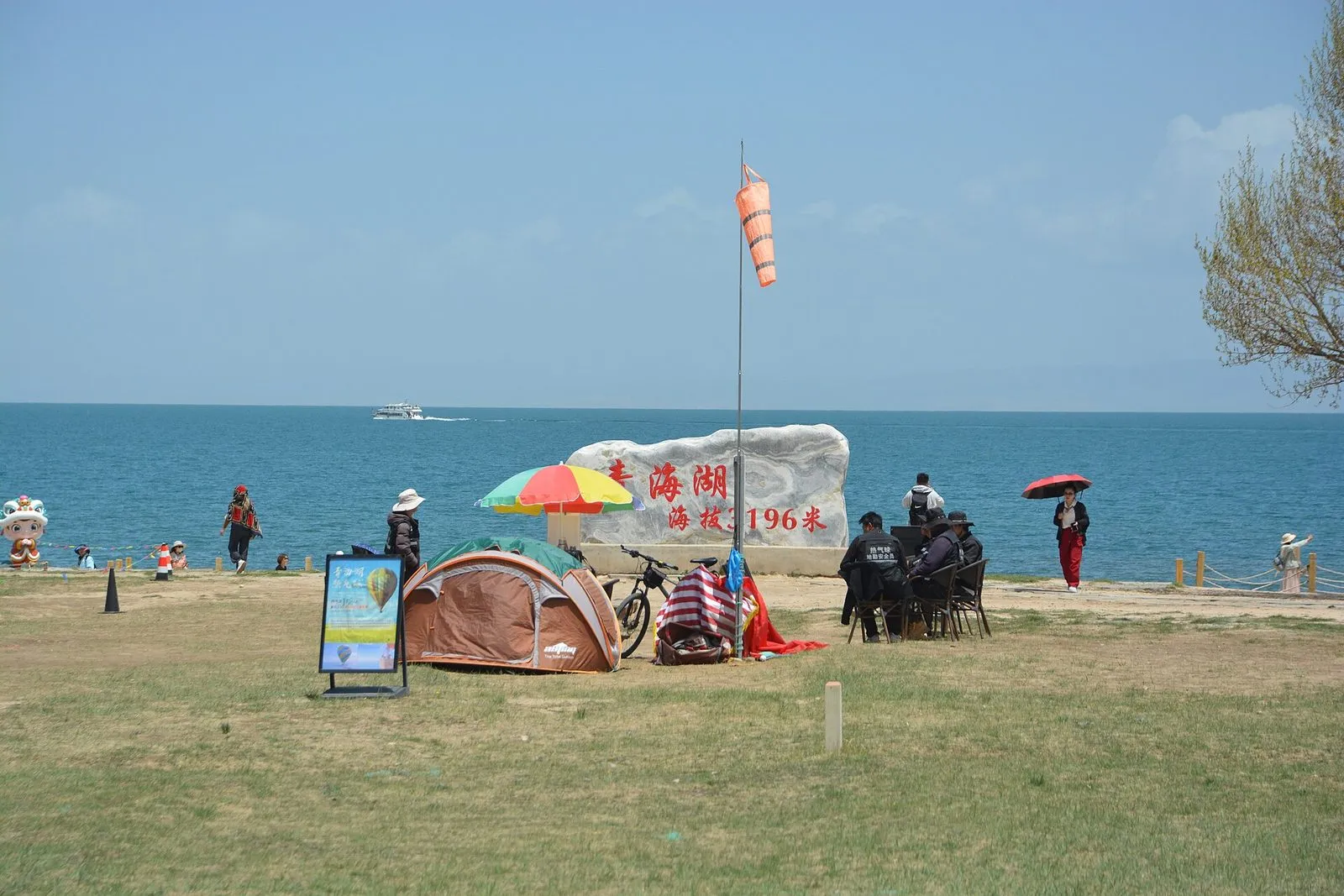
Xining, capital of Qinghai and the largest city on the Tibetan Plateau, sits at a cool 2,270 meters where the Silk Road's northern routes met the Tang–Tibet road — and the city still trades on that junction. Hui Muslim quarter and Himalayan monastery, yak-butter and cumin lamb, prayer flags and mosque minarets share the same valley. For travelers it plays three roles: an underrated two-day city of its own (Kumbum Monastery and the Dongguan Great Mosque headline), the classic acclimatization stop before Tibet, and the base for the great Qinghai Lake loop — China's largest lake, the 'Mirror of the Sky' salt flats at Chaka, and the 3,399-meter Riyue Pass, all within a day's drive. This page sorts the ticketing realities for 2026, the honest crowds-versus-mirror math at Chaka, and the July rapeseed bloom with the July–August price surge that follows it.
Top sights at a glance
No. 1
Kumbum Monastery
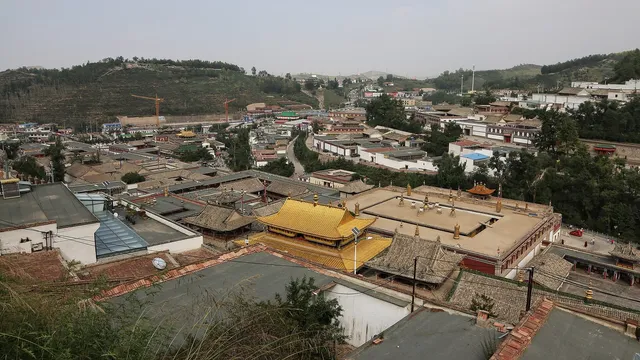
One of the six great monasteries of the Gelug school, Kumbum (Ta'er Temple) grew from a memorial stupa of 1379 — raised by the mother of Tsongkhapa, who founded the Gelug order and was born on this spot in 1357 — into a working monastery of halls and courts in the Lusar valley, about 40 minutes from downtown. Pilgrims still prostrate on its worn porches. The monastery's 'three wonders' are practical art at the highest level: sculpted butter flowers, centuries-old murals, and raised-silk embroidery.
Good to know · Tickets run ¥70 to enter the halls, open 7:30 AM–5:30 PM (as of September 2026) — the outer grounds are free, and honestly atmospheric. Photography inside the halls is strictly forbidden. Any taxi or DiDi covers the 25-odd kilometers in about 40 minutes; buses also run from the city center.
No. 2
Qinghai Lake
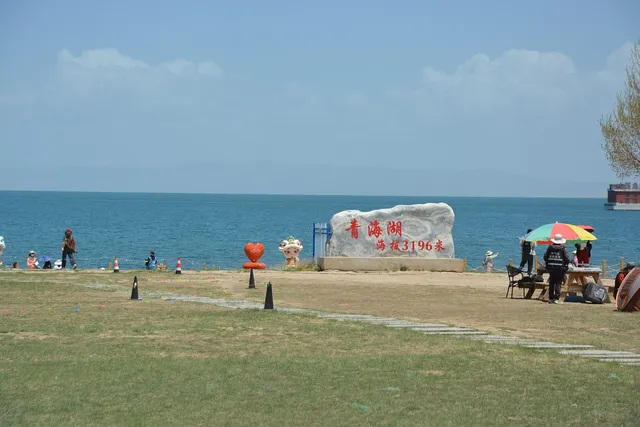
China's largest lake is an inland salt sea lying at 3,205 meters about 100 kilometers west of Xining, ringed by grasslands that ignite yellow with rapeseed flowers in July. The lakeshore has become a cycling rite of passage — a multi-day loop at altitude on quiet roads — and every July the Tour of Qinghai Lake race rides the same shores. Erlangjian, the developed scenic area on the south shore, is the classic first encounter: a long peninsula, boat harbor, and water the color of deep lapis.
Good to know · The lake basin is vast and free to approach in many spots, but Erlangjian is gated — Trip.com currently lists ¥190 with transport add-ons, hours 7:30 AM–7:00 PM (as of September 2026); village lanes and public shoreline give cheaper views. Bird Island has been closed to visitors since 2020. Book lake-loop lodging far ahead for July–August.
No. 3
Chaka Salt Lake
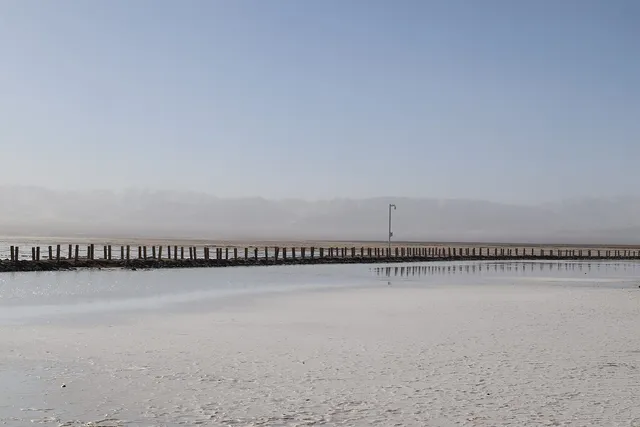
Three hours west of the big lake, Chaka is a shallow brine pool over crusted salt so still it doubles the sky — 'Mirror of the Sky' is the local billing, and on the right day it is fully deserved. The visit is part landscape, part industrial archaeology: an old salt-mining railway now runs sightseeing trams straight onto the lakebed, and you walk out between white fields and electric-turquoise water. Honest math: the mirror needs a windless, softly lit day, and the crowds do not help.
Good to know · Entry is ¥60, the sightseeing train adds ¥50 one-way, and rubber boot covers rent for ¥10 if you want to walk onto the bed (as of September 2026). Hours run 7:50 AM–8:50 PM in season. Aim for early morning or near sunset on a calm day; midday wind and harsh light flatten the famous reflection.
No. 4
Dongguan Great Mosque
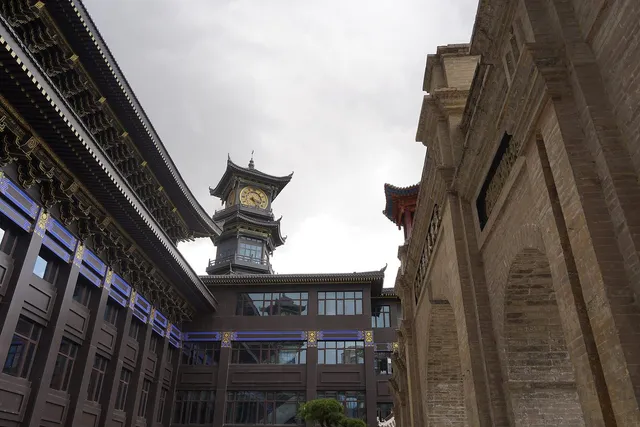
Built in 1380 and now the largest mosque in Qinghai, Dongguan anchors the Hui quarter east of the center — at Friday prayers the surrounding streets famously overflow with worshippers. A sweeping 2021 remodel traded the green domes of recent decades for a grander Chinese-style complex; the original prayer hall remains. Even non-Muslim visitors find it rewarding: the building, the bookshop-style courtyards, and above all the street food market that spills out around it.
Good to know · Admission is free, open about 8:00 AM–6:00 PM, but non-Muslims may not visit during Friday prayers (before 12:30 PM) and never enter the prayer hall (as of September 2026). Dress modestly, ask before photographing worshippers, and time your visit for the market streets immediately around it.
No. 5
Riyue Mountain Pass
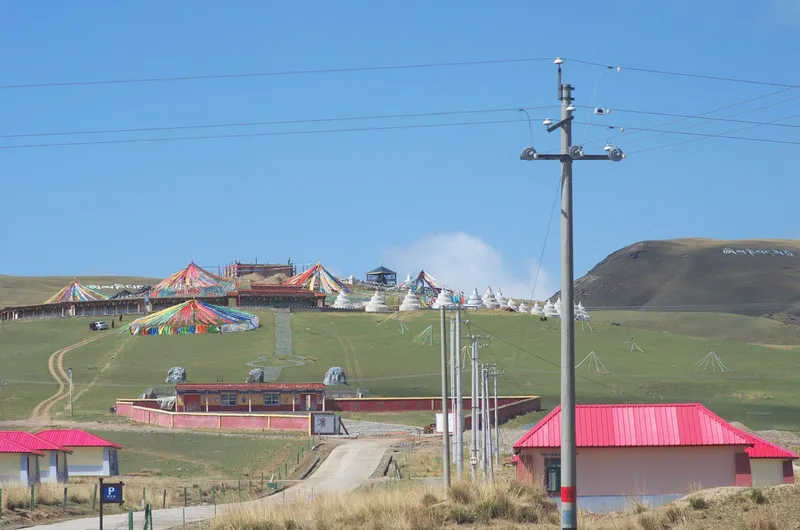
The road to Qinghai Lake climbs over the Sun-and-Moon Pass — Riyue Shan — at 3,399 meters, the old frontier where the agricultural east gives way to the pastoral Tibetan west, marked by flickering walls of prayer flags. Princess Wencheng is said to have paused here in the 7th century on her journey to marry the Tibetan king, casting down a sun-moon mirror; the DaoTang River, unusually, flows west from the pass. It is a 30-minute stop rather than a destination, and a perfect one.
Good to know · The pass sits directly on the G214 highway an hour or so southwest of Xining, typically visited en route to the lake rather than as its own trip (as of September 2026). The small memorial halls at the top charge about ¥40 — the free panorama from the road pull-offs is honestly the best part. Pack a windproof layer; it is cold up here even in July.
Every great plateau journey needs a threshold, and Xining is China’s. The capital of Qinghai sits at 2,270 meters in a tight river valley where the Silk Road’s northern branch met the Tang–Tibet road, and 21 centuries of that traffic left a city unlike any other in the country: a Hui Muslim quarter grilling lamb around the 14th-century Dongguan Great Mosque, a Tibetan Buddhist complex founded at the birthplace of an order’s creator an hour away, markets smelling of cumin, butter tea, and fresh flatbread. Most foreign travelers skim Xining on the way to somewhere else — Lhasa, or the great blue rectangle of Qinghai Lake to the west. That is a mistake on both ends: the city rewards two full days, and it is the smart traveler’s acclimatization chamber before the lake’s 3,200 meters or the plateau beyond. Do the monastery, do the mosque, eat everything, then point west.
A Bit of History
Xining’s position made it — a green pocket in the Huangshui valley, guarding the corridor between the loess lowlands and the Tibetan Plateau. Han commanders planted a frontier county here over 2,100 years ago, on the northern Silk Road whose trade in horses, timber, wool, and salt ran through this valley for two millennia. The city’s fortune rose and fell with the frontier itself: overrun by Tibetan armies in 763 and ruled from Lhasa’s sphere as Qingtang city, it was recovered by the Song dynasty in 1104 and given the name it still wears — Xining, “peace in the west,” a hopeful name for a town that stayed a military threshold. Only in 1928 did it leave Gansu to become the capital of the new province of Qinghai.
Religion built the skyline. Around 1379, the mother of Tsongkhapa — born nearby in 1357, and destined to found Buddhism’s Gelug school — raised a memorial stupa at his birthplace in the valley below; a monastery accreted around it from 1560 onward, becoming Kumbum, one of the six great monasteries of the Gelug world. In 1380, the Muslim community established the Dongguan Great Mosque a few streets east of the city’s crossroads; both foundations still define the city’s rhythm today.
The modern chapter ties Xining to the great journeys. The Qinghai–Tibet Railway starts here — the station remains the classic boarding point for the plateau crossing, a 20-plus-hour climb many travelers still call the world’s great train ride. The Lanzhou–Xinjiang high-speed line wired Xining into fast China: 57 minutes from Lanzhou, through trains rolling on toward Urumqi along the corridor Zhangye and Dunhuang guard.
Culture & Daily Life
Xining’s texture is its minorities, and daily life is a lesson in how a Chinese frontier city works. The Hui community — Chinese Muslims, deep-rooted here since the Ming — sets the city’s clock: the call to prayer sounds over the Dongguan quarter, halal butcheries and noodle shops line the east side, and the food economy runs on their kitchens. The Tibetan presence deepens as you leave the valley: monastery pilgrims from Amdo and Kham circle Kumbum’s porches, and the city’s north side hosts the remarkable Tibetan Medicine and Tibetan Culture museums, home to a 600-meter-long thangka claimed as the world’s longest.
The altitude is the city’s quiet personality trait. At 2,270 meters the air is thin, the sun fierce, and the swings wide — a July afternoon can hit 25°C and drop to near single digits at night. Locals move at a pace that is highland efficiency, not laziness. Drink more water than you think you need, wear sunscreen at all times, and keep a layer in your daypack from June to September — you will use it daily.
Etiquette splits by district. In the mosque quarter, dress modestly, never enter the prayer hall, and steer clear during Friday midday prayers. At Kumbum and its ilk, walk clockwise, skip the flash, and keep your voice low in the halls — photography inside is banned outright. Between the two, Xining is an easy, friendly city: English is thinner than in the big destinations, a translation app smooths most exchanges, and payments run entirely on Alipay or WeChat Pay.
One custom worth adopting: the evening market stroll. When the heat fades, the whole city drifts toward the stalls around Shuijing Xiang, Mojia Street, and the mosque’s periphery, eating through the dusk. Join it — it is the best cultural show in town, and you eat the tickets.
Nature & Day Trips
Xining’s geography hands you a ladder of landscapes, each rung higher and stranger than the last. One hour southwest, the Riyue Pass crosses from wheat fields to yak pastures at 3,399 meters — the historical and ecological frontier, worth its own stop on any lake run. Two to three hours west lies Qinghai Lake, China’s largest at 3,205 meters: a salt sea ringed by grasslands and, in July, by tens of thousands of hectares of blooming rapeseed. The lake rewards a day trip or a four-day cycling circuit; the east and west shore roads hold the best water-and-mountain compositions.
Farther on, at about 300 kilometers west of the city, the Chaka Salt Lake flats conjure the “Mirror of the Sky” — details below. For something greener, Kanbula Forest Park southeast of town pairs scarlet danxia cliffs with the Lijia Reservoir in 2.5 hours by bus — a local weekend escape with few foreign faces. Closer in, the North Mountain temple complex clings to cliffs at the city’s northern edge, though part of the cliff path is closed for erosion work — check locally.
Pack for altitude everywhere beyond the valley: sun protection is non-negotiable at 3,200 meters, summer thunderstorms roll in fast, and temperatures swing 15 degrees between lunch and dusk. The classic loop — pass, lake, salt flats — fits in two long days or, far better, three with a lakeside night between.
Food & Drink
Northwest China’s best street-food city? Xining makes a serious claim. The Hui kitchens supply the canon: hand-grabbed boiled lamb with a salt dip, cumin-dusted kebabs over coal, big flatbreads, spicy hand-pulled noodles, and a lamb broth culture that starts at breakfast. The city’s signature snack is niangpi — cool, bouncy wheat-starch noodles dressed with chili and vinegar, around ¥5 a plate — chased by a bowl of thick, cream-topped local yogurt, faintly sour and nothing like the factory version, for about ¥3. In autumn, fermented sweet oat mash (tianpei) shows up in street cups, warming and boozey at the same time.
Tibetan cooking has its quarter too: small rooms near the railway station serve momos — steamed dumplings — with butter tea, as authentic as anything in the city. Between the two traditions, the markets tie it together: Mojia Street off Dongda Street runs snack stalls from dawn (spicy “bird egg” flatbreads, niangpi, yogurt), the lanes around Shuijing Xiang Bazaar fill each evening, and the Xinanguanjie market spilling from the mosque’s gates is the halal street-food heartland.
Prices are the city’s quiet gift: a robust noodle lunch costs pocket change, a street-food crawl rarely clears ¥40, and even sit-down lamb feasts divide kindly across a group. Payments run on Alipay or WeChat Pay at every stall. Drink bottled water and tea — tap water is off the menu everywhere in China — and go easy on the first night’s lamb and liquor; your stomach is acclimatizing too.
Top Sights
Xining sequences neatly: monastery and mosque fill the city days, the lake loop the days beyond. Carry your passport for ticketed sites; bookings run through official mini-programs or Trip.com, paying with Alipay or WeChat Pay.
Kumbum Monastery
Start with the city’s reason for spiritual fame. Kumbum — Ta’er Temple in Chinese — ranks among the six great monasteries of the Gelug school, founded on the birthplace of Tsongkhapa, the 14th-century reformer whose school came to rule Tibetan Buddhism from Lhasa to Mongolia. The story begins with a tree: legend says a sandalwood sprouted where his umbilical blood fell, bearing Buddha-images on its leaves, and the four-storied Golden Temple wraps that spot today. What you see is a valley-side campus of gold-roofed halls, chanting courtyards, and prostrating pilgrims, some of whom measure devotions in years. The famed “three wonders” justify the trip: butter sculptures — tinted yak-butter tableaux remade each winter — alongside murals centuries old and barbola embroidery raised in silk relief. Tickets are ¥70 for the halls, open 7:30 AM–5:30 PM (as of September 2026); the surrounding lanes and courts are free to wander. Rules are firm: no photos inside any hall, clockwise movement, quiet voices. It sits in the Lusar valley of Huangzhong, about 25 kilometers and 40 minutes from downtown — taxi or DiDi covers it easily, buses run from the city, and mornings beat tour-bus afternoons.
Qinghai Lake
The lake is the reason most people come this far west, and it over-delivers. China’s largest lake — an alkaline inland sea that has been growing for two decades — lies about 100 kilometers west of Xining at 3,205 meters, its far shore dissolving into snow-ridge horizon. July transforms it: tens of thousands of hectares of rapeseed bloom gold against the blue water, a color combination no photograph quite settles for. Erlangjian, the south-shore scenic area, is the developed gateway — peninsula walkways, a boat harbor — while independent travelers favor the quieter east and west shore roads, and cyclists ride the full multi-day loop each summer, timed to the Tour of Qinghai Lake race every July. Know the practical shape: Erlangjian gates and tickets run ¥190 on current Trip.com listings, hours 7:30 AM–7:00 PM (as of September 2026), though lakeside lanes and village viewpoints cost little or nothing; Bird Island, the famed birding spit, has been closed to visitors since 2020. In July–August, book lakeside rooms weeks ahead — domestic demand spikes prices brutally — and pack windproof layers; the lake makes its own weather.
Chaka Salt Lake
Drive another three hours past the lake’s western shoulder and the landscape goes white. Chaka — “salt pond” in Tibetan — is a brine lake over a crusted salt bed at the edge of the Qaidam Basin, mined for centuries and now mined for photographs. A repurposed salt railway trundles sightseeing trams straight onto the lakebed; walkways and wading platforms spread between pools where, on still days, the thin water mirrors the sky so perfectly that horizon lines dissolve — the “Mirror of the Sky” billing is honest, within limits. Those limits matter: the mirror requires no wind and soft light, which is why the honest play is early morning or the last hours before sunset, not midday, when breeze, glare, and tour crowds flatten the calm. Entry is ¥60, the sightseeing tram adds ¥50 one-way, boot covers rent for ¥10 if you want to walk out on the bed, and hours run 7:50 AM–8:50 PM in season (as of September 2026). Chaka is a long day trip — 300 kilometers each way from Xining — so most travelers fold it into an overnight lake loop; in July–September a tourist train also runs direct from Xining in about four hours, a calm way to arrive.
Dongguan Great Mosque
Back downtown, the Dongguan Great Mosque is where Xining’s daily life concentrates. Founded in 1380 and now the largest mosque in Qinghai, it anchors a dense Hui quarter of halal butcheries, noodle shops, and the market spilling from its gates — the city’s best food crawl starts here. The building carries visible history: a 2021 remodel replaced the green domes and minarets of past decades with a grand Chinese-style pavilion roofline; the original prayer hall remains the working heart, and Friday midday prayers famously overflow into the surrounding streets. Visiting rules are clear and easy to respect: admission is free, hours run about 8:00 AM–6:00 PM, non-Muslims skip Friday mornings entirely and never enter the prayer hall (as of September 2026). Dress modestly, ask before pointing a camera at worshippers, and let an hour here flow naturally into lunch in the surrounding lanes — that combination, architecture plus appetite, is the mosque’s real gift.
Riyue Mountain Pass
The last sight is the smallest, and it reframes everything you have just seen. The Riyue Mountains — Sun and Moon — crest at a 3,399-meter highway pass about an hour southwest of the city, the historical hinge where the farmer’s China ends and the herder’s plateau begins: agriculture east, yak pastures west, prayer flags flapping in a wind that never seems to stop. History thickens the view. In the 7th century, Princess Wencheng is said to have halted here en route to marry the Tibetan king Songtsen Gampo, gazing into a sun-moon mirror said to show her homeland — and shattering it; the DaoTang River, defying the region’s eastward norm, is said to spring from her tears and flow west toward the lake. Two small memorial halls at the summit tell the tale for about ¥40; candidly, the free panorama from the roadside — sea of flags, grassland running to Qinghai Lake’s basin — is the better purchase (as of September 2026). The pass sits on the G214, the old Tang–Tibet road, so it slots naturally into any lake-bound drive: stop, stretch your legs at altitude, and read the landscape boundary with your own eyes.
Getting There & Around
Xining is Northwest China’s rail crossroads, and the fastest way in is the high-speed line: from Lanzhou it is as quick as 57 minutes, with around 60 departures a day (as of September 2026) — book on the official 12306 app or Trip.com with your passport. Direct trains link Xi’an and the east, and the corridor line runs on toward Zhangye and Urumqi. The classic slow departure is the point for some: the Qinghai–Tibet Railway to Lhasa boards here, roughly 20–22.5 hours across the plateau with oxygen piped into the carriages; around four to six trains run daily, berths sell out in summer, and the permit logistics live in our Tibet permit guide. Xining Caojiabao Airport, 15 kilometers southeast, covers major domestic cities; the airport bus into town costs ¥21 and takes half an hour.
In town, taxis start at ¥8 and DiDi works everywhere; city buses cost ¥1 and cross the compact center in minutes. For the lake loop and Chaka, hire a car with driver for a day or two, or join a small-group tour from the station area — public buses reach the lake towns but eat your daylight.
Where to Stay
Pick your neighborhood by purpose. The east side — around the railway station and the Dongguan mosque quarter — is the practical choice: mid-range hotels at honest prices, the night markets and mosque streets downstairs, and early trains or lake-loop departures a short walk away. The newer west side around the provincial museum is calmer and glossier, suiting travelers with a car and a preference for big-hotel comfort. For the experience option, spend one lake-loop night in a guest town on the south or east shore — wake to the water, beat the buses to the shore at dawn — knowing seasonal prices there are the steepest in the province.
Whatever the base, book far ahead for July and August, when the rapeseed bloom and the school holidays collide and even modest rooms triple. Two nights in town covers mosque, monastery, and markets; add two for the lake loop, and consider a third if Chaka’s mirror is on your must list — you will want one calm morning to spare.
Sources & verification (15)
- https://en.wikipedia.org/wiki/Xining
- https://en.wikipedia.org/wiki/Qinghai_Lake
- https://en.wikipedia.org/wiki/Kumbum_Monastery
- https://en.wikipedia.org/wiki/Dongguan_Mosque
- https://en.wikipedia.org/wiki/Chaka_Salt_Lake
- https://en.wikipedia.org/wiki/Riyue_Mountain
- https://zh.wikipedia.org/wiki/%E5%A1%94%E5%B0%94%E5%AF%BA
- https://en.wikivoyage.org/wiki/Xining
- https://www.chinahighlights.com/xining/
- https://www.chinahighlights.com/xining/attraction/qinghai-lake.htm
- https://us.trip.com/travel-guide/attraction/xining/kumbum-monastery-77994/
- https://us.trip.com/travel-guide/attraction/ulan/chaka-salt-lake-78544/
- https://us.trip.com/travel-guide/attraction/gonghe/qinghai-lake-erlangjian-scenic-area-10558958/
- https://www.trip.com/trains/china/route/xining-to-lhasa/
- https://www.trip.com/trains/china/route/lanzhou-to-xining/