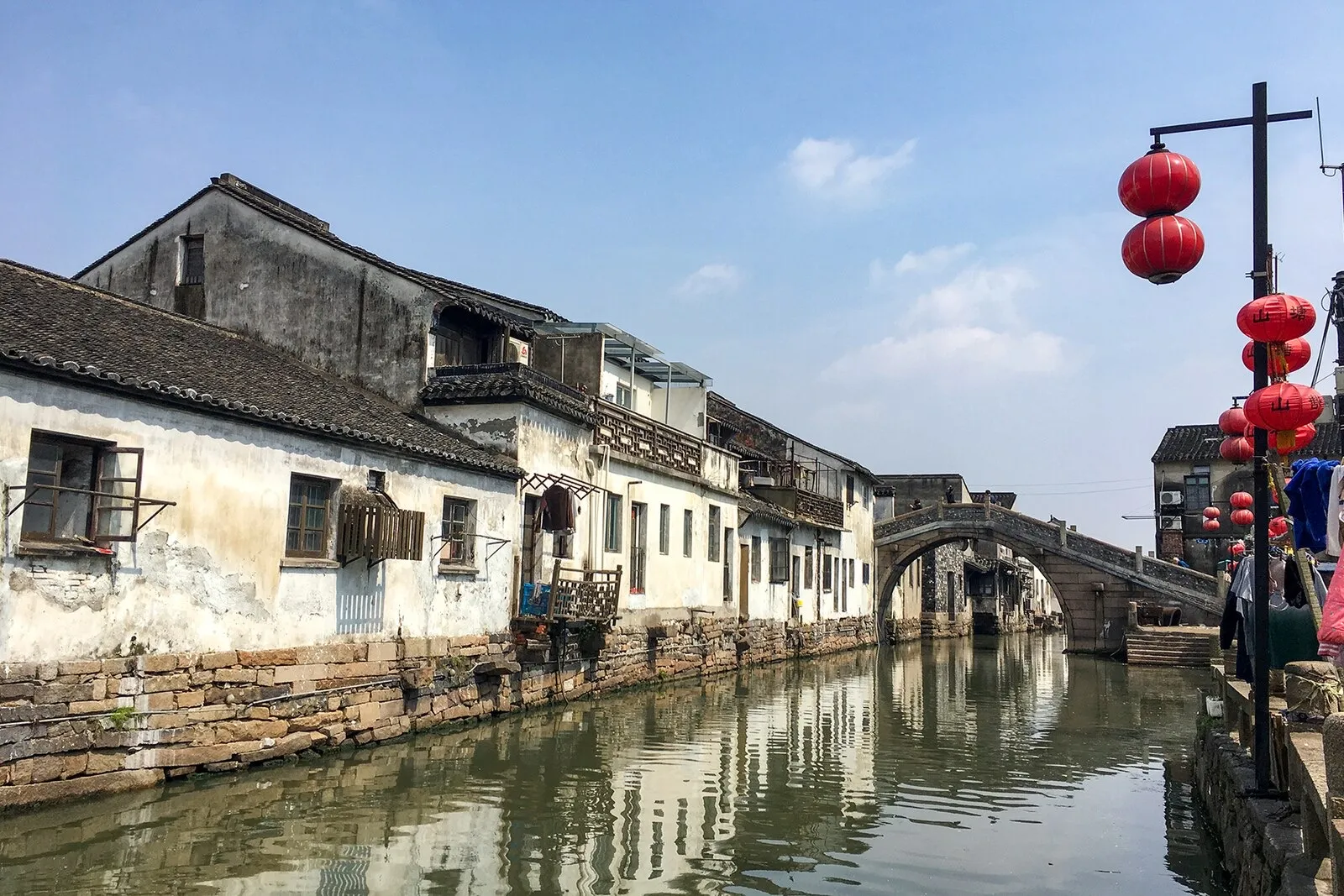
Suzhou built its fame in miniature: walled gardens barely a hectare wide, composed so that a twenty-meter stroll takes you past mountains, lakes and autumn forests. Nine of these gardens are UNESCO World Heritage sites, and walking them — at opening hour, before the tour buses — is one of the essential experiences of any China trip. Around them lies a canal city that earned the nickname 'Venice of the East': the 800-year-old lane houses of Pingjiang Road, teahouses where pingtan storytellers still perform, and a museum by I.M. Pei that is free if you can win the reservation race. Add water towns like Tongli on the metro line, a sweet and delicate local kitchen, and a train station 25 minutes from Shanghai, and Suzhou becomes the highest-density day or overnight trip in eastern China. Best for travelers who like design, slow cities, and ticking off masterpieces on foot.
Top sights at a glance
No. 1
Humble Administrator's Garden
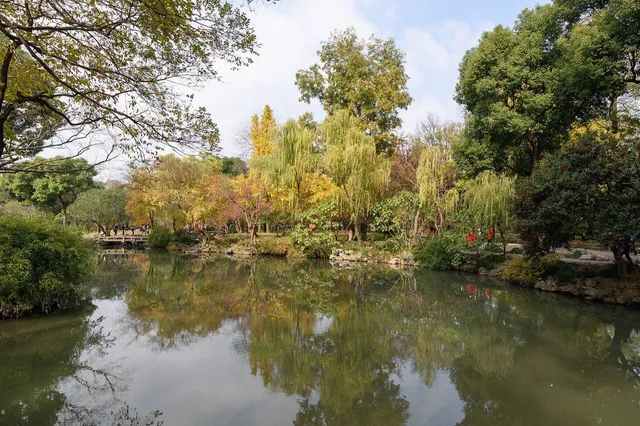
The largest and most celebrated of Suzhou's classical gardens, laid out around 1509 by a retired Ming official who decided gardening was better than politics. Its five hectares of ponds, pavilions and borrowed views set the template every other Jiangnan garden copied, and UNESCO inscribed it in the first batch of the Classical Gardens of Suzhou in 1997. In peak lotus season it can feel like a station platform — but at the 7:30 opening it is one of the most beautiful half-hours in China.
Good to know · Tickets run about RMB 70–80 depending on season (higher around major holidays), and entry is by real-name timed reservation through the official 'Suzhou Gardens Tourism' WeChat channel — passports are accepted, book several days ahead in spring and autumn. Hours run roughly 7:30 am–5:30 pm; go at opening. It sits next door to the Suzhou Museum — do both in one morning.
No. 2
Master of the Nets Garden
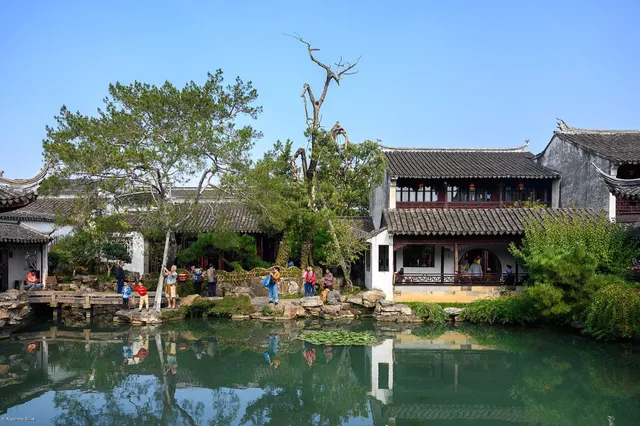
The smallest of Suzhou's famous gardens — about a tenth the size of the Humble Administrator's — and the masterpiece of the genre: a Song-dynasty original, rebuilt in the 18th century, that fits mountains, lakes, moon gates and mirrored pools into half a hectare. By day it's the best crash course in garden design in China; by night, from mid-March to mid-November, it hosts an atmospheric performance tour where musicians and opera singers appear, lantern-lit, in the courtyards.
Good to know · Day tickets run about RMB 30–40 depending on season. The night garden tour costs about RMB 100–120 and runs roughly 7:30–10 pm — book a day or two ahead via official or Trip.com channels and pay with Alipay/WeChat. Allow 1–1.5 hours; the garden is a ten-minute walk from the Pingjiang Road area.
No. 3
Pingjiang Road
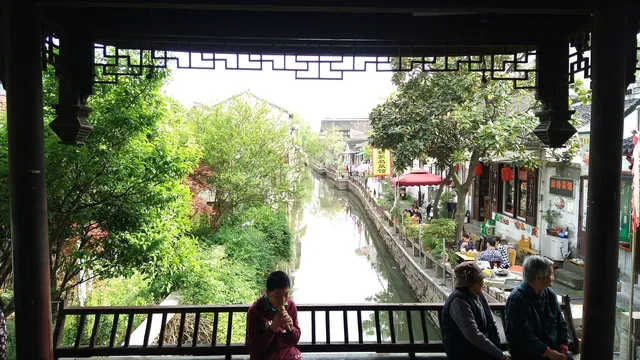
A kilometer and a half of stone-paved lane following a narrow canal, laid out on the Song-dynasty street plan that still organizes Suzhou's old town — houses on one side, water on the other, lanterns everywhere after dark. Free to wander at any hour, it mixes teahouses with pingtan storytellers, snack shops, boutiques and actual residents' lives in the side lanes. It is also perfectly placed: the museum and two great gardens stand within a fifteen-minute walk.
Good to know · No ticket, no reservation — go twice if you can, quiet in the morning and lantern-lit after dinner. Pair it with the Suzhou Museum and Humble Administrator's Garden for a single old-town day. Metro Line 4 to Beisita station puts you about ten minutes' walk away; duck into the side lanes (longtang) where the crowds thin.
No. 4
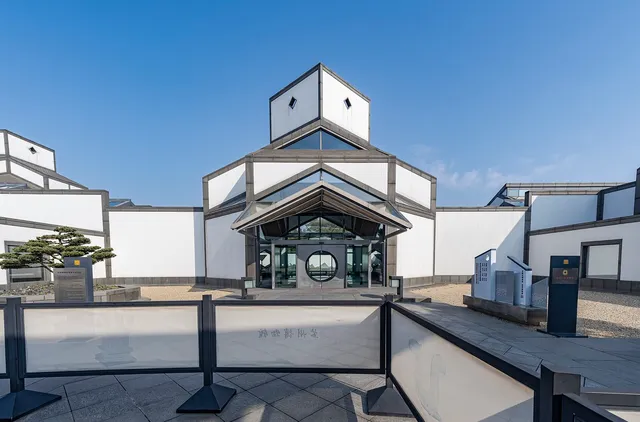
Suzhou Museum
I.M. Pei's 2006 masterwork, designed in his late eighties for his ancestral city: white walls and grey-tiled geometry that translate the vocabulary of the Suzhou garden into modern architecture, crowned by the famous sliced-stone rockery in the courtyard. Inside are Wu-school paintings, jade, and the silk and embroidery that made the city rich — and admission is free. The catch is access: timed reservations release seven days ahead and the good slots vanish within minutes on weekends.
Good to know · Free, but advance booking is mandatory on the official 'Suzhou Museum' WeChat mini-program (passports work) — set an alarm for seven days before your visit. Open 9 am–5 pm, last entry 4 pm, closed Mondays except holidays. The newer west branch requires a separate booking. Metro Line 4 to Beisita, then a ten-minute walk.
No. 5
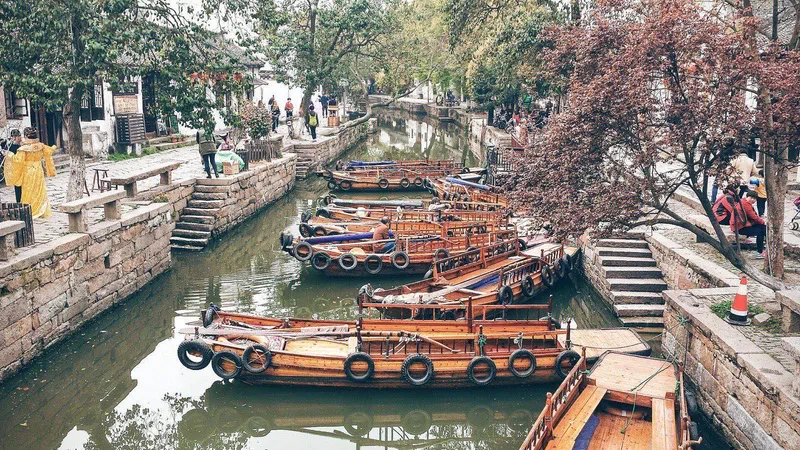
Tongli Water Town
The best of the canal towns near Suzhou: a lattice of streams crossed by old stone bridges, gabled houses leaning over the water, and the Tuisi Garden — 'Retreat and Reflection' — a late-Qing compound so fine that UNESCO added it to the Classical Gardens listing in 2000. Tongli is more lived-in and calmer than Zhouzhuang, and it is reachable on the metro, which makes an overnight stay — when the day-trippers leave — remarkably easy.
Good to know · A combo ticket, around RMB 100, covers entry to Tuisi Garden and the other listed sights (two days' validity; a cheaper night ticket appears after late afternoon). Tickets for the sights are checked roughly 8 am–5 pm; wandering the lanes outside those hours is free. Take Metro Line 4 to Tongli station, then a short taxi or bus — about 40 minutes door to door from downtown.
Half the praise Suzhou gets is about scale. This is a city of masterpieces measured in hectares: gardens the size of a suburban lot that compress entire landscapes — mountains, lakes, four seasons — into a twenty-minute walk, and canal lanes where the street plan has not changed since the Song dynasty. It sits 25 minutes from Shanghai by high-speed train, which makes it both the easiest and the most underrated trip in eastern China: most visitors come for a rushed afternoon and leave having seen one garden. Do it properly instead — a night in the old town, gardens at opening hour, the museum when the reservations allow, and an evening on Pingjiang Road when the lanterns come on. If your itinerary gives you only one city besides Shanghai, this is the strongest argument for making it Suzhou.
A Bit of History
Suzhou starts early. Founded in 514 BC as the capital of the Wu kingdom, it spent its first centuries as a walled city of canals and swords, and its rise to real wealth came when the Grand Canal put it on the main line between China’s rice bowl and its political north. From the Tang onward, the region’s grain, silk and salt made Suzhou one of the richest cities in the empire — by Song times, the saying went, heaven had a granary, and it was here.
The city you walk today is largely a Song design. Suzhou’s old town was laid out as a “double chessboard,” streets and canals running in parallel grids, and Pingjiang Road preserves that geometry intact: the lane you stroll is the lane Song-dynasty maps record. When the Song court fled south in the 1130s it considered Suzhou for its capital and chose neighboring Hangzhou instead — Suzhou kept the wealth and lost the court, which may be why its aesthetic turned inward, toward refinement at domestic scale.
The gardens are the product of that wealth plus a very Chinese career arc. For centuries, scholar-officials built fortunes in imperial service, then retired home to Suzhou, bought a canal-side plot, and spent the rest of their lives composing landscapes about renouncing ambition — hence names like the Humble Administrator’s Garden, a joke at their own expense. Between the Ming and Qing dynasties this became the city’s signature art form; more than fifty gardens survive from that era.
UNESCO inscribed the first four gardens in 1997 and added five more in 2000, including Tuisi Garden out in Tongli. Modern Suzhou has wrapped all of this in a manufacturing and tech metropolis — the Singapore-developed Industrial Park east of downtown is a skyline of its own — but the old town kept its height limits, so the canals and tiled roofs still read as a city, not a theme park. That contrast is the trip: gardens at 7:30 am, a 30-story skyline at dinner.
Culture & Daily Life
Suzhou’s cultural exports are all soft-edged. The local dialect, Wu at its most delicate, is famous in China for sounding like conversation set to music — which is roughly what pingtan is: a duet of storyteller and instrumentalist (pipa and sanxian) performing half-spoken ballads in teahouses, still drawing local audiences who come with tea and snacks for the afternoon. You’ll catch short pingtan sets aimed at visitors on Pingjiang Road; if you like it, that’s the gateway. Kunqu opera, one of the roots of all Chinese theater and among the first entries on UNESCO’s intangible heritage list, has its home here too, with occasional full performances at city venues.
Craft is the other inheritance. Su embroidery, one of China’s four great schools, still supports working studios; silk runs through everything from the markets to the museum galleries; and the garden aesthetic leaks into the whole city — lattice windows, borrowed views, rockery in office courtyards. The pace is noticeably slower than Shanghai’s twenty-five minutes away: teahouses rather than cafes, morning markets rather than brunch, old men playing chess under the eaves of Pingjiang’s side lanes.
Practically, Suzhou is an easy city to be a foreigner in. Payment runs on Alipay and WeChat Pay like everywhere in China — set both up before arrival, since even the RMB 3 water bus taps a QR code — and the old town is compact enough that walking does most of the work. The one daily-life skill worth practicing is the reservation: this city’s top sights all run on timed real-name booking, and learning the mini-program flow once covers everything.
Nature & Day Trips
Suzhou’s nature is engineered, and none the worse for it. The classic is Tiger Hill at the old town’s edge — the burial mound of a Wu king crowned by a brick pagoda, seven centuries old and leaning like a Chinese Pisa, set in a low hill of woodland paths. The poet-governor Su Shi is said to have called a visit to Suzhou incomplete without it, and the view from the top makes his case. Closer in, Shantang Street strings a long canal-side walk from the old town toward Tiger Hill — a pleasant hour of bridges and storefronts.
West of the city, Taihu Lake — the third-largest freshwater lake in China — supplies the horizon: fishing villages, hillside tea, and a shoreline built for slow bike rides. And then there are the water towns. Zhouzhuang, the most famous, is a 45-minute drive and spectacularly crowded; Tongli (covered below) is on the metro line and calmer. In autumn the regional obsession is hairy crab from Yangcheng Lake, an hour east — from September to December the whole Yangtze delta rearranges its weekends around steamed crab and vinegar, and joining in counts as cultural immersion.
Food & Drink
Jiangnan cooking reaches its sweetest, most delicate form in Suzhou — this is a city where the vegetables are candied and the fish arrives in costume. The signature dish is squirrel-shaped mandarin fish: a whole fish scored, deep-fried into a curling tail, then finished with hot sweet-and-sour sauce at the table — it squeaks when the sauce hits, which is where the name comes from (theatrical, and better than it sounds). Look also for river shrimp, lotus root stuffed with sticky rice in osmanthus syrup, and the city’s quietly obsessive noodle culture — breakfast bowls change with the seasons, and locals rank shops the way other cities rank coffee.
The calendar has its own menu. Spring brings bamboo shoots and freshwater greens; autumn is hairy crab season, when Yangcheng Lake crabs are steamed whole and dismantled slowly with vinegar and ginger. Suzhou’s other famous snack is the fresh-meat mooncake, a flaky hot pastry sold by the bagful in the weeks around the Mid-Autumn Festival — buy them where locals queue.
Geographically: Guanqian Street is the traditional commercial heart, busy and touristy but honest; Shiquan Street and the lanes off Pingjiang Road hold the better teahouses and small restaurants; and the water towns do excellent farmhouse cooking — river fish, greens, tofu — at village prices. A solid local meal runs RMB 60–120 per person; a noodle breakfast costs pocket change. Do book the occasional splurge dinner here: Suzhou food rewards a proper table better than most Chinese cities’.
Top Sights
Humble Administrator’s Garden
Start with the masterpiece. Built from about 1509 by Wang Xianchen, a retired imperial official, the Humble Administrator’s Garden is Suzhou’s largest classical garden at roughly five hectares, and its central-pond composition — pavilions framed by borrowed mountain views, lotus in summer, maples in November — became the model for Jiangnan garden design everywhere. UNESCO listed it in the original 1997 batch, and on its good days it justifies every word ever written about Chinese landscape art. On its bad days it’s a queue, which is why timing is everything.
Entry runs about RMB 70–80 depending on season, higher around major holidays, and it is strictly by real-name timed reservation on the official “Suzhou Gardens Tourism” WeChat channel — book with your passport several days ahead for spring and autumn weekends, when slots genuinely sell out. Hours run roughly 7:30 am–5:30 pm (earlier opening in midsummer), and the difference between the 7:30 entry and the 10 am entry is the difference between hearing birdsong and hearing tour groups. Give it two hours, then walk straight next door to the Suzhou Museum and five minutes on to Lion Grove’s rockery labyrinth if your feet still work.
Master of the Nets Garden
If the Humble Administrator’s is the genre at full orchestra, the Master of the Nets is the solo recital. Around half a hectare — a tenth its famous sibling’s size — it was begun in the Song dynasty and rebuilt in the 18th century by a retired official who said he’d rather fish than govern. Everything Suzhou garden design does best happens here in miniature: a moon gate framing a courtyard, mirrors doubling the garden’s depth, a pool that turns four rooms into eight by reflection. Design students sketch it; you should simply slow down in it.
Two ways to visit. By day, tickets run about RMB 30–40 and crowds stay manageable — this is the garden to study. By night, roughly mid-March through mid-November, the Night Garden Tour (about RMB 100–120, 7:30–10 pm) moves you through the courtyards in small groups while musicians play pingtan, Kunqu fragments and folk tunes in lantern-lit pavilions; it is one of the loveliest evenings in China and books out ahead, so reserve a day or two in advance via official or Trip.com channels. The garden sits a ten-minute walk south of Pingjiang Road — do it in the evening and spend the day elsewhere.
Pingjiang Road
Pingjiang Road is the old Suzhou in one straight line: a kilometer-and-a-half lane of stone slabs and whitewashed houses running beside a narrow canal, exactly as the Song-dynasty “double chessboard” plan drew it eight centuries ago. It costs nothing and requires no reservation — the rare top sight where you can simply show up — and it delivers the city’s best atmospheric loop: breakfast in the side lanes, pingtan drifting from a teahouse at noon, lanterns doubling themselves in the water after dark.
Treat it as a spine for the old town rather than a destination. It runs parallel to (and ten minutes’ walk from) the Suzhou Museum and the Humble Administrator’s Garden at its north end, with the Master of the Nets Garden off its southern stretch — the reason you can do this page’s whole checklist on foot in a day and a half. Take Metro Line 4 to Beisita and walk over, and resist the urge to finish at the first bridge: the north half is calmer, and the small longtang (lane) openings on the west side lead into neighborhoods where laundry, chess games and actual canal life continue without a ticket booth. Weekday mornings are near-empty; weekend evenings are the opposite.
Suzhou Museum
The museum is free; getting in is the skill. Designed by I.M. Pei — Suzhou-born, architect of the Louvre pyramid — and opened in 2006, the building treats Pei’s ancestral city as raw material: white rendered walls and grey geometry, light filtered through wooden louvers, and the famous courtyard where sliced-stone slabs stand in for the scholar’s rockery against a blank white plane. Even with empty galleries it would be worth the reservation; the Wu-school paintings, ceramics and silk-and-embroidery halls inside make it one of China’s finest regional museums.
The process, as of September 2026: admission is free but strictly by timed reservation, released seven days ahead on the official “Suzhou Museum” WeChat mini-program (passports supported) — popular slots, especially weekends, disappear in minutes, so set an alarm. The museum insists you book only through official channels, not resellers. Hours are 9 am–5 pm with last entry at 4 pm, closed Mondays except public holidays. Note the geography: the main hall stands beside the Humble Administrator’s Garden in the old town, while the newer west branch, across town, takes a separate booking — check which one your slot covers before you set out.
Tongli Water Town
Fifteen kilometers southeast of the city, Tongli is the canal town worth your time: a town-sized lattice of streams and stone bridges where residents still hang laundry over the water, and the day-trippers thin out the moment their buses leave. Its claim to the big leagues is Tuisi Garden, “Retreat and Reflection,” a late-Qing official’s garden compound so complete that UNESCO added it to the Classical Gardens of Suzhou in 2000 — the only garden on the list you reach by boat-flecked canal town lanes rather than a city street.
Practicalities: wandering the lanes, bridges and canals is free, while a combo ticket of around RMB 100 opens Tuisi Garden and the other listed sights and stays valid two days; ticket checks run roughly 8 am–5 pm, with a cheaper night ticket after late afternoon. Getting there is the easiest of any water town: Metro Line 4 from central Suzhou to Tongli station, then a short taxi or bus — about 40 minutes door to door. Day-trip it if you must, but the town genuinely changes after 5 pm; an overnight guesthouse turns it into the quietest, most atmospheric night of the trip.
Getting There & Around
The Shanghai–Suzhou rail corridor is one of the busiest on earth: the fastest trains cover Shanghai Hongqiao to Suzhou in 21–25 minutes, second class roughly RMB 35–44, with a departure every few minutes at midday and 200-plus services a day — closer to a metro than a train. Book via 12306 or Trip.com, and aim for Suzhou station itself, which sits at the edge of the old town ten minutes from the gardens; the fastest non-stops use Suzhou North, about twenty minutes from downtown by metro. Hangzhou is 1.5 hours away by the same network, Beijing 4.5–5.5.
In the city, the metro covers everything in this guide: Line 4 runs from the old town (Beisita, for the museum) straight out to Tongli, and lines thread all the main stations. Didi is quick and cheap, the old town is walkable, and shared bikes swarm the canal paths in good weather. Between old town and the Industrial Park’s skyline, allow 30–40 minutes by taxi or metro — doable in an evening if the skyline calls.
Where to Stay
Stay inside the old city. The Pingjiang Road area is the character pick: canal-side guesthouses and small courtyard hotels, evening lanterns at your doorstep, and the museum-garden-Pingjiang cluster within a fifteen-minute walk — the right base for first-timers and anyone making it an overnight from Shanghai. Around Guanqian Street, the commercial heart, you trade atmosphere for convenience and food density at better prices. If you’re staying two nights or want the modern contrast, a night near Jinji Lake in the Industrial Park adds the skyline view and the city’s sleeker dining — most travelers, though, will cross town for dinner and sleep by the canals.
As everywhere in China, prices and availability tighten sharply around public holidays; Suzhou’s small courtyard hotels in particular sell out weeks ahead in spring and autumn. Book early, and request a canal-facing room — it’s the whole point.
Sources & verification (11)
- https://whc.unesco.org/en/list/813
- https://localshanghai.com/shanghai-to-suzhou-train/
- https://www.szmuseum.com/Other/ReservationTip
- https://www.gochinatravel.org/en/suzhou/humble-administrators-garden
- https://www.gochinatravel.org/en/suzhou/suzhou-museum
- https://www.gochinatravel.org/en/suzhou/tongli-water-town
- https://www.chinahighlights.com/suzhou/attraction/humble-administrators-garden.htm
- https://www.chinahighlights.com/suzhou/attraction/the-garden-of-the-master-of-nets.htm
- https://www.chinadiscovery.com/jiangsu/suzhou/master-of-the-nets-garden.html
- https://www.trip.com/moments/theme/poi-pingjiang-road-87769-guides-993135
- https://gochinafreely.com/things-to-do/pingjiang-road-suzhou-walking-guide