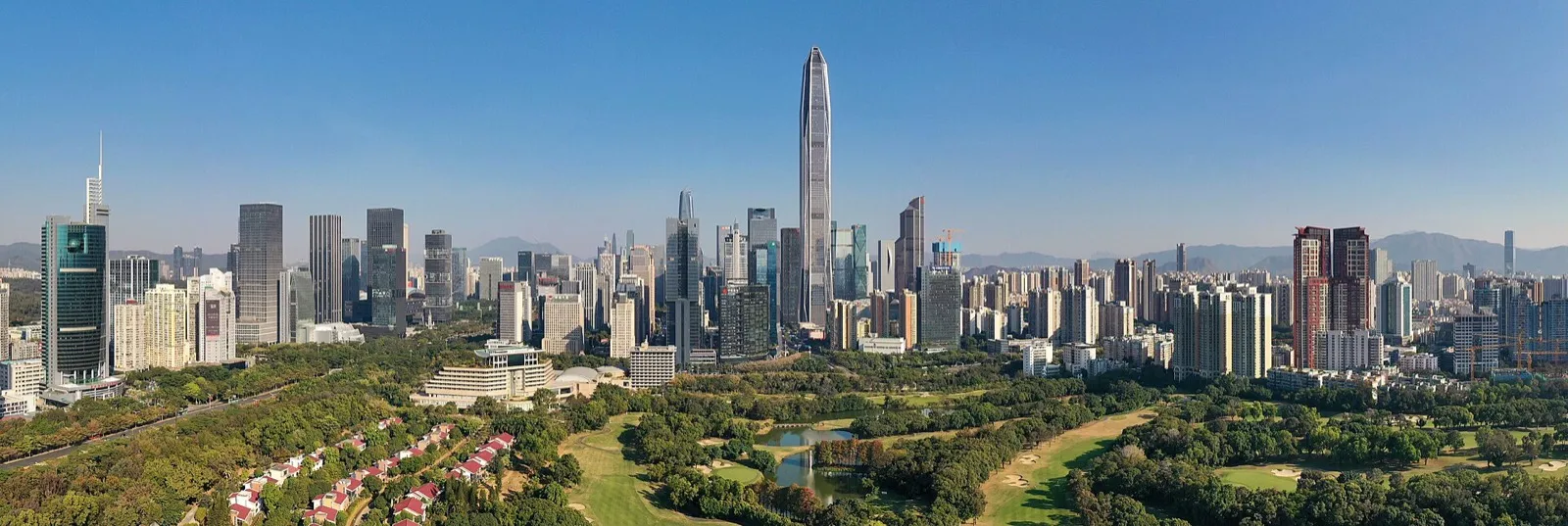
Shenzhen is the most improbable city in China: a border county of a few hundred thousand people in 1980, now a metropolis of 17.5 million that invented nothing less than the template for the modern Chinese city. Honest framing first: it is more livable than must-visit, and it does not offer what the heritage cities do. What it does offer is original — the 116th-floor view over the wildest skyline on earth, the OCT-LOFT galleries in converted factories, the painting workshops of Dafen village, and a real beach an hour from downtown. For travelers from Europe and North America it works best in two ways: as a design-and-tech stop on a Guangdong route, or as an easy mainland extension of a Hong Kong trip, reached in under 15 minutes by high-speed rail or on foot across the Futian border.
Top sights at a glance
No. 1
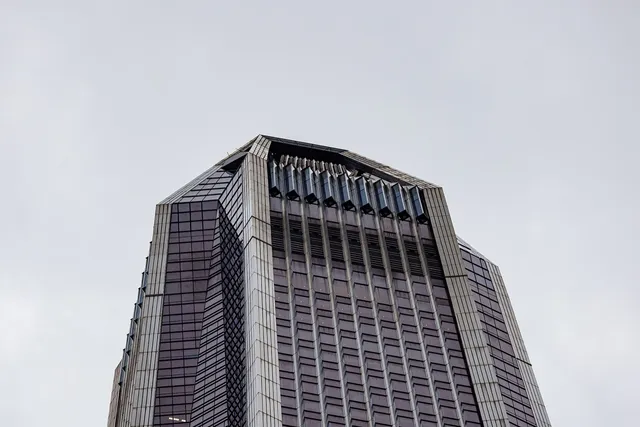
The Futian Skyline & Ping An Tower
Futian is where Shenzhen shows off: a forest of supertalls around the civic axis, crowned by the 599-meter Ping An Finance Center, the tallest building in the city and among the tallest on earth. The Free Sky observation deck on the 116th floor puts you at about 548 meters over the experiment — glass to the horizon, Hong Kong's hills visible on clear days. Lianhuashan Park's hilltop, free and opposite, gives the classic panorama down the axis.
Good to know · Free Sky costs about RMB 200, open daily 10 am–8 pm (last entry 7:15 pm) as of September 2026; book online via the official channels or Trip.com and take the metro to Shopping Park station, exit D. For the free alternative, climb the lawn paths of Lianhuashan Park to the Deng Xiaoping statue at sunset.
No. 2
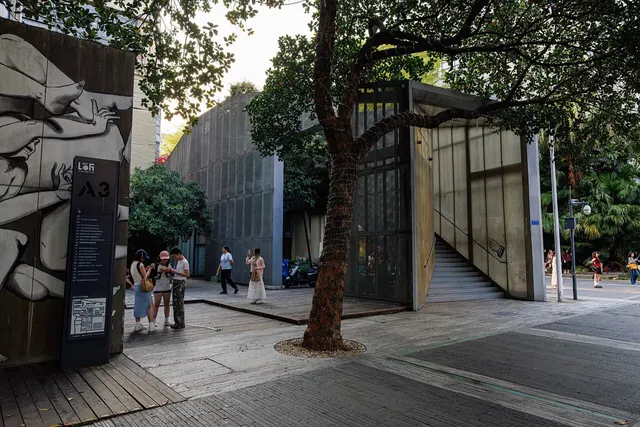
OCT-LOFT Creative Park
Shenzhen's answer to Shanghai's M50 or Beijing's 798: a 1980s electronics factory compound in the Overseas Chinese Town district, converted in the 2000s into a low-rise campus of galleries, independent bookshops, design studios, cafes and live-music rooms. It is the best single place to feel the city's self-image — young, artistic, self-invented — and everything of substance, from contemporary art shows to the annual jazz festival, is free to enter.
Good to know · Free entry; galleries keep daytime hours while cafes and bars run into the night. Take Metro Line 1 to Qiaocheng East station and walk about five minutes north. Late afternoon into evening is the sweet spot; check what is on at the OCAT galleries before you go.
No. 3
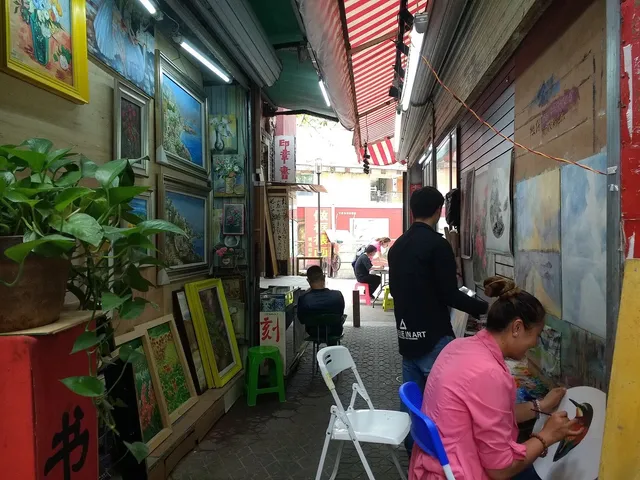
Dafen Oil Painting Village
A former urban village that became the world's most famous painting workshop: since the late 1980s, thousands of trained painters have turned out hand-painted replicas of Van Goghs and Vermeers by the million from Dafen's narrow lanes. The copy trade has faded in the AI-and-e-commerce era, but the village remains fascinating — working studios, galleries of original art, and the chance to commission a portrait of yourself in the style of the old masters, often within days.
Good to know · Free to wander, liveliest mid-morning to late afternoon. Take Metro Line 3 to Dafen station. Expect hard selling for replica canvases; the more interesting stops are the studios doing original work and the small Dafen Art Museum. Negotiate everything.
No. 4
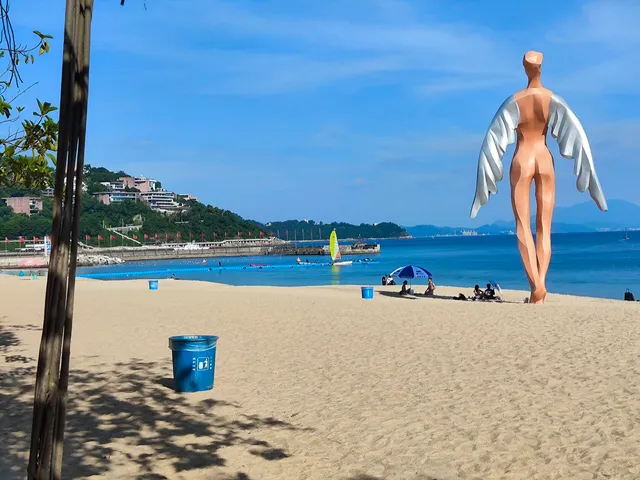
Dameisha Beach
Shenzhen is not all glass and concrete: along its eastern coast in Yantian district, Dameisha is the city's big free public beach — a broad crescent of sand framed by green mountains, with a long promenade, swimming in summer and a boardwalk that connects on foot to neighboring Xiaomeisha. On a blue-sky weekend it fills with a million-barbecue city unwinding, which is itself the sight: the megacity at leisure.
Good to know · Entry is free; hours run roughly 6:30 am–11 pm in the May–October peak season and 7:30 am–10 pm otherwise as of September 2026, and a same-day WeChat reservation has been required at peak periods — ask your hotel or check the Yantian district's official account. Metro Line 8 runs to Dameisha station; allow about an hour from central Futian.
No. 5
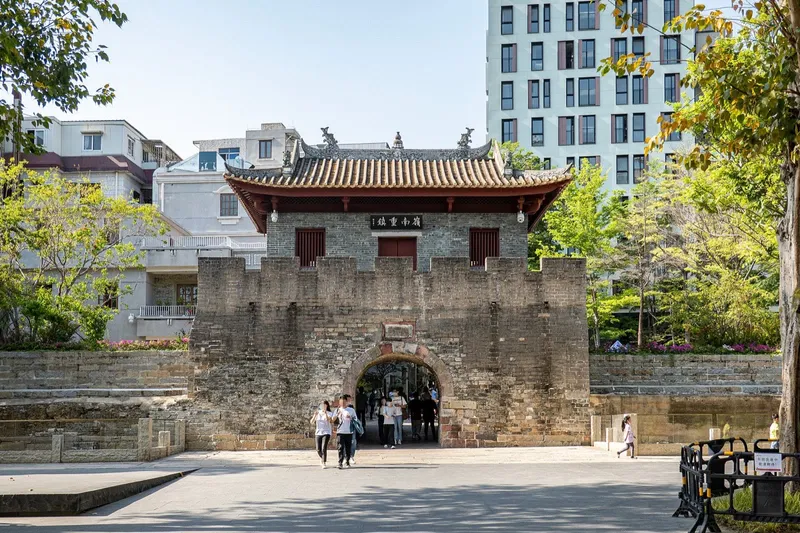
Nantou Ancient City
The counterargument to 'Shenzhen has no history': Nantou was the seat of regional government from the Eastern Jin dynasty — nearly 1,700 years ago — and remained the administrative heart of Bao'an county until the special economic zone moved the story north. Recent renewal restored the old city gates, temples and lanes and filled them with small museums, galleries and snack stalls, all inside a live urban village. It is Shenzhen's past and present in one walk, and admission is free.
Good to know · Free and open all day as a district; individual museums keep their own hours. Take Metro Line 12 to Nantou Ancient City station. Go late afternoon into the evening, when the lanes fill with street food; pair it with the Shenzhen Bay waterfront a short ride south.
No city in China asks more of your expectations than Shenzhen, so set them honestly. This is not a destination of temples and old streets — Nantou’s 1,700-year lanes are the exception that proves it — and it can honestly be described as more livable than must-visit. What Shenzhen offers instead is the spectacle of the most audacious urban experiment on earth: a border county of a few hundred thousand people in 1980, now a metropolis of 17.5 million whose skyline, metro system and design scene all rank among the world’s largest. It suits three kinds of travelers: the design-and-architecture curious, the tech-curious who want to see where their gadgets are imagined, and anyone based in Hong Kong who wants to step onto the mainland for a day without ceremony — the high-speed rail crossing takes under fifteen minutes. Give it a long day from Hong Kong, or two days as the southern bookend of a Guangdong route.
A Bit of History
The founding story everyone repeats is that Shenzhen rose from a “small fishing village.” The truth is better. The area was organized as a commandery seat as early as the Eastern Jin dynasty in 331 AD, with its government at Nantou, and for the next sixteen centuries it was Bao’an county — a region of walled Hakka villages, salt fields, pearl fisheries and a Ming-dynasty fortress at Dapeng built in 1394 to fight coastal pirates. Right up to the 1980s it was best known for one thing: it bordered Hong Kong, and its residents kept risking their lives to swim across.
Then came the experiment. In 1979 the county became the city of Shenzhen, and in August 1980 Deng Xiaoping declared 327 square kilometers of it a Special Economic Zone — the first in China — where market economics, foreign investment and wage labor could be tested without redesigning the country. The zone boomed beyond anyone’s model: by the 2020 national census the city held 17.56 million people, nearly all of them migrants or children of migrants, making it China’s youngest major city in age and its most self-selected in temperament.
The economy evolved in decades rather than centuries: low-cost manufacturing through the eighties, hardware and the stock exchange in the nineties, then the creation of companies that became global names — Huawei in telecoms, Tencent in games and social media, DJI in drones, BYD in electric cars. In 2008 UNESCO named Shenzhen a City of Design, the first in China, an official nod to what the studios of OCT-LOFT had already made obvious. The city’s own museum of this era is the street itself: each district is a record of what the experiment felt like at that moment.
Culture & Daily Life
Shenzhen has no natives in any meaningful sense — the local saying is “once you come, you are a Shenzhener” — and that defines daily life. Mandarin, not Cantonese, is the default street language; the median resident is in their early thirties; restaurants span every Chinese province because every province lives here. What looks from outside like a workaholic monoculture is, on the ground, a migrant city’s normal texture: parks full of pick-up badminton, malls that double as town squares, a café-and-cycling scene out of proportion to the city’s age.
The physical environment is the city’s best-kept secret. Shenzhen is green in a way its neighbors are not — roughly half the land is protected as parks, mountains or coastline, and the streets are lined with the banyans and bougainvillea of a genuine subtropical climate. An “urban village” — a dense village of self-built towers swallowed by the metropolis — sits in the middle of districts that would otherwise look like Dallas; they are where the city’s cooks, couriers and painters live, and Dafen and Nantou (below) are the two worth walking.
Practical notes for visitors: English signage is good on the metro but thin elsewhere; Alipay and WeChat Pay run everything, from metro gates to beach reservations (see our payments guide); and the climate is Hong Kong’s — hot and humid from May to September, mild and dry from October to December. Life runs fast; the exception is the weekend, when the whole city relocates to its mountains and beaches.
Nature & Day Trips
For a city associated with construction cranes, Shenzhen is remarkably well supplied with landscape. Wutong Mountain, at 944 meters the highest point inside the city, is a half-day stair climb through cloud forest to a summit view over both the skyline and Hong Kong’s hills. The Shenzhen Bay boardwalk threads miles of mangrove-edge waterfront — flat, free and the city’s favorite evening run — while the Dapeng Peninsula to the east keeps the oldest things around: the 1394 Dapeng Fortress, a walled garrison town, plus the wildest beaches at Xichong and Dongchong, reachable by bus and a hike.
The obvious day trip, though, needs no bus. Hong Kong sits across the border, and the connections are the fastest on earth: the high-speed rail link runs from West Kowloon to Futian station in about 14 minutes, two land checkpoints — Futian and Shenzhen Bay — cross on foot or by coach, and the crossing is processed as a normal border movement (most foreign passports need a visa or qualify for a transit exemption; see our visa-free entry guide). The reverse trip is equally common: travelers based in Shenzhen spend weekends in the Hong Kong islands. Macau is also feasible by ferry and land route but is a longer haul.
Food & Drink
Shenzhen eats like the migrant country it is: there is no single Shenzhen cuisine, because the city imported every one. The Cantonese base is excellent and unavoidable — roast goose, steamed fish, dim sum of a standard that would pass in Guangzhou next door — and the Hakka tradition of the old Bao’an county survives in stuffed tofu and braised pork dishes. Then the provinces arrived: Chaozhou beef hotpot with its anatomical cuts, Yunnan mushroom broths, Xinjiang grills, Hunan fire, Sichuan numbing, Dongbei dumplings, all served with their home-province exactness in strip-mall storefronts.
Two local habits are worth copying. First, seafood: along the coast at Shekou and Yantian, markets and seafront restaurants serve the day’s catch cooked to order — you choose from tanks, they weigh and cook, and a feast costs far less than the equivalent in Hong Kong. Second, hotpot as weekend religion: coconut-chicken hotpot, a Hainanese import this city adopted as its own, is the default group meal.
Geographically, the action follows the districts: the food streets of Coco Park and Futian’s shopping belt for density; OCT Harbour and Shekou Sea World for waterfront terraces and imported beer; urban-village lanes like those at Nantou for the most honest cheap eats in town. Mid-range meals run US$6–12 a head; the foreign-chef scene, a function of the tech industry, is the priciest in South China after Hong Kong.
Top Sights
The Futian Skyline: Ping An Tower
Start at the top, because Shenzhen’s first argument is vertical. Futian, the central district, packs one of the densest clusters of supertalls on the planet around a civic axis of parks and culture halls, and the Ping An Finance Center rides over all of it at 599 meters and 118 floors — the tallest building in the city and among the tallest on earth. Its public face is the Free Sky observation deck on the 116th floor, at roughly 548 meters: indoor glass all around, a small sky-walk section, and a view that compresses the whole experiment into one glance — towers to the horizon, the border rivers winding toward Hong Kong’s hills, container ships in the strait.
Go in the last hour of daylight and watch the city switch on; Shenzhen’s light show culture is serious, and on weekend evenings the towers across Futian run coordinated LED performances. Tickets cost about RMB 200 as of September 2026, hours are 10 am–8 pm with last entry at 7:15 pm, and booking through the official channels or Trip.com with Alipay/WeChat is the smooth path; Shopping Park station on the metro is the stop. The free counterpart is Lianhuashan Park across the axis: a twenty-minute hilltop walk puts you level with the middle of the skyline, at the feet of the bronze Deng Xiaoping, whose pointing gesture started all of it.
OCT-LOFT Creative Park
Shenzhen’s cultural identity lives in converted factories. OCT-LOFT is the former eastern industrial zone of the Overseas Chinese Town district — a 1980s electronics-factory campus — recycled from the mid-2000s into the city’s arts quarter: whitewashed saw-tooth roofs, old machinery left as sculpture, and in between a dense walkable grid of contemporary galleries (the OCAT constellation), independent bookshops, design studios, craft-beer rooms, cafes and B10 Live, the city’s essential music venue. The annual OCT-LOFT Jazz Festival and creative festival give it a calendar; the everyday cafe-and-bookstore life gives it a pulse.
What makes it worth a traveler’s half-day is what it says: this is a city that reached prosperity and immediately spent it on art spaces — and filled them. Everything is free to enter; galleries keep daytime hours, cafes and bars run late, and the crowd on a Saturday is the youngest you will see anywhere in China short of a university. Metro Line 1 to Qiaocheng East station leaves a five-minute walk north. Combine it with the Shenzhen Bay boardwalk a short ride south for the city-as-park experience.
Dafen Oil Painting Village
Dafen is Shenzhen in miniature: a village that found a market nobody planned. Painters from Hong Kong and the mainland set up here in 1989, and within a decade the settlement was producing hand-painted copies at industrial scale — at its peak, a commonly cited share of the world’s oil-painting replicas, though exact figures are hard to verify. Van Gogh’s sunflowers multiplied by the ten thousand; trainee painters from art academies across China worked rows of easels in four-story walk-ups; the exports went to hotel lobbies and motels everywhere.
The copy trade has thinned since — automation, e-commerce and rising wages saw to that — and the village has pivoted toward original art, galleries and experience tourism. What a visitor gets now is a compact urban village of lanes where paintings hang floor to ceiling, working studios take commissions (a master-copy or a portrait of your own face, often deliverable in days), and a small free art museum tells the story. It is free to wander and half a day at most; Metro Line 3 to Dafen station drops you at the door. Watch the difference between the souvenir stalls and the serious studios — and know that haggling is the local custom, not rudeness.
Dameisha Beach
The megacity takes a breath here. Dameisha is Shenzhen’s flagship public beach: a broad, free crescent of sand on the Yantian coast, half an hour east of downtown through the Wutong Mountain tunnel, backed by forested peaks and fronted by a long promenade of sculptures, boardwalk and barbecue lawns. Swimming runs through the warm months, lifeguarded within marked zones; the rest of the year the beach belongs to strollers and kite flyers, and the traffic-free boardwalk west toward Xiaomeisha is one of the region’s best seaside walks.
The appeal is partly sociological: on a warm weekend this is where the city that built itself goes to play — families under rented parasols, adults in full snorkel gear fifty meters from rented duck boats — a very Chinese beach scene that many foreign visitors never see. Practicalities: entry is free, hours run roughly 6:30 am–11 pm in the May–October season and 7:30 am–10 pm otherwise as of September 2026, and during holidays and peak summer weekends the park has used a same-day WeChat reservation with visitor caps, so check before setting out. Metro Line 8, extended to the coast in 2023, terminates at Dameisha station — a rare thing, a beach with its own subway stop.
Nantou Ancient City
If you only take one thing from Shenzhen, make it the argument this place settles. Nantou was the administrative seat of the Pearl River delta’s eastern shore from 331 AD — the government of Bao’an county, the jurisdiction that later became Shenzhen — a walled town of gates, temples and clan halls standing where every map of the region pointed for sixteen centuries. The special economic zone made it obsolete, and it spent forty years as a low-rise urban village wrapped by towers; a renewal completed in the last few years restored the walls, gates and key buildings and threaded the lanes with small museums, galleries, craft shops and food stalls.
The result is neither a dead heritage park nor a demolished village but a working quarter where 1,700 years of continuity are legible on foot — the old city gate under apartment towers, a converted farmhouse showing the archaeology, snack queues two doors from a Qing-era yamen. Everything is free to enter as a district; individual museums keep their own hours. Metro Line 12 to Nantou Ancient City station serves it directly; go from late afternoon into evening, eat your way through the lanes, and let it recalibrate the “fishing village” story you arrived with.
Getting There & Around
Shenzhen Bao’an International Airport (SZX) sits on the western shore, linked to central Futian by Metro Line 11 in about half an hour — one of the smoothest airport rails in China — or by taxi in similar time. By rail, the star is the express link: high-speed trains run from Hong Kong West Kowloon to Futian station in about 14 minutes, with well over a hundred departures daily and one-way fares starting around US$11 as of September 2026, immigration processed at the stations themselves. Guangzhou is 30–50 minutes further up the same corridor.
The border offers alternatives: Futian checkpoint crosses on foot to Hong Kong’s MTR at Lok Ma Chau, operating roughly 6:30 am–10:30 pm; Shenzhen Bay handles coaches and cars with longer hours; Huanggang runs around the clock (see our visa-free entry guide for passport rules). In town, the metro is one of the world’s largest networks — clean, bilingual, covering every sight on this page — and Didi fills the gaps. For the beach, Line 8 is the ride; for the border, Futian is usually the fastest.
Where to Stay
Match the district to the mission. Futian, around the Convention & Exhibition Center and Shopping Park stations, is the practical default: inside the skyline, a short walk or one metro stop from the Hong Kong border crossing, and surrounded by food streets — best for first-timers and anyone crossing from Hong Kong. Nanshan, around OCT-LOFT and Shekou Sea World, is the style choice: galleries, cafes, the bay-side promenade and the most walkable evenings in town — best for design-minded travelers and longer stays. Luohu, the original 1980s downtown by the border, is the budget option: older, grittier, direct rail to Hong Kong at Lo Wu, and the cheapest large-hotel rooms near the center.
Skip the theme-park districts of western Nanshan — Window of the World and its siblings hold little appeal for travelers who have the originals an hour away by air — and book ahead during China’s public holidays, when beach and border districts alike fill with domestic travel.
Sources & verification (7)
- https://w000007.tabccc.com
- https://www.trip.com/trains/china/route/hong-kong-to-shenzhen/
- https://www.chinadiscovery.com/greater-bay-area-tours/hong-kong-to-shenzhen-visa.html
- https://en.wikipedia.org/wiki/Shenzhen
- https://en.wikipedia.org/wiki/Dafen,_Shenzhen
- https://en.wikipedia.org/wiki/Line_8_(Shenzhen_Metro)
- https://en.wikipedia.org/wiki/Line_11_(Shenzhen_Metro)