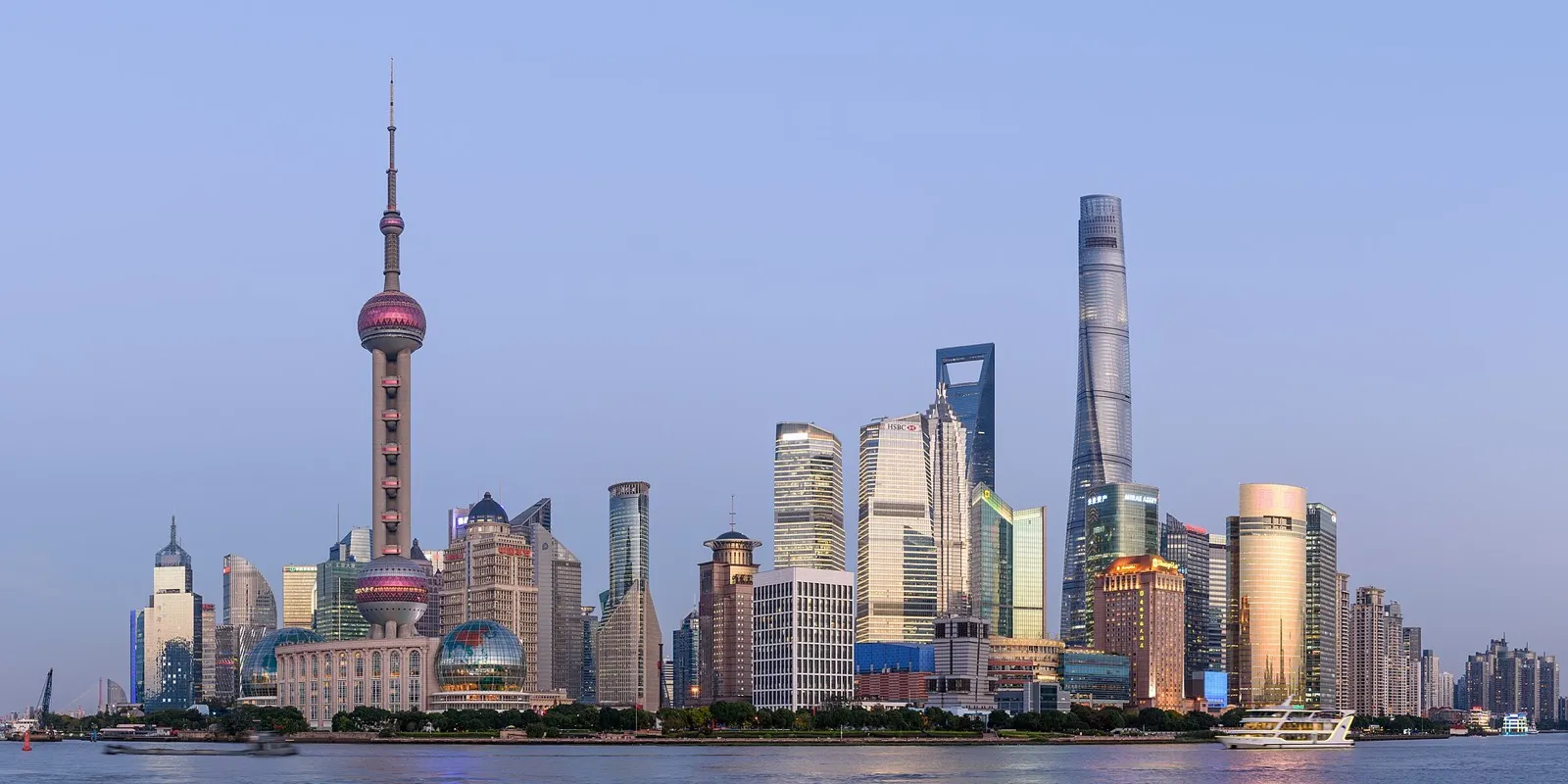
Shanghai is China's most international city and its easiest soft landing: English signage, world-class transit, and a century of treaty-port architecture pressed against one of the boldest skylines on earth. The core experience is a study in contrasts — walk the Bund's colonial riverfront at dusk, then watch the lights of Pudong ignite across the water; wander a 400-year-old classical garden in the morning and plane-tree-lined cafe streets in the afternoon. Add street-level food culture, the best coffee scene in Asia, and an easy half-day trip to the canals of Zhujiajiao, and you have the ideal first stop for first-time visitors who want China's big-city energy without a steep learning curve. Best for independent travelers who like walkable neighborhoods, eating well, and cities that reward wandering.
Top sights at a glance
No. 1
The Bund
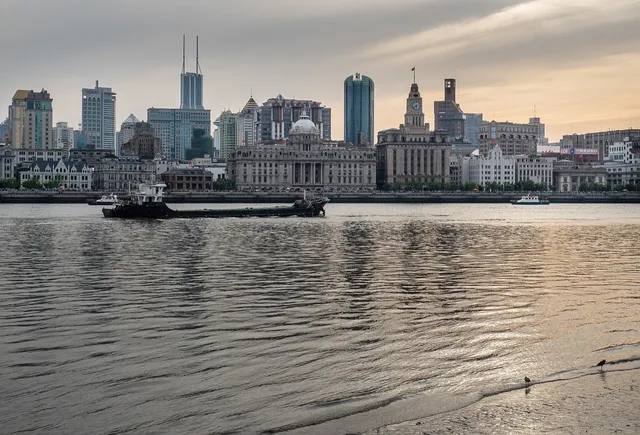
Shanghai's riverfront promenade is the city's signature sight: a graceful mile of 1920s banks and trading houses on one bank, and the space-age towers of Pudong across the Huangpu River. It is free, open around the clock, and at dusk it delivers arguably the single best urban view in China. Come once in daylight and again after dark — they are two different experiences.
Good to know · The promenade is free with no reservation needed. Arrive about 30 minutes before sunset for daylight photos, stay for the light show; building lights switch on around 7 pm in summer and 6 pm in winter and go dark around 10 pm. Metro Line 2 or 10 to East Nanjing Road, then a 10-minute walk.
No. 2
Pudong Skyline
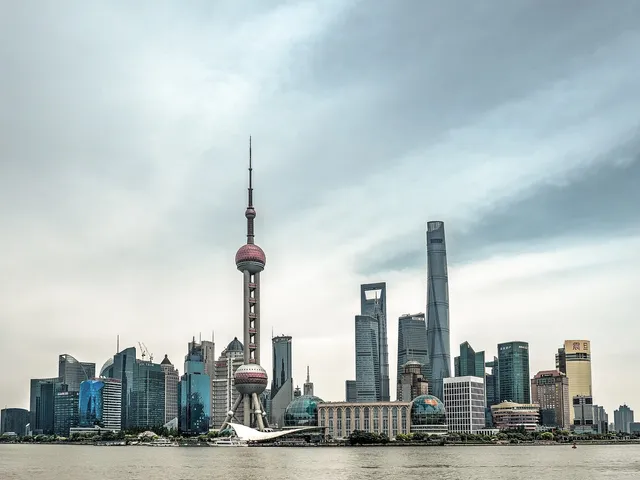
Across the river from the Bund, the Lujiazui district packs three supertall towers — the Oriental Pearl, the World Financial Center, and the 632-meter Shanghai Tower, China's tallest building — into a few blocks. The skyline is the view from everywhere in Shanghai, but you can also go up inside it: the Top of Shanghai Observatory on the 118th floor is one of the highest observation decks in the world.
Good to know · Tickets to the Shanghai Tower observatory cost about RMB 180 for adults as of September 2026; book online (official site or Trip.com) or via the official mini-program with Alipay/WeChat, and bring your passport for entry. Sunset slots sell out — reserve a day or two ahead.
No. 3
Yu Garden
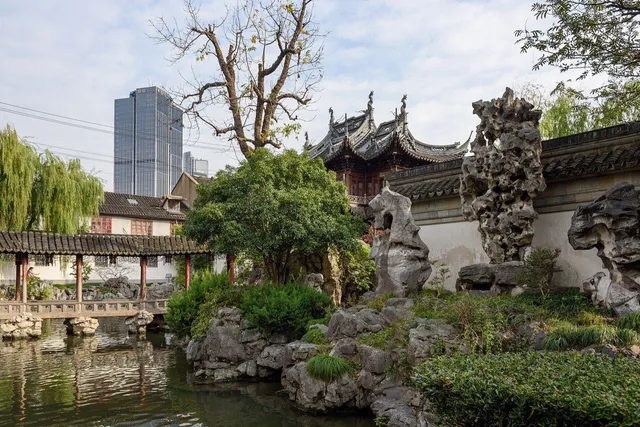
A classical Jiangnan-style garden laid out in 1559, Yu Garden is Shanghai's oldest surviving landmark: jagged rockeries, lotus ponds, latticed pavilions, zigzag bridges and the famous Jade Exquisite Rock compressed into two compact hectares. It sits inside the City God Temple bazaar district, so a visit pairs Ming-dynasty landscaping with a lively (and touristy) quarter of snack stalls, incense and tea houses.
Good to know · Entry costs about RMB 30–40 depending on season; buy via the official Yu Garden mini-program or at the gate (passport works at the ticket window). Go at the 8:30–9 am opening to beat tour groups. Reach it on Metro Line 10 or 14 to Yuyuan Garden station.
No. 4
Former French Concession
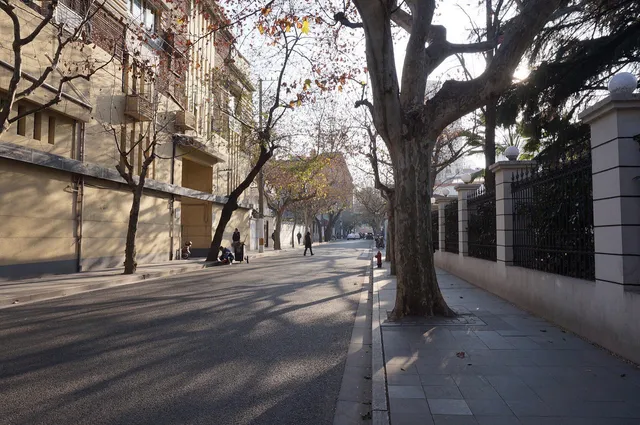
From 1849 to 1943 this was French-administered territory, and the plane trees, villas and corner cafes it left behind make up Shanghai's most pleasant walking. Streets like Wukang Road and Anfu Road mix 1930s apartment buildings with boutiques, bakeries and some of the thousands of cafes that make Shanghai the coffee capital it is. No ticket — just comfortable shoes and a free afternoon.
Good to know · Start at Wukang Mansion (Metro Line 10/11 to Jiaotong University, then walk) and wander south. Allow 2–4 hours; weekday mornings are quietest, weekends can be packed. Cafes and shops cluster along Wukang, Anfu and Yongkang roads.
No. 5
Zhujiajiao Water Town
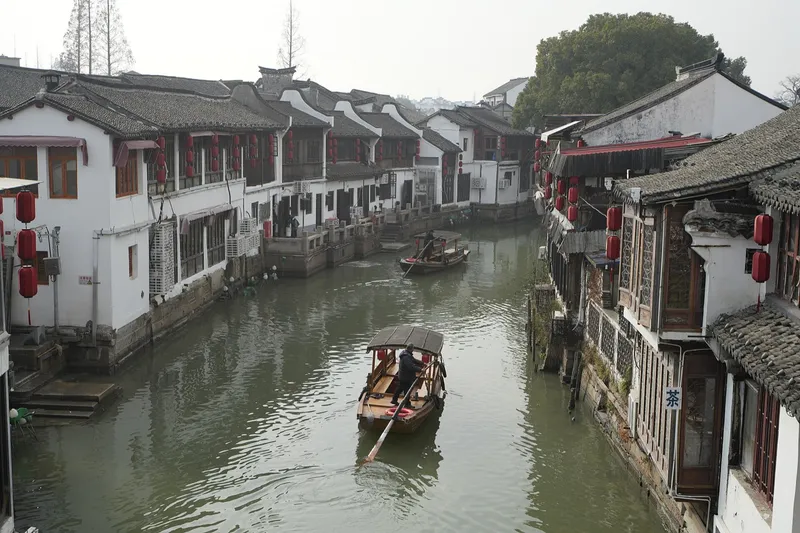
A 1,700-year-old canal town inside Shanghai's city limits, Zhujiajiao strings stone bridges, whitewashed houses and storefront temples along a web of narrow waterways. Entering the town is free — you can spend a half day drifting between bridges and snack stalls — and a combination ticket covers the interior sights such as Kezhi Garden. It is the easiest canal-town fix from any Chinese city.
Good to know · Take Metro Line 17 from Hongqiao Railway Station to Zhujiajiao station (about 40 minutes), then walk 10–15 minutes to the old town. The combo ticket for the paid sights runs about RMB 60; boats cost extra. Go on a weekday morning to dodge the crowds.
Beijing is where China shows itself; Shanghai is where China performs. Land at Pudong, skim the coastal fields on a 300-km/h maglev train, and within half an hour you are standing under some of the tallest towers ever built — a skyline that did not exist in any recognizable form before 1990. That speed is the point of Shanghai. It is the country’s most international city, its easiest place to land as a foreigner, and the best first stop for an independent trip: English signage is everywhere, the metro is enormous and idiot-proof, and a century of treaty-port history gives the streets a texture no other Chinese city can match. Come for the views, stay for the neighborhoods — this is a city best understood at street level, one plane-tree block and soup dumpling at a time.
A Bit of History
For most of its existence Shanghai was a modest market town on the Huangpu River, known for cotton and, later, for the opium that flowed through it. That trade is what put it on the world map involuntarily: after the First Opium War, the 1842 Treaty of Nanjing forced the port open to foreign commerce. Britain, the United States and France carved out self-governing concessions along the river — sovereign-in-name-only districts where foreign law applied — and Shanghai spent the next century as the treaty port, the “Paris of the East” of 1930s legend.
The Bund, the embankment where the foreign banks built their headquarters, became the financial face of the era; locals still call the row of buildings a “museum of world architecture,” and the nickname fits. The concessions also made Shanghai a refuge. Between the wars the city absorbed White Russian exiles and, notably, roughly 20,000 Jewish refugees who settled in the Hongkou district — the Shanghai Jewish Refugees Museum documents how the city’s open-port status let them arrive without visas when almost nowhere else would take them. Politics took root here too: the Chinese Communist Party held its first congress in 1921 in a shikumen townhouse in what is now the Xintiandi shopping district.
War ended the party. Japanese occupation from 1937, then civil war, then the communist victory in 1949 closed the ports and the banks; the concessions were long gone and the foreign firms followed. For four decades Shanghai was repositioned as a socialist industrial workhorse — enormous, productive and deliberately unglamorous.
The reset came in 1990, when the central government designated the rice fields of Pudong, across the river from the Bund, as a new development zone. What followed is probably the fastest large-scale urban transformation anywhere, ever: the Oriental Pearl rose in 1994, Jin Mao in 1999, the World Financial Center in 2008, the 632-meter Shanghai Tower in 2015. Today the city counts nearly 25 million people and the world’s busiest container port, a rank it has held since 2010. The skyline is barely older than the travelers photographing it — and that, more than anything, explains the city.
Culture & Daily Life
Shanghai’s cultural personality is summed up by the word haipai — “Shanghai style” — which historically meant an openness to borrowing whatever works, from anywhere, and making it local. You see it in the architecture, in the food, and in the fact that many Shanghainese grow up speaking three registers: the local Wu dialect (Shanghainese, mutually unintelligible with Mandarin) at home, Mandarin in the street, and enough English to get by in hotels, museums and cafes.
Daily life here runs on noticeably different rails than the stereotype of China. People queue. Metro cars have quiet cars. There is a coffee shop on what feels like every block — by most counts Shanghai has more cafes than any other city in the world, several thousand of them, from three-generation teahouse-adjacent roasteries to mall chains — and weekend brunch culture that would feel at home in Melbourne or Brooklyn. Spend a Sunday morning in a neighborhood park instead: groups doing taichi and ballroom dancing, old men flying kites, and in People’s Park, the famous “marriage market” where parents advertise their single children on laminated sheets.
The city’s art scene is concentrated along the West Bund, where a strip of converted industrial buildings now holds several major museums, and in the M50 art district upriver. And after dark, Shanghai is one of the few Chinese cities where you can wander at midnight and find life — noodle shops, convenience stores, riverside strollers — at full volume. Practical note: life runs on WeChat and Alipay here just like everywhere in China, so sort out mobile payments before you arrive.
Nature & Day Trips
Shanghai is flat, riverine and heavily built — nobody comes for wilderness — but it escapes the concrete more easily than you might expect. The riverside itself is the best free amenity: continuous walking and running paths line both banks of the Huangpu, with landscaped stretches well beyond the famous Bund. Century Park is the big green lawn of Pudong; Chongming Island, an hour north by bus or car, is a slow, agricultural slab of wetlands and cycling routes in the river mouth.
The real day-trip payoffs sit an hour away on the high-speed rail network. Suzhou, 25–30 minutes from Shanghai by train, is the classical-garden capital of China, a UNESCO-listed ensemble of Ming and Qing garden compounds laced with canals. Hangzhou, 45–60 minutes away, wraps the West Lake — arguably China’s most celebrated body of water — in pagodas, tea fields and causeways. And for water-town atmosphere without leaving the metro system, Zhujiajiao is a 40-minute ride on Line 17 (covered below).
Food & Drink
Shanghai eating is its own school, usually called benbang (“local”) cuisine, and it skews sweet, braised and soy-forward. The dish everyone knows is the xiaolongbao, the soup dumpling invented in the nearby town of Nanxiang — paper-thin wrappers around pork and a jellied broth that turns to soup as it steams. Its cousin the shengjianbao, a pan-fried pork bun crisp on the bottom and soupy in the middle, is arguably the more beloved local breakfast. Order both; eat them over the spoon, not in the air.
Beyond dumplings, look for hongshao rou (red-braised pork belly, glossy and sweet), scallion-oil noodles, and, if you visit in autumn, hairy crab — the season’s obsessive delicacy, eaten slowly with vinegar and ginger. Breakfast street-side is a genre of its own: sesame-crusted da bing flatbread, ci fan tuan sticky-rice rolls, and fresh soy milk, all for a few yuan.
Geographically: the City God Temple quarter near Yu Garden is the classic (touristy but honest) place to graze on traditional snacks; the former French Concession owns the cafe-and-brunch scene; and ordinary street breakfast carts do the best cheap eating in the city before 9 am. A solid sit-down local meal runs RMB 60–120 per person; dumpling-shop lunches can cost less than a metro ride. Coffee prices, in typical Shanghai fashion, are closer to Seattle’s than to the rest of China’s.
Top Sights
The Bund
The Bund (Zhongshan Dong Yi Lu) is the reason most postcards of Shanghai exist: a curve of riverfront where 52 banks, hotels and trading houses built in the 1910s–1930s face the tower cluster of Pudong across a half-kilometer of water. It is a public promenade, free at all hours, and the experience changes completely with the light. In the morning you get joggers, taiji groups and clean architectural photos. At dusk, the crowd gathers for the main event: around 7 pm in summer (6 pm in winter) both banks switch on their lights, and the Pudong skyline runs its nightly performance until roughly 10 pm.
Two practical notes. First, the riverside ferry across the Huangpu costs just a few yuan and is the cheapest skyline cruise in China; tourist boats with commentary cost far more and add little. Second, the promenade is at its most packed on weekend evenings and holidays — for the same view with a fraction of the people, walk north ten minutes along the river toward the Waibaidu (Zhapu Road) Bridge. Metro Line 2 or 10 to East Nanjing Road puts you a ten-minute walk away.
Pudong Skyline
Everyone sees Pudong from the Bund; the better move is to also go up inside it. The pick is the Shanghai Tower, China’s tallest building at 632 meters. Its “Top of Shanghai” Observatory wraps the 118th floor, reached by elevators that are among the fastest on the planet — you are at 546 meters in under a minute. Adult tickets run about RMB 180 as of September 2026, with discounted slots online; book through the official site or mini-program and pay with Alipay or WeChat, and bring your passport for entry. Time your visit for the hour before sunset and you get daylight, dusk and the lights-on skyline in one ticket.
The Oriental Pearl, the pink-spheres-and-tripod tower from every 1990s photo of the city, offers a more retro-futuristic ride up (and a glass-floored sightseeing section), while the World Financial Center’s observation deck has an open-air skywalk near its top. Honestly, one deck is enough — the view of the Bund side of the river is the better half. Down at street level, Lujiazui itself is corporate and, on foot, inconveniently scaled; treat it as a viewpoint, not a neighborhood.
Yu Garden
Yu Garden is what Shanghai looked like before the treaties: a classical Jiangnan garden begun in 1559 by a Ming-dynasty official for his parents, and rebuilt mid-20th-century after war damage. In two compact hectares it compresses everything the genre does best — crooked rockeries, koi ponds, latticed pavilions, the famous Jade Exquisite Rock, and zigzag bridges built deliberately crooked because spirits, per legend, only travel in straight lines. It can feel crowded even on thin days, but early opening (around 8:30–9 am, hours vary seasonally) is genuinely peaceful.
The garden’s ticket runs roughly RMB 30–40 depending on season; buy via the official mini-program with Alipay/WeChat or at the window (passports are accepted). Everything around it is free and half the fun: the City God Temple bazaar district, the Nine-Bend Bridge and the mid-lake Huxinting Teahouse, where you can drink tea served the old way. In the weeks around Chinese New Year the Lantern Festival turns the bazaar into the city’s most photogenic crowd — magical, and packed enough that tickets surge and sell out. Metro Line 10 or 14 to Yuyuan Garden station.
Former French Concession
Between 1849 and 1943 the French ran a self-governing concession southwest of the old Chinese city, and they planted it with London plane trees that now arch over whole districts. The result is Shanghai’s most charming walking, and its most European — low-rise 1920s villas and apartment buildings, corner bakeries, boutiques, and cafe after cafe. Start at Wukang Mansion, a 1930s apartment building shaped like a flattened ocean liner that anchors the corner of Wukang Road, then let the side streets pull you: Anfu Road for shops and coffee, Yongkang Road for food, the quieter lanes in between for actual residents’ lives.
Deeper in, Xintiandi shows what happens when shikumen — the distinctive stone-gate townhouses of the era — get upscale-mall treatment; one of those townhouses hosted the Communist Party’s first congress in 1921 and is now a free museum. Tianzifang, a warren of converted lane-house studios and snack stalls, is grittier and more fun, though thoroughly touristed. None of it requires a ticket; budget two to four hours and go on a weekday if you can. Metro Line 10 or 11 to Jiaotong University station for Wukang Road, or South Shaanxi Road for Xintiandi.
Zhujiajiao Water Town
Zhujiajiao is a functioning canal town — 1,700 years old, older than Shanghai’s fame by about 1,650 years — that ended up inside the metro system when the city boundaries expanded. Five stone bridges cross its central channel, the oldest and loveliest being Fangsheng Bridge; whitewashed houses lean over the water; and the main streets sell the same excellent street food you find in the city, plus the town’s own specialties. Entering the town is free. A combination ticket, about RMB 60, opens the interior sights — Kezhi Garden, a temple, a few small museums — and is worth it if you have the time; hand-rowed boats putter the canal for an extra fee.
The logistics are the best part: Metro Line 17 runs from Hongqiao Railway Station to Zhujiajiao station in about 40 minutes, then it is a 10–15 minute walk to the old town. Total transport cost is a few yuan each way, which makes this the cheapest countryside day in China. Go on a weekday morning; by early afternoon the day-trip buses arrive and the narrow lanes thicken. A half day is right — pair it with an afternoon back in the city.
Getting There & Around
Shanghai has two airports. Pudong (PVG) handles most international flights and is far east of downtown — the maglev train gets you to Longyang Road in about eight minutes at 300 km/h (the only commercial maglev of its kind), where Line 2 takes over; a taxi takes 60–90 minutes depending on traffic. Hongqiao (SHA) sits much closer to the center, handles mostly domestic flights, and is physically attached to Hongqiao Railway Station, the high-speed rail hub: Beijing is 4.5 hours, Suzhou 25–30 minutes, Hangzhou about an hour.
Inside the city, the metro is the answer — by route length it is the longest network in the world, with English signage and fares of roughly RMB 3–9. Buy single-journey tickets at machines (cash, card or scan) or set up the ride code in Alipay. Didi, China’s Uber, works well and accepts international cards; metered taxis are plentiful. This is, honestly, the most logistically forgiving city in China for first-time foreign visitors.
Where to Stay
Three areas cover most travelers. Around People’s Square and the Bund you trade some charm for location — walking distance to the waterfront, Yu Garden and Nanjing Road, which makes it the easy choice on a first visit. The former French Concession is the character pick: leafy, low-rise, full of cafes and small hotels, best for travelers who plan to spend evenings wandering neighborhoods rather than hitting checklist sights. Jing’an, just north of the Concession, balances the two — residential calm, serious metro connections, and some of the city’s best everyday food. Lujiazui in Pudong makes sense mainly if a skyline-view room is the point. Book anything with a river view early; the good ones are the first to go.