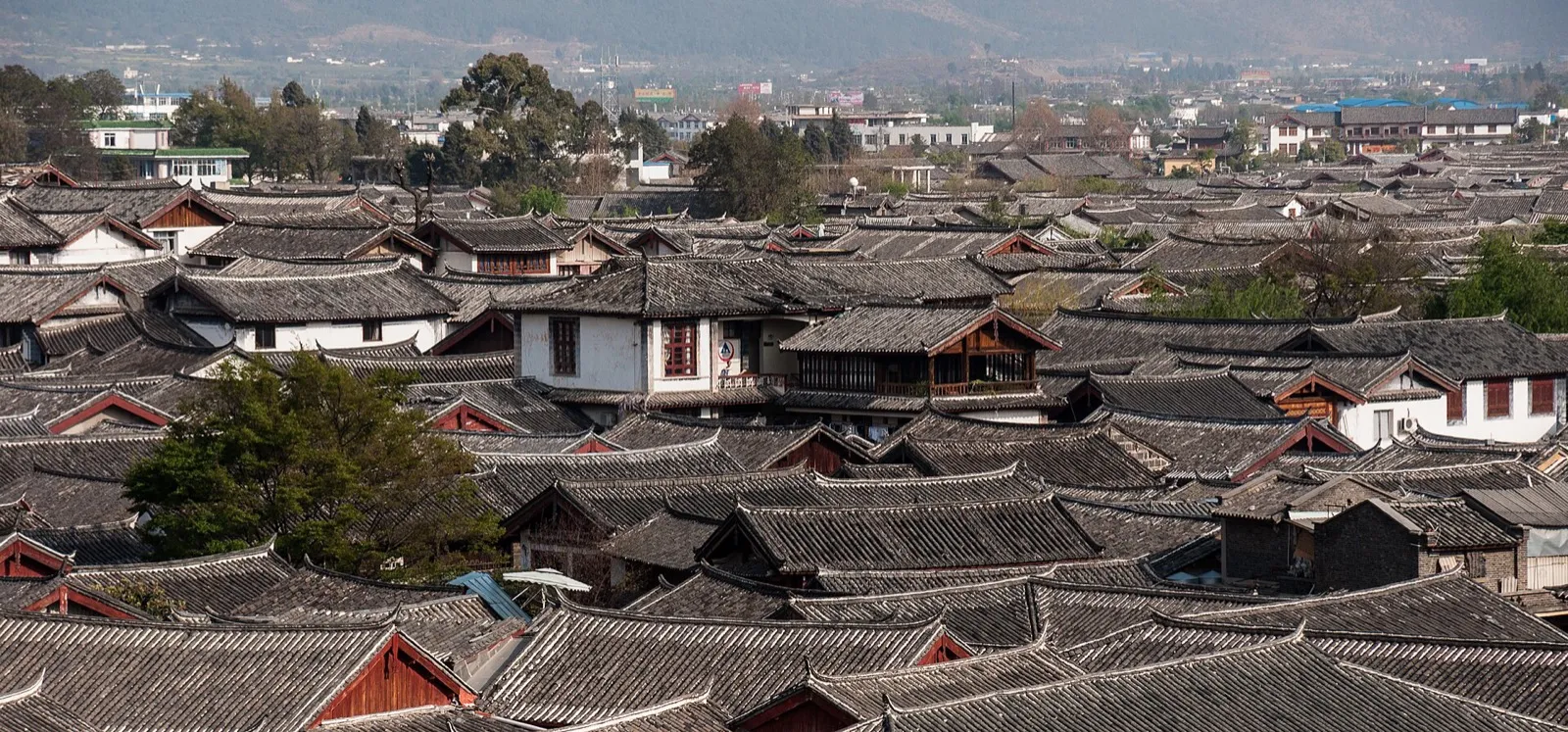
Lijiang sits on a 2,400-meter plateau in far northern Yunnan, where the wooden lanes and canals of a UNESCO-listed old town face the wall of Jade Dragon Snow Mountain across the valley. Once a caravan hub on the Tea Horse Road, it is the home of the Naxi people and their pictographic Dongba script, and its old quarters — Dayan, Baisha, and Shuhe — were collectively inscribed by UNESCO in 1997. Today it is one of China's most visited heritage towns, and honestly commercialized in the center; but it repays effort. Arrive early, sleep in a courtyard guesthouse, and use the town as a base for glacier viewpoints at 4,680 meters, the classic reflection pool at Black Dragon Pond, quiet Baisha village, and the walkways of Tiger Leaping Gorge. Lijiang suits travelers who want culture and big mountain scenery in one tidy base — and who will trade some crowds for both.
Top sights at a glance
No. 1
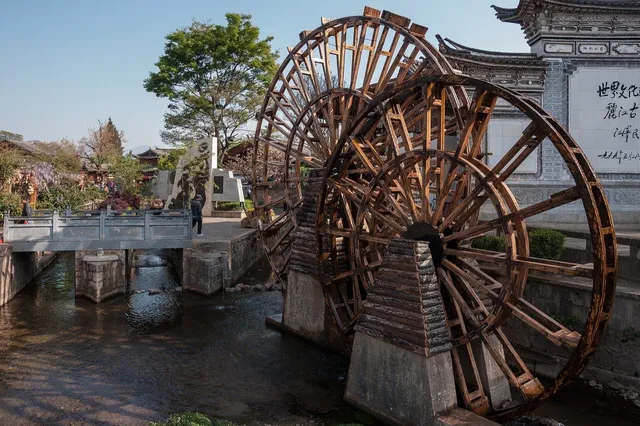
Lijiang Old Town
Dayan, the heart of Lijiang, is a car-free maze of timber houses, stone lanes, and little canals spanned by hundreds of bridges, with Sifang Street as its beating center. Home to the Naxi people for more than 800 years and a UNESCO World Heritage Site since 1997, it is free to enter and open around the clock — best at dawn, when the tour groups are still asleep and grandmothers wash greens in the channels.
Good to know · Entry is free, but the old-town maintenance fee — ¥50, valid for a year with unlimited entries (confirm it still applies on the official account when you book; as of September 2026) — is checked at points on the main streets, and its receipt is required at Black Dragon Pond and the Baisha murals. The Mu Residence (¥40, open 9:00–17:30) is the one paid sight worth your time inside town.

No. 2
Jade Dragon Snow Mountain
Thirteen peaks of limestone and glacier, fronted by the 5,596-meter summit of Shanzidou, form the mountain that defines every view in Lijiang. The big cableway lifts you from pine forest to a boardwalk at about 4,680 meters — high enough that altitude is a real consideration — past meadows, the Blue Moon Valley, and the yak pastures at its foot. It is the region's headline day out, and the park caps daily visitors, so planning ahead is essential.
Good to know · Park entry runs ¥100 plus ¥140 return for the Glacier Park cableway (as of September 2026). Tickets are capped and sell out days ahead in season — reserve via the official WeChat mini-program or Trip.com with your passport, and carry a warm layer; oxygen canisters are sold at the base station.
No. 3
Black Dragon Pond Park
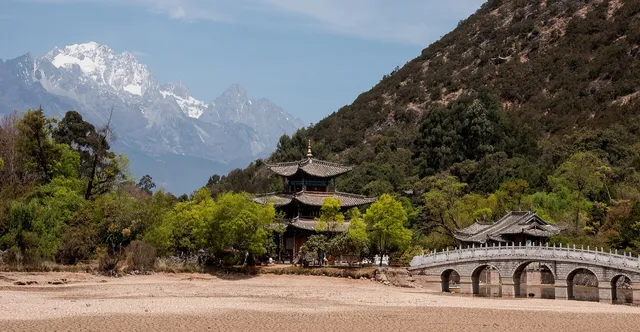
The park that holds China's most famous mountain postcard: still ponds at the foot of Elephant Hill, an arched pavilion, and the whole snow mountain doubled in the water. Laid out in 1737, it also shelters the Dongba Culture Museum and the research institute that rescued the Naxi pictographic script — a compact dose of both scenery and culture, twenty minutes' walk north of the old town's north gate.
Good to know · Entry is free with your old-town maintenance fee receipt, checked during opening hours, roughly 7:30 AM–9:00 PM (as of September 2026). Come early on a clear morning for the reflection shot before wind ruffles the surface — and note the ponds can run low in drought years.
No. 4
Baisha Village
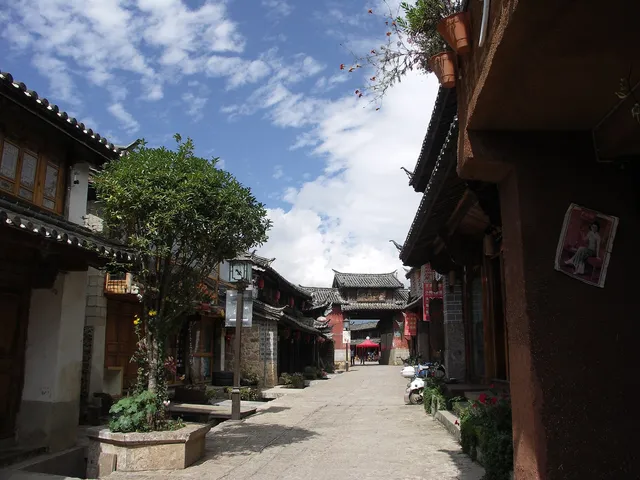
The oldest of Lijiang's three heritage settlements was the Naxi capital before Dayan, and it still feels like a working village: cobbled streets, courtyard houses, woodsmoke, and the snow mountain filling the sky at the end of the lane. Its murals, painted from the Ming into the early Qing, fuse Buddhist, Taoist, and Naxi imagery in one hall; Botanist Joseph Rock based himself here in the 1920s and 30s.
Good to know · The village is free to wander all day; the mural hall charges about ¥20 and opens roughly 8:00 AM–5:30 PM, with no photography inside (as of September 2026). Buses run from the old town for around ¥10, or it is an easy 30-minute bike ride from Shuhe.
No. 5
Tiger Leaping Gorge Day Trip
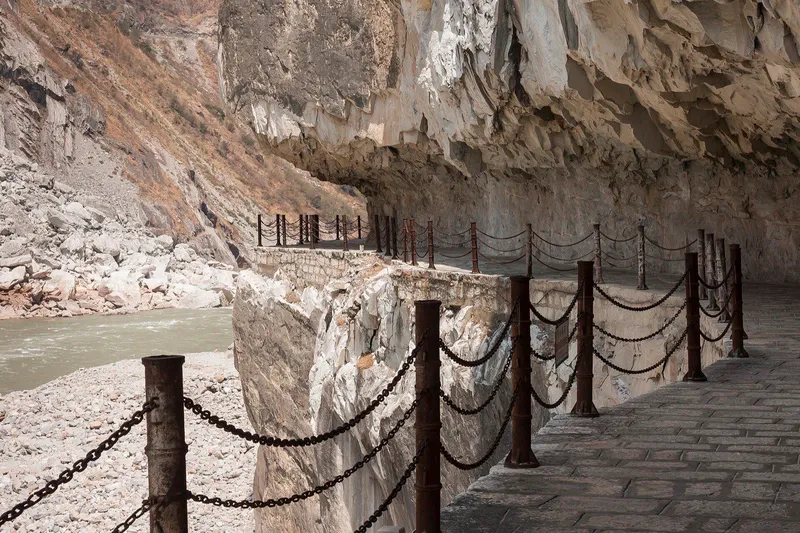
One of the deepest river gorges on Earth — nearly 3,800 meters from the Jinsha River to the peaks above — squeezes through a narrows so tight a tiger supposedly leapt it. A day trip from Lijiang covers the upper gorge walkways, where the river detonates through rock chutes within meters of the path; committed hikers return for the famous two-day high trail through villages and guesthouses.
Good to know · Entry is ¥65 from the Lijiang side and ¥45 from the Shangri-La side, open about 8:30 AM–5:30 PM (as of September 2026). Buses and tours take about two hours each way; a sightseeing elevator down to the lower platforms costs extra if you would rather skip the stairs.
Lijiang is the rare place that deserves both its fame and its caveats. The setting is outrageous: a roof of red-tiled timber at 2,400 meters, streams braiding between the lanes, and a 5,500-meter snow mountain standing over it all like a stage set. The culture is real — this is the homeland of the Naxi people, whose priests still write prayers in the world’s last widely used pictographic script. The crowds are real too, because Dayan old town became one of China’s most famous destinations after UNESCO listed it in 1997. The trick to loving Lijiang is direction: use the town for early mornings and evenings, and spend your days pointed outward — up the cableway into glacier air, down to the gorge of the Jinsha River, or north to the villages where the old culture lives quietly. Do that, and the postcard town becomes a base camp with excellent dinners.
A Bit of History
Lijiang grew rich in the gap between empires. For centuries the town sat at a hinge of the Tea Horse Road — the caravan network that carried Pu’er tea north into Tibet and brought horses, salt, and silver back down — and the Naxi chieftains who ruled here played the great powers around them with skill. When the Ming dynasty was established in the late 14th century, the local ruler threw in his lot with the new emperor, received the surname Mu, and built the governing compound whose rebuilt halls still anchor the south of the old town. The old town itself was deliberately left unwalled — legend says the Mu family refused to box the character for their name inside an enclosure, which would have turned “Mu” into the character for “trapped.”
The result was a merchant city of a type China has nearly lost: timber courtyard houses with whitewashed screens, lanes paved in five-flower flagstone, and three streams channeled through town to serve households, mills, and markets. Alongside trade, the Naxi developed Dongba — a priestly tradition whose manuscripts use a pictographic script of more than a thousand glyphs, without real parallel anywhere else.
The 20th century tested the town. A violent earthquake in February 1996 damaged the old core badly — and, in a twist that now defines the place, the reconstruction effort dovetailed with a successful UNESCO World Heritage nomination: Dayan, along with the outlying quarters of Baisha and Shuhe, was inscribed in December 1997, one of the first entire towns in China to make the list. International recognition met a booming domestic travel industry, and Lijiang became a case study in heritage tourism — beloved, profitable, and by the 2010s heavily commercialized at its center. The current decade’s story is rebalancing: tighter management of shops and bars, and travelers learning to look past Sifang Street to Shuhe, Baisha, and the mountain beyond.
Culture & Daily Life
Lijiang is the cultural capital of the Naxi, a Tibetan-Burman people of a few hundred thousand whose heartland is this single valley. Their presence is the town’s texture: women in traditional dress — dark jackets and blue aprons, sheepskin capes embroidered with seven stars on the shoulders — selling vegetables in the morning market; courtyard houses arranged around flower beds; and in the evenings, circle dances on the cobbled squares that visitors are openly invited to join.
The Dongba tradition gives Lijiang a cultural depth that goes beyond costume. Dongba priests wrote scriptures in a pictographic script — glyphs of birds, mountains, and doors that read like a comic strip — and it remains the only pictographic writing system still in active ritual use anywhere in the world. The Dongba Culture Museum at Black Dragon Pond Park and workshops around Baisha give you the tools to appreciate it; the elegant, melancholy Dongjing music societies, which preserve Taoist-inflected concert music once on the edge of extinction, still perform in the old town. Look for notices at the cultural courtyards near the east side of Sifang Street.
Daily life runs early and outdoors. Markets get going at dawn; the afternoon belongs to tea houses and sun-trapped doorsteps; evenings fill with food stalls and the famous (or infamous) bar street along the canals — hear it once, then walk ten minutes in any direction to escape. The valley’s 2,400-meter altitude means fierce sun and cool evenings — sunscreen and a layer are non-negotiable. English is patchier than in China’s big cities — a translation app goes a long way, especially outside the old town.
Nature & Day Trips
Few Chinese towns stack this much landscape within an hour of the city wall. The mountain is the headline: the Jade Dragon massif runs the entire western horizon, and its lower slopes hold the Blue Moon Valley’s milk-turquoise pools and the meadows of Spruce Meadow and Yak Meadow. The mountain is a genuine summit wall — Shanzidou tops out at 5,596 meters and was only first climbed in 1987 — so even its “foothill” days happen at 3,000 meters and up.
Water defines the rest. Black Dragon Pond gives the classic reflection view; the White Water River tumbles milky with glacier flour below the cableway; and Lashi Lake, a wetland thirty minutes southwest, offers wintering waterbirds and grassland horseback rides.
For walkers, the region’s legend is Tiger Leaping Gorge — the high trail on its Shangri-La side is one of Asia’s classic hikes, and even the day-trip version described below is a genuine encounter with big water. Farther afield, Lugu Lake, home of the Mosuo people and their matrilineal traditions, rewards an overnight run of four hours or so each way; Shaxi, a beautifully preserved Tea Horse Road market town three hours south, pairs well with Dali. Pack for altitude and sun everywhere in this region, and keep one day’s plan flexible: mountain weather changes fast.
Food & Drink
Lijiang’s kitchen is Naxi home cooking plus highland produce — heartier and dairy-tinged compared with the chili oil of Sichuan next door. The dish you will remember is the cured pork ribs hotpot: a bubbling pot of salt-air-dried ribs with tomatoes, celery, and a broth that deepens as you cook greens and tofu into it, built for cold mountain evenings and groups. Naxi grilled fish, split and sizzled with spices, runs a close second.
Street food rewards grazing. Jidou liangfen — a wobbly jelly of local chickpea lentils, served cold with chili-vinegar or pan-fried — is the town’s signature snack. Round flatbreads (baba), stuffed sweet or savory, make breakfast; roasted potato wedges with chili powder, skewers of yak meat, and cups of salt-butter tea fill the gaps. Between June and October the surrounding mountains send wild mushrooms to market — a seasonal treat to eat in restaurants, never self-cooked.
Where to find it: the lanes immediately off the tourist core keep the honest kitchens; the covered Zhongyi Market in the south of the old town is the local grocery run and an excellent cheap lunch. Shuhe and Baisha add a distinct layer of courtyard cafes and decent coffee for their size. Prices sit a notch below big-city China for local food — a noodle lunch is pocket money, and a hotpot dinner for a group divides kindly — while the prettiest squares charge a premium for the view.
Drink like the valley lives: salt butter tea by the pot in a courtyard, pu’er after dinner, and — a Lijiang specialty — fresh-brewed coffee from Yunnan beans, which the province grows in earnest. The old town’s craft-beer and cocktail lanes along the canals run loud until late; for something calmer, the teahouses around the quieter lanes pour local herbal blends with mountain views. Vegetarians manage easily — noodle shops will build meat-free bowls on request, and the vegetable and tofu dishes are strong. Tap water stays off the menu anywhere in China; tea is the default.
Top Sights
Lijiang’s sights divide into town mornings and mountain days. Carry your passport for all ticketed sites; payments run on Alipay or WeChat Pay, and the big attractions want advance real-name booking.
Lijiang Old Town
Dayan is the main event — and the best way to see it is to give it your first morning and every evening. The town is free to enter and never closes: water wheels mark the entrance at the north, Sifang Street anchors the center, and streams edge nearly every lane, crossed by some 350 little bridges. At dawn you get the postcard without the crowds; after dark the lanterns and canal reflections earn the romance back. The town’s one great interior is the Mu Residence, the rebuilt seat of the Mu chieftains: a Ming-style complex of halls and courtyards climbing toward Lion Hill, with a free guided commentary in the ticket. Entry runs ¥40 and it opens about 9:00–17:30 (as of September 2026). Climb Lion Hill’s Wangu Tower for the red-roof panorama against the snow mountain. Honest note: the maintenance fee — ¥50, valid 365 days (as of September 2026) — is checked at points on main streets; keep the receipt, because Black Dragon Pond and the Baisha murals will ask for it.
Jade Dragon Snow Mountain
The mountain is why the valley looks like this, and the big cableway makes its high country accessible to anyone. From the Ganhaizi base the Glacier Park ropeway leaps to a station at about 4,506 meters; a boardwalk then climbs to a viewing platform at roughly 4,680 meters, face to face with the glacier-hung walls of Shanzidou, the 5,596-meter summit. At that height the air holds about half the oxygen of sea level — walk slowly and skip it entirely if you have heart or lung concerns; the park sells oxygen canisters at the base and rents coats for the cold. The full outing runs ¥100 park entry plus ¥140 return for the big cableway (as of September 2026); the park opens about 6:30 AM–6:00 PM, the cableway about 7:00–16:00. Two quieter alternatives share the mountain — Spruce Meadow and Yak Meadow, each with its own smaller ropeway. The practical reality: daily visitor numbers are capped at around 10,000 across the park, and tickets — released about seven days ahead — sell out fast in season. Book early via the official WeChat mini-program or Trip.com with your passport, setting an alarm for the release time, or ask your guesthouse to grab tickets. The Blue Moon Valley’s turquoise pools at the mountain’s foot need no ropeway and photograph best in late morning.
Black Dragon Pond Park
Twenty minutes’ walk north of the old town, this is the postcard. Ponds fed by the springs beneath Elephant Hill hold a perfect inverted image of the snow mountain, framed by the arched Moon-Embracing Pavilion and the five-tiered Wufeng Tower — a pavilion ensemble assembled in the 18th century and rebuilt across the 20th. Beyond the view, the park anchors Naxi scholarship: its Dongba Culture Museum walks you through the pictographic script, manuscripts, and ritual objects, and the research institute here did much to pull the writing system back from the edge. Entry is free with your maintenance fee receipt — checked during opening hours, roughly 7:30 AM–9:00 PM, with receipts no longer checked after 8:30 PM (as of September 2026). Come on your first clear morning, before the wind and the crowds; the reflection dies by midday. In drought years the ponds can shrink and the famous mirror disappears — another argument for keeping your schedule flexible.
Baisha Village
Drive ten kilometers north and step back two centuries. Baisha was the Naxi capital before Lijiang, and its lane follows the same canal-and-cobble formula as Dayan at half the density — working courtyards, embroidery workshops where Naxi women stitch at doorways, and the snow mountain filling the sky above the fields. The reason to come inside is the Baisha Mural in the Dabaoji Hall: painted across the Ming dynasty and into the early Qing by Han, Tibetan, and Naxi artists, the murals fold Buddhist, Taoist, and indigenous figures into the same compositions — a rare document of how many religions shared one valley. The hall charges about ¥20 and opens roughly 8:00 AM–5:30 PM, with no photography inside (as of September 2026); your maintenance fee receipt may be checked. Beyond the murals, Baisha’s pleasures are slow ones — courtyard coffee and the best unobstructed mountain views of any of the towns; botanist Joseph Rock based himself at nearby Yuhu village in the 1920s and 30s. Buses run from the old town for about ¥10, or it is a flat 30-minute ride by bike from Shuhe.
Tiger Leaping Gorge Day Trip
The Jinsha River, upper Yangtze, exits the Jade Dragon massif through one of the deepest gorges on the planet: roughly 15 kilometers long and nearly 3,800 meters deep where the 5,596-meter Jade Dragon peak faces the 5,396-meter Haba Snow Mountain across the water. At the famous narrows the river compresses into a churning chute just tens of meters wide — the tiger, legend says, leapt it fleeing a hunter. From Lijiang it is about 60 kilometers and two hours each way, which makes the upper gorge an honest day trip: walkways and platforms run right down to the roaring chutes, and a sightseeing elevator (about ¥100 return, extra to the ticket) saves the last stairs if you would rather spend your legs on the viewpoints. Tickets run ¥65 from the Lijiang side and ¥45 from the Shangri-La side, open about 8:30 AM–5:30 PM (as of September 2026); buses and small-group tours leave from Lijiang through the morning. If the gorge hooks you — it hooks many — the classic two-day high trail from Qiaotou, over guesthouse villages to Tina’s, is one of Asia’s great walks. As a day trip, bring real shoes for the platforms and a weather eye: rockfall warnings close paths after heavy rain.
Getting There & Around
Rail is the easy way in. Bullet trains link Kunming and Lijiang in around three hours — second class from about ¥207.5, with roughly 15–20 departures daily (as of September 2026) — and trains also run up from Dali in about two hours. Book on the official 12306 app or Trip.com with your passport. Lijiang’s railway station sits south of the old town: a taxi or DiDi into the old quarter takes about 15–20 minutes. Lijiang Sanyi Airport, a half hour southeast, is domestic in practice — most international visitors connect through Kunming or Chengdu.
Inside the old town everything walks: the lanes are car-free, cobblestones are real, and luggage with good wheels earns its keep. Taxis and DiDi cover the valley cheaply — Shuhe is 15 minutes, Baisha about 25 — and buses reach both. For the mountain and the gorge, tours and shared transfers save logistics; rental cars suit confident drivers only.
Where to Stay
Choose your old town, then your street. Dayan itself is the atmospheric choice — courtyard guesthouses converted from Naxi homes, best picked in the quieter lanes northwest of Sifang Street, where you trade a short walk for actual sleep (the bar street’s bassline carries far). Shuhe, a 15-minute ride away, is the polished middle: restored canals, a strong cafe-and-courtyard scene, and a slightly older, calmer crowd — the best base if you want evenings out without sleeping inside a nightclub. Baisha is the rustic option: village quiet, mountain views off the rooftop, and thin services — right for travelers whose ideal evening is a fire pit and stars.
Whichever base you pick, book ahead for Chinese holidays and summer weekends, when the valley swells and prices follow. Three nights is the honest minimum: one for the towns, one for the mountain, one for the gorge.
Sources & verification (13)
- https://www.travelchinaguide.com/attraction/yunnan/lijiang/old_town.htm
- https://www.travelchinaguide.com/attraction/yunnan/lijiang/jade_dragon.htm
- https://www.travelchinaguide.com/attraction/yunnan/lijiang/heilongtan.htm
- https://www.travelchinaguide.com/attraction/yunnan/lijiang/baisha-village.htm
- https://www.travelchinaguide.com/attraction/yunnan/lijiang/lijiang_murals.htm
- https://www.travelchinaguide.com/attraction/yunnan/lijiang/tiger.htm
- https://www.travelchinaguide.com/attraction/yunnan/lijiang/mu-residence.htm
- https://en.wikipedia.org/wiki/Old_Town_of_Lijiang
- https://en.wikipedia.org/wiki/Jade_Dragon_Snow_Mountain
- https://en.wikipedia.org/wiki/Tiger_Leaping_Gorge
- https://en.wikipedia.org/wiki/Black_Dragon_Pool
- https://www.trip.com/trains/china/route/kunming-to-lijiang/
- https://whc.unesco.org/en/list/811/