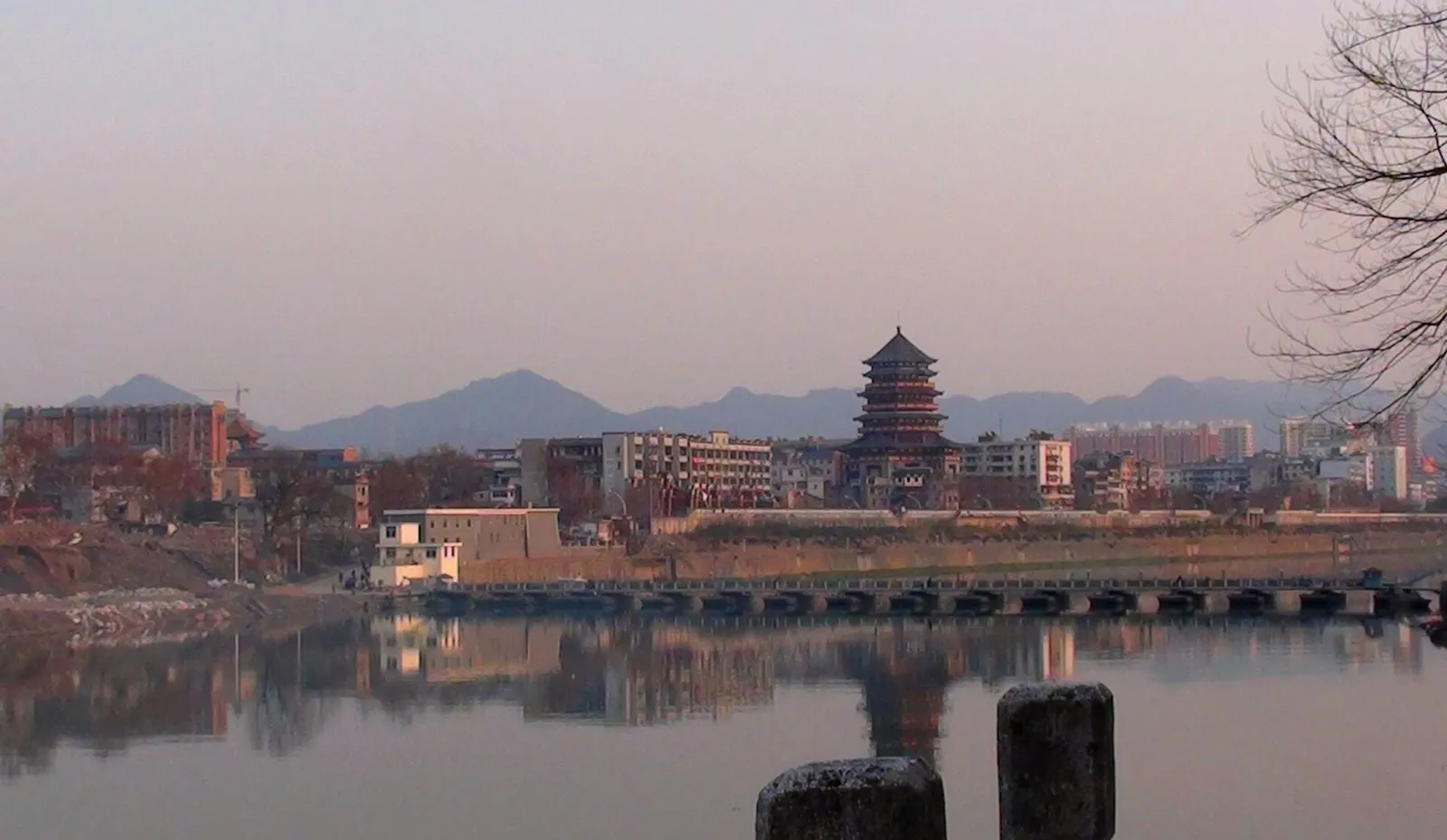
China's porcelain capital has been making ceramics for two thousand years, supplying imperial courts for six hundred, and reinventing itself roughly every decade — most recently as a magnet for thousands of young ceramicists who have turned old factory districts into China's most energetic craft economy. The experience stacks eras: night markets where 'jing piao' artists sell one-off pieces beside the chimneys of a state kiln, a museum of brick vaults built over the Ming imperial kiln site, working reconstructions of ancient dragon kilns, and quiet valleys where the world's porcelain clay takes its name from a single village. In July 2026 UNESCO inscribed the city's handicraft porcelain industry sites as World Heritage — the planet's only living industrial heritage of handmade porcelain. Two days here, with hands in clay at least once, is the perfect third act after the pagodas of the east coast.
Top sights at a glance
No. 1
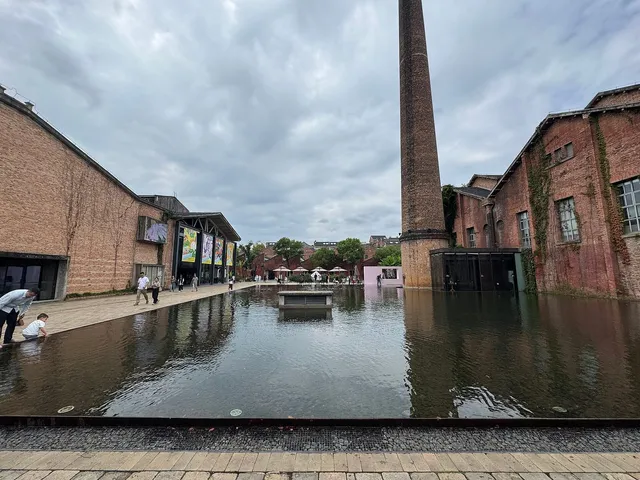
Taoxichuan Ceramic Art Avenue
The city's craft economy made visible: a 1950s state porcelain factory — the Universe Porcelain Works — reborn as kilnside galleries, studios, cafes and the famous artisan markets, where young 'jing piao' ceramicists sell cups, glazes and small miracles under the old chimney. Weekend afternoon markets run weekly; the bigger Tao Ran Ji night market, with hundreds of stalls juried fresh each week, erupts irregularly and is worth planning around.
Good to know · Entry is free and the district stays open all day; markets peak on weekend afternoons and evenings (as of September 2026). Arrive around 6 pm for photos before the 8 pm crush. It sits about 6.5 km from the center — a taxi from the high-speed station costs roughly RMB 18. Everything taps Alipay.
No. 2
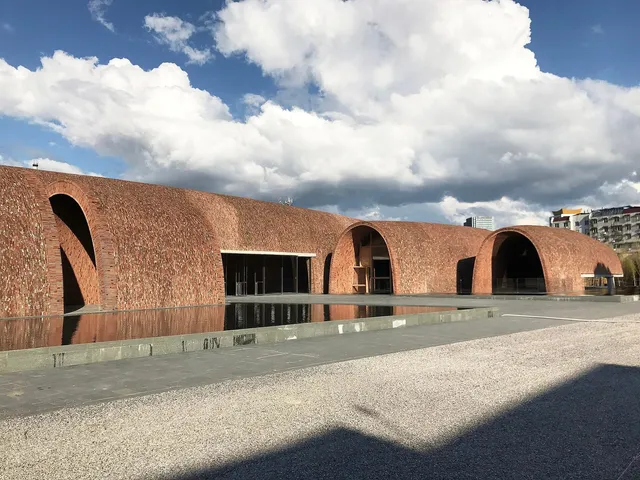
Imperial Kiln Museum
Built over the ruins of the imperial kiln that fired for the Ming and Qing courts for nearly 600 years, this award-winning museum is a landscape of brick vaults modeled on the egg-shaped wood kilns of the city's past. Its galleries hold more than 800 treasures excavated from the imperial waste pits — porcelain deliberately smashed for the emperor's exclusivity, then pieced back together — beside the Dragon Vat, the largest restoration of its kind.
Good to know · The museum sits inside the Taoyangli heritage district (district ticket from around RMB 51); museum hours run 9 am–10 pm, closed Mondays outside holidays, with timed reservation expected — book via official channels with your passport (as of September 2026). Pair with the surrounding Ming-Qing lanes and Longzhu Pavilion. Two hours minimum.
No. 3
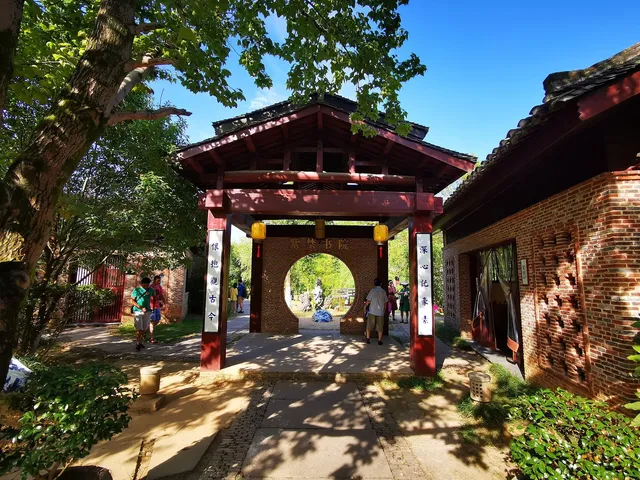
Ancient Kiln & Folk Museum
The complete crash course in how porcelain actually gets made: a park of relocated Ming-Qing buildings and rebuilt wood-fired kilns — dragon and egg kilns among them — where artisans demonstrate every trade from clay wedging to enamel painting, and the great kilns are periodically fired for real. You can watch, ask, and try the wheel yourself; it is the most hands-on of the city's sights and the best place to understand the craft whole.
Good to know · Budget roughly RMB 75–95 for entry — the list price is around RMB 95 with discounted online tickets common (older guides cite RMB 50; verify on official channels) — and expect roughly 8 am–5 pm hours (as of September 2026). Time your visit to a scheduled kiln firing if announced. Four hours with a workshop session; 1.7 km from the city center.
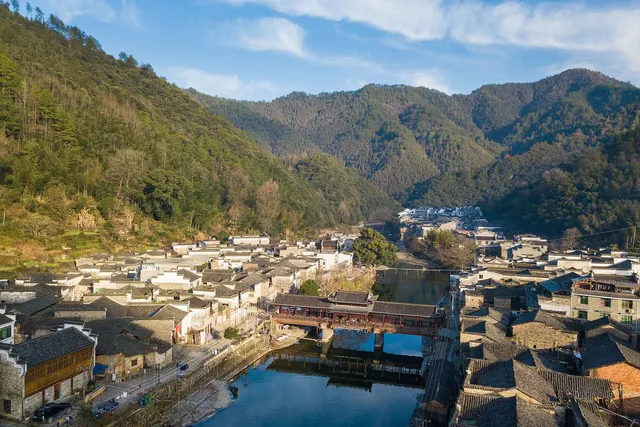
No. 4
Yaoli Ancient Town
Where the world's porcelain begins: the valley town of Yaoli, about 50 kilometers northeast of the city, holds the village of Gaolin — whose white clay, 'kaolin,' gave the entire world its word for porcelain earth. Expect a riverside town of Ming-Qing streets and covered bridges in a green gorge of tea terraces and waterfalls, with far fewer tour groups than the city sights.
Good to know · The town lanes are free to enter on current listings (reservation may be required online); the full scenic-area ticket covering outlying sights runs about RMB 98–110 (as of September 2026). It is a half- to full-day trip — taxi, private driver or bus from the city. Weekdays are beautifully quiet; bring layers, the valley runs cool.
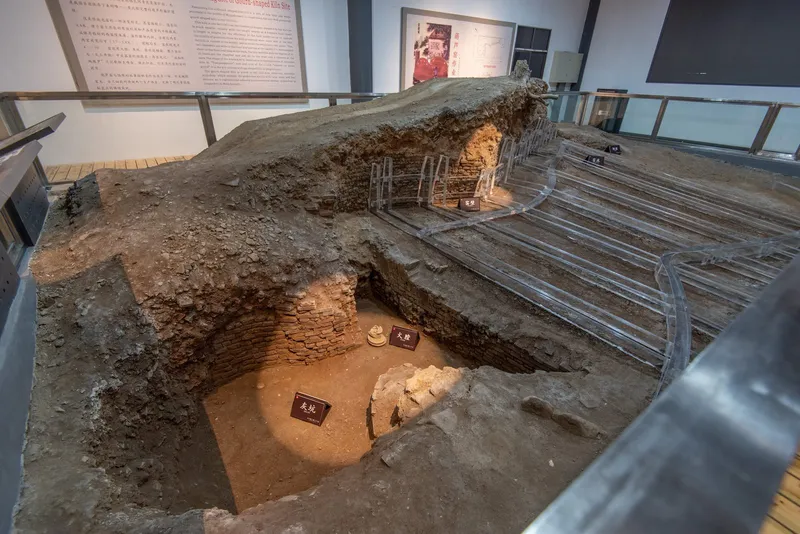
No. 5
Hutian Kiln Site
For porcelain obsessives: the archaeological remains of Hutian, one of more than thirty ancient kiln sites scattered around the city and among the most important — a Song-dynasty complex that helped perfect the pale, glassy qingbai ware the West later fell for. Kiln beds, waster heaps and shard fields sit in a working village on the city's eastern edge, archaeology in situ rather than in glass cases.
Good to know · A low-key site for a niche audience — no big-ticket infrastructure, and facilities are basic (as of September 2026). Reach it by taxi or DiDi from the center and confirm opening details with your hotel or driver the day before. Pair it with the China Ceramics Museum (free, reservation required) to see the wares these kilns produced.
Every country has a town that made its name, and for porcelain — for “china” itself — that town is Jingdezhen. The statistics are absurd: ceramics for two thousand years, official kilns for a thousand, imperial ware for six hundred, and today the densest community of working potters on earth. What surprises visitors is how un-museum-like it all is: the heritage is living, messy and purchasable. You can spend a morning inside brick vaults stacked with imperial shards, an afternoon failing honestly at a pottery wheel, and an evening buying second cups from the students who made them. In July 2026 UNESCO listed the city’s porcelain industry sites as World Heritage — the world’s only living industrial heritage of handmade porcelain. Come for two days, keep your hands dirty.
A Bit of History
The recipe that made Jingdezhen exist is geology plus water: the hills to the northeast held the fine white china clay later known worldwide as kaolin, the forests supplied kiln fuel, and the Chang River floated everything to market. Potters were working here some two thousand years ago; by the late Northern Song the town ran nearly three hundred civilian kilns, and when the imperial court took notice, the town received its name — the era title of an emperor, Jingde (1004–1007), making it one of the few Chinese cities named after a reign. The emperor in question wanted the town’s wares; the arrangement outlasted his dynasty by eight centuries, and court demand turned a river town into a global brand.
Official status became imperial monopoly. From the Ming dynasty onward, the court ran its own kilns here, staffed with the empire’s best craftsmen and funded without limit, and for roughly six hundred years the finest porcelain on earth was made in this town for the emperor’s household. The system had a ruthless edge: anything imperfect was smashed and buried in waste pits so that no flawed imperial piece would ever circulate — which is why, centuries later, archaeologists could rebuild masterpieces from those deliberate fragments. Blue-and-white matured into the world’s most coveted ceramic, export wares sailed out through the Maritime Silk Road by the millions of pieces, and by the Qing dynasty the kilns’ output stood at its historical summit. European courts called the output simply “china,” because no one could work out what it was made of — kaolin, ground from these very hills.
The twentieth century reorganized everything into giant state factories, and the 1990s broke them; the laid-off workers, ironically, seeded today’s artisan economy. The new wave is the “jing piao” — “porcelain drifters,” young ceramicists from across China who settled the old factory districts and never left. Their story is now world heritage: in July 2026 UNESCO inscribed the Jingdezhen Handicraft Porcelain Industry Sites, honoring a production tradition the listing called the world’s only living industrial heritage of handmade porcelain, practiced here from the tenth century to the present.
Culture & Daily Life
Jingdezhen’s culture is the workshop. The city’s daily rhythm runs on kiln schedules, market days and the seasons of the craft — summer is firing season, autumn brings the ceramics expo and festival crowds, and the weekend belongs to the markets where young potters sell what they made that week. What makes it remarkable is the entry bar: stalls at the juried markets are contested week by week, so the goods on the table are genuinely the best of a very deep local field. Window-shopping here is a design education.
The city wears its history pragmatically. Museum-grade shards turn up as garden paths; apartment courtyards keep old kiln furniture; the China Ceramics Museum (free, reservation required) holds more than 50,000 pieces spanning the dynasties, and locals treat it as a field-trip venue — on weekends the galleries fill with art students sketching and would-be apprentices. There is folk religion at the kilns — potters still honor the fire god before major firings — and one beloved oddity nearby: the “Porcelain Palace,” a house a determined local woman began cladding in her own ceramics in 2010, spending five years and her savings on a folly the city now adores.
For travelers the culture is participatory: every studio district offers wheel time, painting classes and kiln-opening events, and English is scarcer than in the big cities, though the craft vocabulary translates by gesture. Kiln openings are the local theater — a full kiln comes out at temperature, and the crowd’s collective gasp when a glaze breaks well is genuinely moving. Payments run on Alipay and WeChat Pay throughout, market stalls included. Two habits will serve you: bargain gently at markets — a polite counteroffer is part of the game — and always ask before photographing someone’s stall or studio.
Nature & Day Trips
Jingdezhen sits in green hill country, and its best outdoor day is northeast to Yaoli, the valley town where the kaolin clay was mined — now a gorge of rivers, covered bridges, Ming-Qing lanes and tea terraces that doubles as the region’s hiking escape. The kaolin story is the point: the village of Gaolin gave the world the word for porcelain clay, and the old mine terraces are walkable. Combine with Fuliang Ancient Town on the way back — a county seat dating to the Tang dynasty, restored beside the river.
Closer to town, the Chang River embankments are promenaded at dusk, and the wetlands along the outflow attract egrets between kiln towns. But honestly, Jingdezhen’s “nature” is mostly a palate cleanser — the reason to be here is indoor heritage and studio time.
The strategic trip is geographic. The mountain line that funnels travelers to Huangshan continues south to Jingdezhen, making a three-way loop — Huangshan’s peaks, Wuyuan’s Huizhou villages, Jingdezhen’s kilns — one of eastern China’s best combinations; direct trains cover the Huangshan–Jingdezhen leg in well under an hour. Travelers short on time should treat the loop as the itinerary rather than trying to see all of rural Jiangxi between kiln days.
Food & Drink
Jingdezhen eats like a Jiangxi river town: rice-noodle breakfasts, chili-laced stir-fries, river fish, and dumpling-shaped snacks wrapped in rice dough. The local canon starts with leng fen — cold rice noodles dressed with chili oil, garlic and pickled greens, the standard street breakfast alongside steamed dumpling-bites dipped in vinegar and thick taro-and-pork soups. Jiangxi food runs hotter than the Jiangsu kitchens foreign visitors may have just left; order “wei la” (slightly spicy) and mean it, because the local default is serious. The streets around the old town do the best cheap lunches: rice-noodle shops with boiling cauldrons, barbecue windows that fire up at noon, pastry counters selling flaky baked goods by the tray.
The craft economy has rewritten the dining map. Around the studio districts you eat in canteen-style noodle shops and cafe-rooftop kitchens run by the same young crowd that runs the stalls; around the old town, traditional restaurants serve braised river fish, tea-scented seasonal dishes and bamboo and mushroom specials that change with the hills. The night markets double as food streets — barbecue skewers, grilled tofu and whole grilled fish feed the market crowds until late (as of September 2026). Order at the grill, take a plastic stool, and judge nothing by appearance: the plainest stall is often the oldest.
Prices are the pleasant shock of this trip: a proper noodle breakfast costs single-digit yuan, a generous local dinner with beer rarely clears RMB 60 a head, and even the cafe scene undercuts the coast by half. Vegetarians should learn “bu yao la” (no chili), or the greens arrive glowing. Follow the studio crowds rather than storefront signs, keep a translation app open for menus, and save one dinner for the night market — eating well here costs less than anywhere else on an eastern-China itinerary.
Top Sights
Taoxichuan Ceramic Art Avenue
The beating heart of modern Jingdezhen is a reformed state factory. Taoxichuan — Ceramic Art Avenue — occupies the red-brick campus of the Universe Porcelain Works, its sawtooth-roofed sheds now holding galleries, design studios, cafes and museums around the original chimney. Every weekend afternoon the artisan market fills the plazas: young jing piao ceramicists juried into weekly-rotating stalls, selling cups, teapots and glaze experiments at student prices. When the larger Tao Ran Ji night market fires — hundreds of stalls, irregular schedule — it is the liveliest street scene in Chinese craft.
Everything here is free to wander; the district stays open all day and peaks in the evening, with photographers arriving around 6 pm and the real crush after 8 (as of September 2026). It sits about 6.5 km out — a taxi from the high-speed station runs roughly RMB 18. Budget at least an evening: browse, bargain politely (a modest counteroffer is expected), eat street barbecue, and buy the one perfect cup you will use forever.
Imperial Kiln Museum
Beneath the museum’s brick vaults lies the reason an empire’s porcelain came from here: the Imperial Kiln, the Ming-Qing court factory whose ruins occupy the center of the Taoyangli historic district. The museum building — vaulted brick shells modeled on the egg-shaped wood kilns of the city’s tradition — has become one of China’s most celebrated contemporary structures. The collection is staggering: more than 800 significant pieces excavated from the imperial waste pits, where imperfect court porcelain was deliberately smashed and buried — including the great Ming dragon vat, shattered centuries ago and now reassembled shard by shard, the largest restoration of its kind.
The museum sits inside the Taoyangli ticketed district (entry from around RMB 51), where the ruins, restored workshops and Ming-Qing porcelain-trade lanes spread over several blocks; the old Xujia wood kiln still fires on a regular schedule, and Longzhu Pavilion crowns the hill above. Museum hours run 9 am–10 pm, closed Mondays outside holidays, with timed reservations expected — book via official channels with your passport (as of September 2026). Give it two hours inside and an hour around the lanes.
Ancient Kiln & Folk Museum
Where the Imperial Kiln Museum shows you the product, the Ancient Kiln & Folk Museum shows you the process. Set in a park of relocated Ming-Qing residences and rebuilt workshop compounds, it reconstructs the entire porcelain production line as it ran for centuries: clay-pounding mills, shaping and trimming benches, painters’ studios with brushes finer than eyelashes, and — the headliners — full-size wood-fired kilns of the historical types, which are periodically stoked and fired for real, smoke and all. Artisans work every station and answer questions; visitors can try the wheel and paint a piece.
The 5A park, about 1.7 km from the city center, gathers more than 5,000 ceramic objects alongside the relocated buildings (as of September 2026). Tickets run roughly RMB 75–95 — the list price is around RMB 95, discounted e-tickets are common, and older guides cite lower figures, so check current pricing on official channels — with hours around 8 am–5 pm. Allow half a day, ideally including a workshop session; it is the best single introduction to the craft anywhere in China.
Yaoli Ancient Town
Northeast of the city, the valley of Yaoli holds the raw material of the whole story. Its village of Gaolin mined the white kaolin clay that Ming potters found superior to everything else, and the mineral took the village’s name — “kaolin” is now simply the world’s word for porcelain earth. Mining ended long ago; what remains is a small town of stone lanes, covered bridges, merchant houses and riverside tea sheds in a gorge of bamboo and tea terraces.
Come for a half day, ideally on a weekday when the stone lanes are slick with valley mist rather than tour groups (as of September 2026). Current listings let you walk the town itself free — an online reservation may be required — while the full scenic-area ticket, covering outlying gorge and waterfall sections, runs about RMB 98–110. From the city it is about 50 km: taxi, private driver for the day, or regional bus. Drink the local tea where the clay was dug.
Hutian Kiln Site
In a working village on the city’s eastern edge lies Hutian — one of more than thirty ancient kiln sites scattered across Jingdezhen and among the most celebrated: a Song-dynasty production complex whose pale, blue-tinged qingbai (“bluish white”) ware became one of the great export ceramics of the age, sailing to Southeast Asia and the Middle East centuries before blue-and-white took over. This is archaeology in situ: dragon-kiln beds cut into the slope, waster heaps and shard fields where centuries of rejects were dumped, finds displayed modestly where they emerged.
This is a site for the porcelain-committed, not a headline sight — facilities are basic, signage limited, and you will likely share it with a few researchers and village dogs (as of September 2026). Reach it by taxi or DiDi from the center, and confirm opening details with your hotel or driver the day before. The payoff is proportionally large if the craft has hooked you: the shards underfoot are ancestors of the qingbai pieces displayed in the China Ceramics Museum — free, reservation required, and worth pairing with this trip.
Getting There & Around
Jingdezhen plugs into the high-speed network through Jingdezhen North station. The scenic approach is from Huangshan: direct trains cover the 123 km from Huangshan North in as fast as about 40 minutes, with a handful of departures daily — reserve ahead in peak season (as of September 2026), and note the leg is short enough to build a Huangshan–Wuyuan–Jingdezhen loop rather than a backtrack. From Nanchang, the provincial hub, the run is frequent — roughly 38 trains a day, from about 40 minutes to an hour and a half depending on the service, second class from around RMB 50 — which makes Jingdezhen an easy rail trip from almost anywhere in eastern China. Jingdezhen Luojia Airport handles domestic flights about 14 km from the high-speed station.
In town, distances are modest: the Imperial Kiln district and the Ancient Kiln park sit near the center, Taoxichuan is about 6.5 km out, and Yaoli is the one real journey. Taxis and DiDi are cheap — the station-to-Taoxichuan run costs around RMB 18, central trips less — and buses cover the main corridors for a couple of yuan. For the day trip to Yaoli, a private driver is the low-hassle option and splits affordably between two or three travelers.
Where to Stay
Base yourself where the evenings matter. The Taoxichuan area is the atmosphere pick: boutique hotels and studio-guesthouses in and around the factory district, night-market stalls at your doorstep, and the city’s young ceramicist crowd at the next table — best for design-minded travelers and anyone planning workshop time. The city center, around the Imperial Kiln district, is the practical pick: walkable to the Taoyangli lanes, mid-range hotels at fair prices, and the Ancient Kiln park a short hop away — best for first-timers squeezing the highlights into two days. The area near Jingdezhen North station suits only early departures; the trade-off in atmosphere is real.
Prices sit well below the coastal cities, and the boutique studios around Taoxichuan book out first on weekends and during the October ceramics season, so reserve ahead for autumn trips (as of September 2026). Ask for a river-facing or district-facing room over a road-facing one, and keep the itinerary loose: kiln firings, market juries and studio openings run on their own calendar, and the best evening in Jingdezhen is usually the one you did not plan.
Sources & verification (9)
- https://www.chinadiscovery.com/jiangxi/jingdezhen.html
- https://www.travelchinaguide.com/cityguides/jiangxi/jingdezhen/
- https://www.travelchinaguide.com/attraction/jiangxi/jingdezhen/ceramic_museum.htm
- https://www.travelchinaguide.com/intro/jingdezhen-porcelain.htm
- https://you.ctrip.com/sight/jingdezhen405.html
- https://you.ctrip.com/sight/jingdezhen405/5072913.html
- https://you.ctrip.com/sight/jingdezhen405/127483.html
- https://www.trip.com/trains/china/route/huangshan-to-jingdezhen/
- https://www.trip.com/trains/china/route/nanchang-to-jingdezhen/