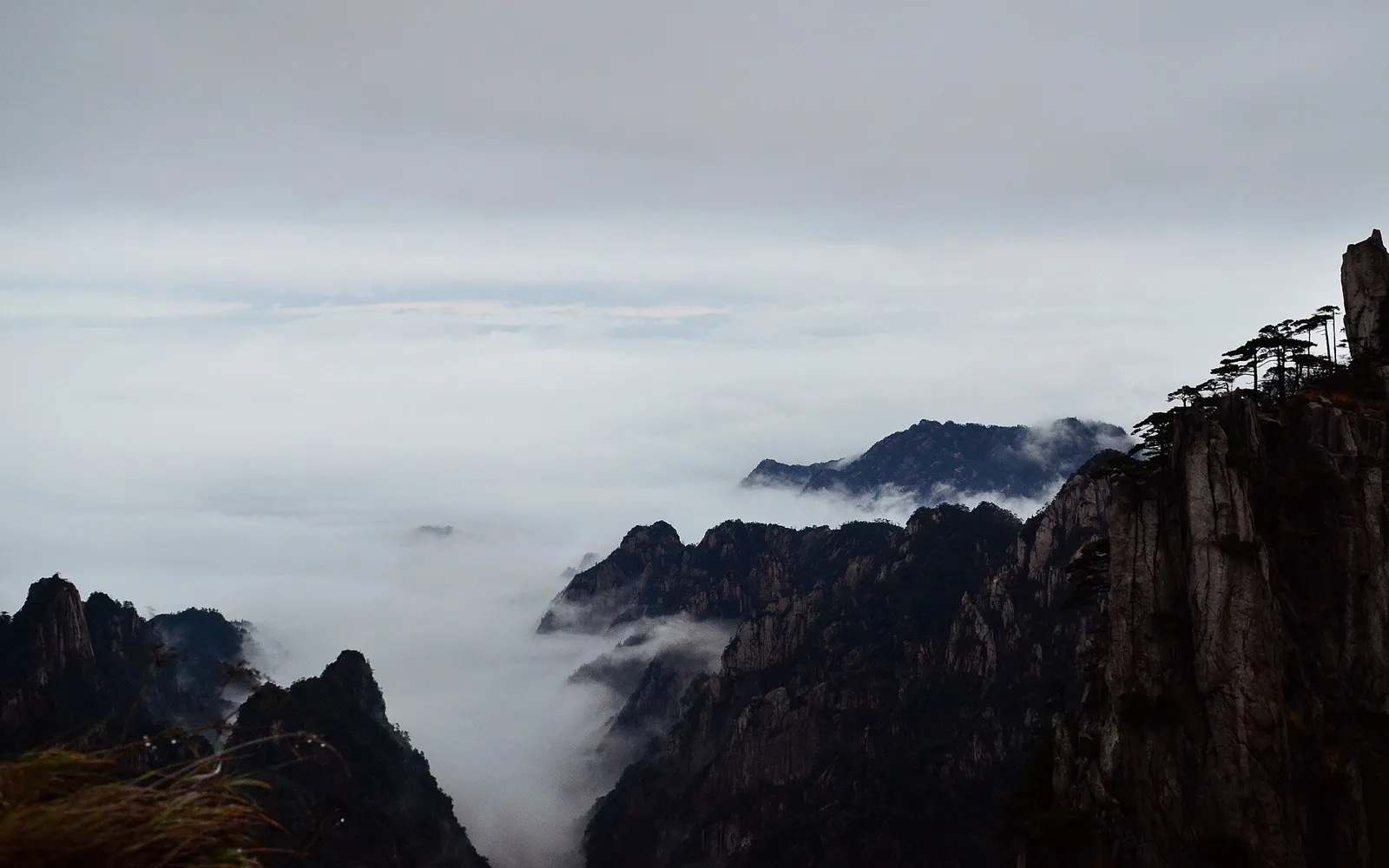
Huangshan — the Yellow Mountain — is the single most painted landscape in China: sheer granite towers, thousand-year-old pines twisting out of bare rock, and, on lucky mornings, a white ocean of cloud filling the valleys to your feet. This is a UNESCO World Heritage site honored for both scenery and culture, and it rewards planning: choosing between the front-mountain and back-mountain cableways decides whether your day flows or grinds, the spectacular Xihai Grand Canyon closes every winter, and summit beds for sunrise sell out weeks ahead. Pair the mountain with Hongcun, the impossibly photogenic UNESCO village an hour away, and finish over Tunxi Old Street's snack-lined lanes in Huangshan city. This page walks through the route decisions, the reservation system, and the weather tactics that turn a good trip into a great one.
Top sights at a glance
No. 1
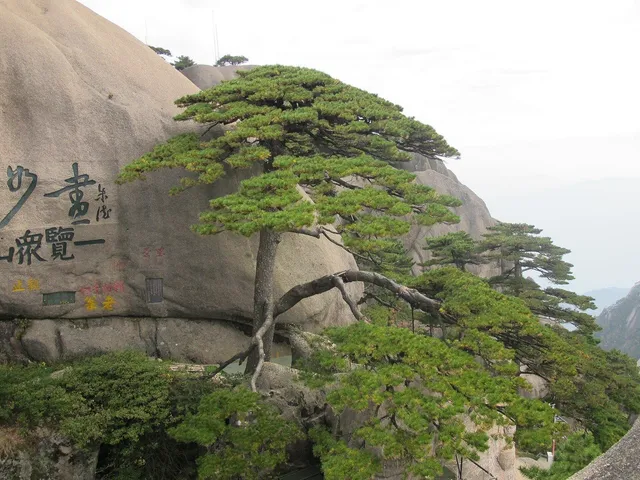
The Yellow Mountain Summit Routes
Almost everything on Huangshan depends on one early decision: which way up. The back mountain (Yungu, east) is the gentle ascent — a cable car to the Begin-to-Believe Peak cluster of pines and the Beihai hotel quarter, saving your legs for the high trails. The front mountain (Yuping, south) is the dramatic one: steep steps past the Greeting Pine beneath the sheer faces of Lotus and Celestial Capital peaks. Most hikers ride up the back and descend the front, turning the mountain into one long scenic loop.
Good to know · Entrance is ¥190 (as of September 2026) and allows re-entry for three consecutive days. Reserve a timed, gate-specific slot one to seven days ahead on the official Huangshan mini-program or via Trip.com with your passport, then take the ¥19 shuttle from the Tangkou transfer center to your cableway. Cable cars run roughly 7:00–17:00; the hiking-only gate closes at 15:00.
No. 2
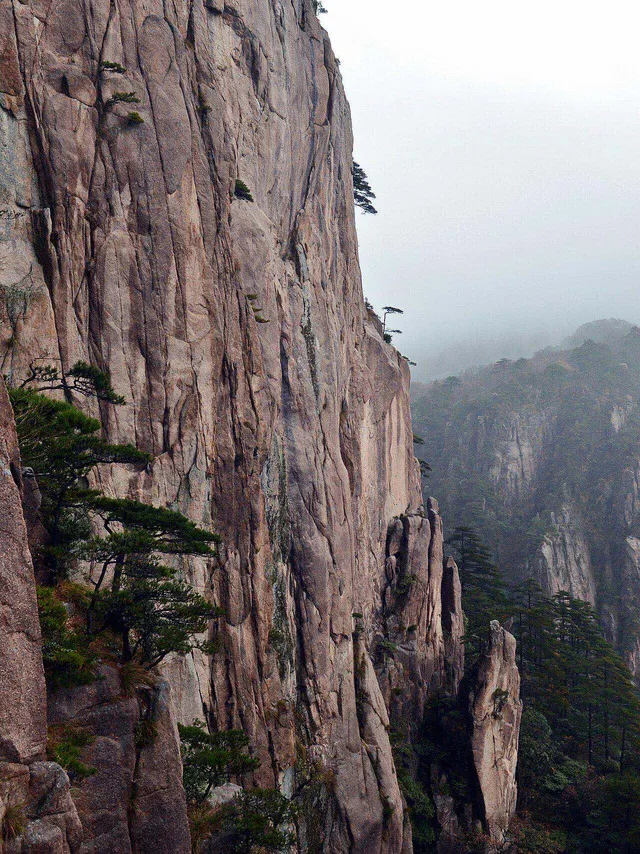
Xihai Grand Canyon
The mountain's wild heart: a mile-deep gorge of granite spires on the west side, crossed by a one-way loop of cliff-hugging walkways that drops from near Paiyun Pavilion into the valley and climbs out the far side. It is the most thrilling — and most physical — walk on Huangshan, two to three hours of stairs bolted to rock walls with the void beside you. Crucially, it is seasonal: the canyon closes every winter, roughly December to mid-March, so confirm it is open before you build your itinerary around it.
Good to know · Included in the mountain ticket; open 8:00–17:00 in season (reopened March 14, 2026 after its winter closure). Walk it downhill in the morning light, and if your knees wave the white flag at the bottom, the canyon cable car lifts you back to the ridge for around ¥100. Sections close temporarily in storms, ice, or high wind.
No. 3
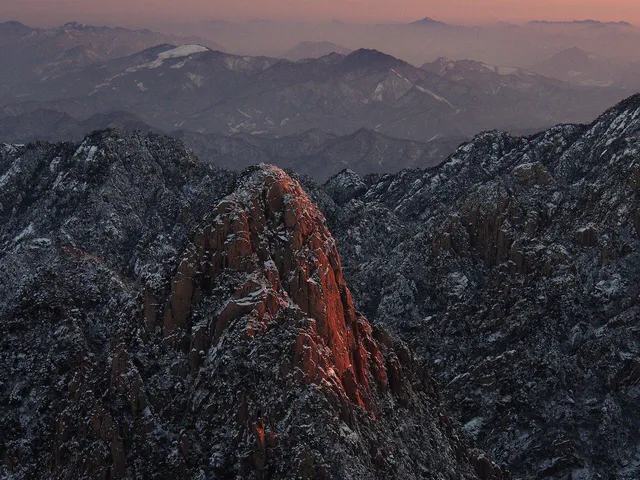
The Sea of Clouds & Sunrise Points
The scene painters came for: humid air rising off the valleys condenses below the summits, filling every gap between the peaks with a slow-rolling white ocean. Odds are best on cool mornings after a rainy day, in late autumn through spring, and they justify sleeping on the mountain. The classic sunrise platforms are Bright Summit and the Lion Peak lookouts over the 'Monkey Watching the Sea' rock; Danxia Peak is the sunset favorite. Check the evening sky, set an early alarm, and stake your spot with a headlamp.
Good to know · Stay overnight near the Beihai or Tianhai areas to make sunrise walkable — summit doubles run roughly ¥1,000–1,500, so book weeks ahead or split a room. Check the posted sunrise time (as early as 5:00 AM in June) and leave 40 minutes early; platforms fill. Fog means sleep in — do not burn the alarm on a blank gray wall.
No. 4
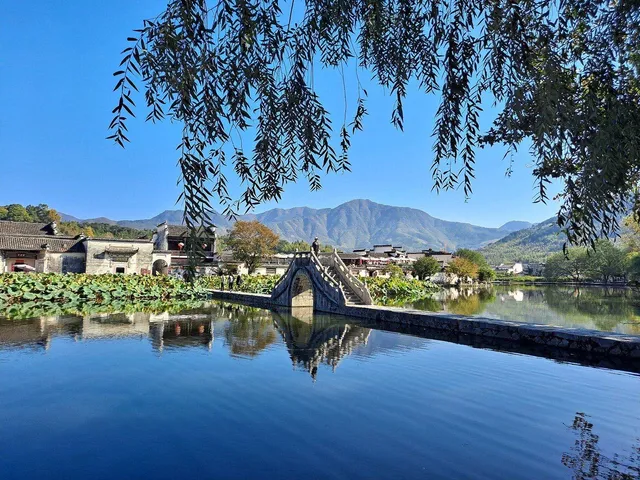
Hongcun Village
An hour from the mountain, this 900-year-old village of white walls, black-tiled roofs, and mirror-still ponds is the other half of the Huangshan experience — and a UNESCO World Heritage site in its own right. Moon Pond sits at the village heart like a supplied inkstone, South Lake strings the skyline along a causeway, and the lavishly carved Chengzhi Hall shows how rich Huizhou merchants spent their timber budgets. Crouching Tiger, Hidden Dragon filmed here; at dawn, before the day groups, you will understand why.
Good to know · Entry is around ¥100 (¥94 bought online, valid for three days, as of September 2026). Buses run from Tangkou in about an hour, and there are direct buses from Huangshan North station — or stay overnight inside the village for the empty-lane mornings. Bring your passport for ticket checks.
No. 5
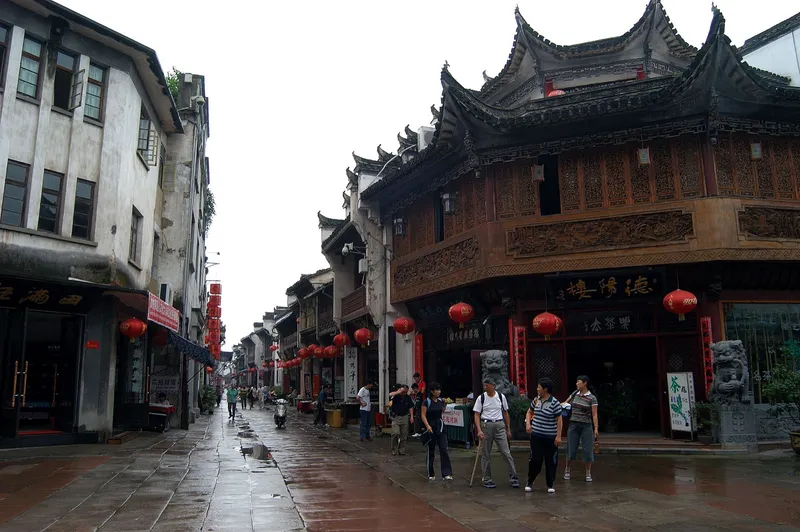
Tunxi Old Street
Huangshan city's graceful exhale: a kilometer of Ming-and-Qing-style shopfronts along stone lanes, free to wander at any hour and at its lantern-lit best after dinner. This is Huizhou merchant architecture rebuilt as a living shopping street — tea merchants pouring Huangshan Maofeng, inkstone carvers, pastry shops stacking walnut shaobing — with the trendier riverside Liyang Old Street just across the bridge. It is the ideal low-effort bookend to days of stairs: arrive, graze, drink tea, and watch the town take its evening constitution.
Good to know · Completely free and open around the clock; evenings are liveliest. It sits in the old town center about 25 minutes from Huangshan North station by bus or taxi — pair it with your arrival or final night, and use the side lanes for cheaper, more local meals than the main drag.
No Chinese landscape has been painted, poem-ified, and pilgrimaged to quite like this one. Huangshan’s granite towers and wind-sculpted pines were declared China’s most beautiful mountains centuries before UNESCO agreed in 1990, honoring the site for both scenery and culture. The experience, though, is logistical as much as aesthetic: one mountain, three cableways, a reservation system, a canyon that closes for winter, and sunrise viewing that depends on where you slept. Get those decisions right — this page exists for that — and you get the payoff the postcards promise: dawn above an ocean of cloud, cliffs appearing and dissolving like ink on wet paper. Add the UNESCO village of Hongcun and the snack-lined lanes of Tunxi Old Street, and you have the most complete nature-plus-culture short trip in eastern China.
A Bit of History
The mountain predates its name. Locals called it Yishan until 747 AD, when a Tang dynasty emperor rechristened it Huangshan — the Yellow Mountain — in honor of the Yellow Emperor, said to have refined elixirs of immortality here. Poets kept adding to the legend: Li Bai versified its peaks, and the Ming travel writer Xu Xiake, after two visits, left the verdict every Chinese schoolchild can recite — having seen the Five Great Mountains, you need not look at any other mountain; having seen Huangshan, you need not look at the Five.
That reputation was built on more than rocks. From the seventeenth century, the monks and artists of the Huangshan school — Hongren, Shitao, and their contemporaries — made these pines and mists the defining subject of Chinese landscape ink painting, sketching the same “four wonders” you will hunt with a camera: strange pines, grotesque rocks, the sea of clouds, and hot springs. The pines themselves became celebrities. The Greeting Pine, arms outstretched beside the front-mountain trail, has stood as China’s unofficial welcome mat for over a thousand years and now gets 24-hour guard duty.
Fame arrived long before infrastructure. For most of the twentieth century the mountain was a hard multi-day expedition; cableways only went up in the 1980s. Recognition followed: UNESCO inscribed Mount Huangshan in 1990 as a mixed cultural and natural site — one of few in China to earn both — and the region reorganized itself around tourism. Tunxi became “Huangshan City,” a high-speed rail station was built to funnel in visitors from Shanghai and Hangzhou, and the peak-rotation system now closing Celestial Capital Peak for ecological rest shows a site actively managing its own popularity.
Culture & Daily Life
The valley below the mountain is old Huizhou — one of China’s most distinctive regional cultures, built on the fortunes of merchants who left these poor, beautiful hills from the Song dynasty onward and came back rich enough to fund ancestral halls, carved mansions, and village water systems like Hongcun’s. Their architecture is the region’s second landscape: white-washed brick, dark tile roofs, horse-head gables stepping skyward, courtyards built around skywells. Villages here were designed, not just settled, and it shows.
That mercantile confidence left a strong literati streak. Huizhou produced the ink, inkstones, and paper of the “four treasures of the study” that Chinese calligraphy depends on; its carvers filled the region’s halls with detail that rewards a slow walk through Hongcun or Tunxi’s antique shops. Tea is the local religion in a quieter way — Huangshan Maofeng and Keemun black tea both grow on these slopes, and any conversation in a Tunxi teahouse will end with you drinking one of them.
Daily life in Huangshan City moves at Anhui pace: morning tai chi on the riverbank, markets heaped with bamboo shoots and dried mushrooms, square dancing after dark. English is scarce outside hotels, so keep a translation app handy. The mountain has its own working culture — porters still haul supplies up thousands of steps on shoulder poles, which tends to put your own complaints about stairs in perspective. And remember the summit, at 1,800-odd meters, runs ten degrees or more cooler than town: even in summer, the people watching sunrise in rented parkas are not being dramatic.
Nature & Day Trips
Geologically, Huangshan is a young, rude intrusion: granite magma pushed up a hundred million years ago and sculpted by ice and weather into cliffs that joint into towers, walls, and natural arches. Seventy-two named peaks crowd the reserve; the highest, Lotus Flower Peak, tops out at 1,864 meters, with Bright Summit a whisker behind. Because the rock sheds soil, the famous pines — a local endemic — root straight into cracks and grow sideways, downward, and upside down, which is why every one of them looks like a calligraphy stroke.
Weather makes the trip. The sea of clouds forms most often when moist air, rain the day before, and cool dawn temperatures combine — late autumn through spring is prime time, and a forecast of “rain then clearing” is genuinely good news. Thick fog, by contrast, can erase the entire mountain; build a flexible day into your plan. Biodiversity is richer than the bare cliffs suggest — macaques, muntjac, and a long list of birds share the forested ravines — and the hot springs at the mountain’s foot have soothed climbers since the Tang dynasty.
Day trips beyond the mountain revolve around the villages. Hongcun and its quieter neighbor Xidi — jointly UNESCO-listed since 2000 — are the essential pair, an hour away by bus. Closer in, the old bridges and riverside lanes of Tunxi fill an easy evening, while deeper options for fans of carved timber and ancestral halls include the Chengkan and Tangmo villages. This is a region where the between-days are as rewarding as the headline hike.
Food & Drink
Anhui cuisine — Hui cai — is one of China’s eight great cooking traditions, and it is mountain food with money behind it: slow-braised, oily in the best way, heavy on wild herbs, bamboo, and preserved things. The famous flagship is chou gui yu, “stinky mandarin fish” — a whole fish fermented until it pungently announces itself, then braised until the flesh turns dense, savory, and utterly unlike the smell. Order it once; it is the dish people fly home talking about. Mao doufu, tofu allowed to fuzz with white mold before pan-frying, is its gentler cousin.
The mountain’s vegetable larder shapes everything else: bamboo shoots stir-fried or stewed in ham broth, stone-ear fungus scraped from cliff faces, wild greens in season. Huizhou cured pork and smoked goose show up sliced as cold starters, and a simple pot of bamboo and pork rice cake soup is the local comfort food. Street level, the region eats huimo — walnut-stuffed pastry biscuits baked in rows over coals — plus sweet rice wine and sesame balls.
Tea deserves its own slot: Huangshan Maofeng for green-tea drinkers, Keemun black tea — grown in these hills — for everyone else, both tasting startlingly better within sight of where they grew. On Tunxi Old Street, tea shops will happily pour you a flight before you buy. Budget ¥40–80 per person for a good sit-down meal in town; on the mountain summit, everything costs double, so carry snacks up with you and treat the hot noodle bowls at the top as fuel rather than cuisine.
Top Sights
One mountain, one strategy: go up the back, sleep high, walk the canyon, and come down the front. The sights below are listed in the order most itineraries should hit them.
The Yellow Mountain Summit Routes
The mountain offers two classic ways up, and the difference shapes everything. The back-mountain route starts at Yungu Temple on the east side: a ¥19 shuttle from the Tangkou transfer center brings you to the Yungu cableway (around ¥80 one-way, as of September 2026), which delivers you in minutes to the Begin-to-Believe Peak area — where, on your first platform, the “pines rooting in bare rock” cliché stops being a cliché. The front-mountain route from Ciguang Pavilion rides the Yuping cableway (around ¥90) up beneath the south cliffs, stepping out near the Greeting Pine with the steepest climbing still ahead. The standard play is up the back, across the high links between Beihai, Bright Summit, and Tianhai, then down the front — one sweeping line through the best of everything, legs preserved for the staircases that matter.
Two cautions. First, the two glamorous summit peaks rotate closure for ecological rest: as of September 2026, Celestial Capital (Tiandu) Peak is closed while Lotus Flower Peak and the Xihai Grand Canyon are open — check the official announcements, because the rotation changes. Second, the reservation system is strict: a timed, gate-specific, real-name ticket tied to your passport, booked one to seven days ahead on the official Huangshan mini-program or through Trip.com. Your entrance ticket (¥190 as of September 2026, winter price ¥150) is valid for three days of re-entry — an honest gift if weather scuttles your first day.
Xihai Grand Canyon
If you take one physical risk on this trip, make it knee-cartilage, not mortal: the Xihai Grand Canyon loop is Huangshan’s masterpiece and its most demanding walk. From Paiyun Pavilion on the west ridge, a one-way trail of stairways and steel plank paths spirals down into a canyon of white granite towers — two to three hours of continuous descent, crossing to the far wall, then climbing back to the ridge near Tianhai. The canyon holds the mountain’s most intimate drama: instead of viewing the peaks from across a valley, you spend hours inside their architecture, close enough to touch the spires.
It is seasonal, and that matters more than any other single fact about it. The canyon closes every winter — ice on steel walkways at those angles is not survivable tourism — generally from early December to mid-March; it reopened on March 14, 2026, after its maintenance closure, and now runs 8:00–17:00. Even in season, storms, ice, or high wind close sections on short notice, so walk it early on your clearest day. Included in the mountain ticket; if the final climb looks grim, the canyon’s own cable car (around ¥100) will hoist you from the bottom to the ridge.
The Sea of Clouds & Sunrise Points
Here is the truth about Huangshan weather: the mountain is famous for a phenomenon most day-trippers never see. The sea of clouds needs moisture, cooling air, and time — precisely the combination an overnight stay buys you. When it forms, valleys flood with white from below your feet to the horizon, and the peaks become islands. Your best statistical friends are late autumn through spring, a day of rain followed by a clearing night, and the coldest, clearest dawn you can get out of bed for.
The classic sunrise stands are on the east and center: Bright Summit, the second-highest point with a 360-degree horizon, and the Lion Peak lookouts — Cooling Terrace and the ledge facing the “Monkey Watching the Sea” rock, which wears its own private cloud sea like a throne. For sunset, Danxia Peak near the canyon’s north rim is the pilgrims’ choice. Sunrise times swing from around 5:00 AM in June to nearly 7:00 in winter — check the posted schedule, leave 40 minutes early, bring a headlamp, and claim your railing before the tour groups pour in. If dawn arrives as solid gray, go back to sleep.
Hongcun Village
Descend from the mountain and finish in soft focus. Hongcun is a working village laid out 900 years ago in the shape of a resting ox — with a hilltop hall for its head, ancient trees for horns, and a system of channels that still runs fresh spring water past every doorway before pooling in the half-moon of Moon Pond and finally South Lake. The reflecting pond views here are the most reproduced images in rural China, and Crouching Tiger, Hidden Dragon borrowed them shamelessly. UNESCO listed Hongcun and nearby Xidi together in 2000 as the finest surviving expressions of Huizhou settlement design.
Give it half a day, ideally with the first hour before the coaches arrive: walk the lake causeway while mist still stands on the water, then work inward through lanes of carved lintels to Chengzhi Hall, a Qing-era merchant mansion nicknamed the “Forbidden City of the folk” for its lavish gilded carving. Entry costs around ¥100 — ¥94 online — and stays valid for three days if you overnight in the village. Buses link Hongcun with Tangkou in about an hour and directly with Huangshan North station.
Tunxi Old Street
Every Huangshan trip ends here, pleasantly. Tunxi Old Street is the Song-dynasty market town grown up: nearly a kilometer of stone-paved lane under carved wooden eaves, free to enter at any hour, running from the river bridge deep into the old town. The goods are properly regional — tea sellers who will brew before they sell, inkstone and brush workshops, bamboo carvers, pastry counters where Huangshan shaobing come off the coals in sheets — and the side lanes hide the better, cheaper restaurants where the stinky fish actually stinks.
Time it for the evening: lanterns up, families out strolling, tea shops sliding into their slowest and friendliest gear. Cross the river to Liyang Old Street for the renovated riverside bar-and-café strip if you want nightlife, then walk back over the old bridge to see both skylines lit. Practicalities are minimal — the street is open around the clock, sits about 25 minutes from the high-speed station, and makes the natural last evening before flying or training onward. Bring an empty bag; the tea and walnut biscuits travel better than any souvenir.
Getting There & Around
Most visitors arrive by high-speed rail at Huangshan North station: about 1.5 hours from Hangzhou and 2.5–3 hours from Shanghai, with direct trains from Beijing and other hubs (book on 12306 or Trip.com with your passport). From the station, an official shuttle bus reaches the Tangkou transfer center at the mountain’s south gate in about an hour for roughly ¥30; ignore private touts offering “secret shortcuts.” The same station also links to Tunxi old town in about 25 minutes and has direct buses to Hongcun. Huangshan Tunxi International Airport (TXN) handles domestic flights and sits 7 kilometers from the old street.
The mountain itself is car-free: private vehicles must stop at Tangkou, where the official green shuttle (¥19 each way, as of September 2026) ferries ticket-holders to the Yungu or Yuping cableway bases. On the summit your engine is your legs. Around town, DiDi works well in Tunxi and Tangkou, and intercity buses knit the villages together — for Hongcun and the western villages, a private driver for the day is an easy, reasonably priced upgrade.
Where to Stay
Three bases, in this order of importance. First, one night on the mountain itself is the difference between seeing Huangshan and merely climbing it: the summit hotels cluster around Beihai (for Lion Peak sunrise) and Tianhai (for Bright Summit and the canyon), and rooms are few, basic, and expensive — roughly ¥1,000–1,500 for doubles, less for dorm bunks — so reserve weeks ahead, or plan to split a room. Second, Tangkou, the gateway town at the south gate, is the practical base for your arrival night and any second mountain day: cheap hotels, early breakfasts, five minutes from the shuttle terminal. Third, Tunxi old town suits the bookends — arrival and final evenings around the Old Street’s restaurants and tea shops. If Hongcun enchants you, one night in a courtyard guesthouse inside the village is the region’s most atmospheric bed.