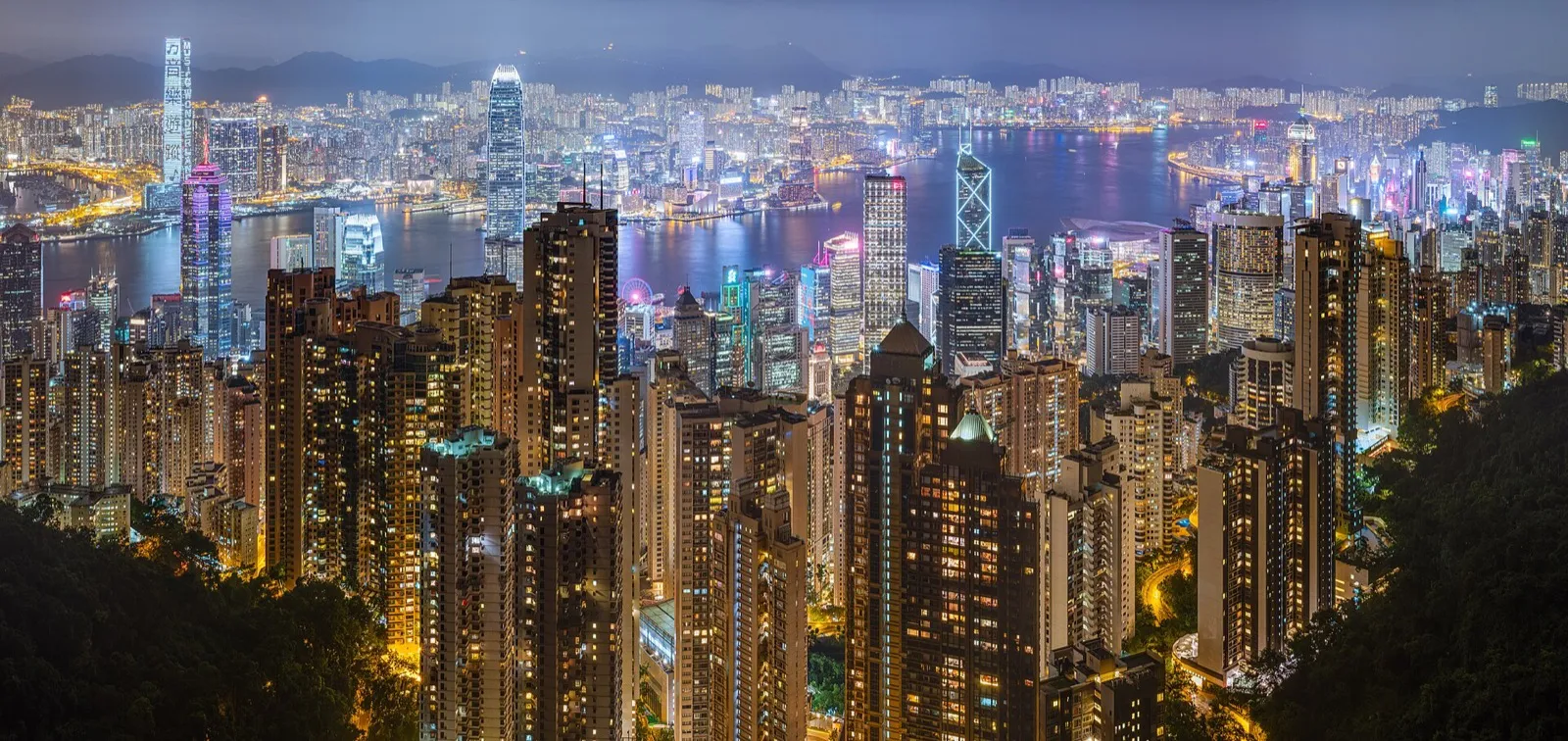
Hong Kong is the most logistically painless slice of Greater China: English is an official language, credit cards and Google work normally, and one of the world's great skylines stacks itself around a harbour you can cross on a century-old ferry for pocket change. The core experience spans altitudes — the Peak Tram to Victoria Peak's balcony view at the top, dim sum parlors and temple-street chaos at the bottom, and a cable car over the sea to the Big Buddha on Lantau Island in between. Because Hong Kong runs its own border, currency and internet rules, it is the simplest first stop or final stop for a China trip, provided you understand the entry mechanics. Best for travelers who want big-city energy, serious food, and hiking trails that start where the skyscrapers end.
Top sights at a glance
No. 1
Victoria Peak
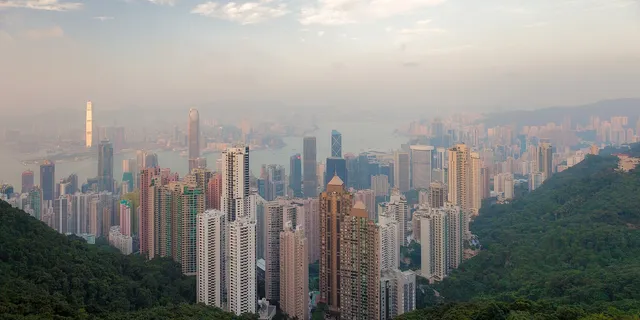
The Peak is Hong Kong's classic view: a 552-meter hillside balcony where the city's towers, the harbour and Kowloon's ridges unroll below, dense enough to look rendered. The 1888 Peak Tram drags you up a gradient so steep that buildings appear to lean. A paid terrace sits at the very top, but the free paths just beyond often frame the view better.
Good to know · The Peak Tram has run since 1888; a return tram ticket plus Sky Terrace 428 admission (the 'Sky Pass') costs from around HK$148 as of September 2026 — check thepeak.com.hk for current prices and book online to skip the queue. The tram runs from early morning until late evening.
No. 2
Victoria Harbour
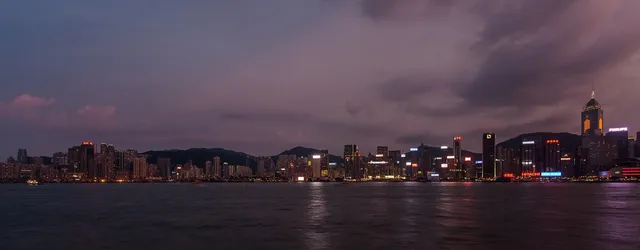
Victoria Harbour is the reason Hong Kong exists, and it remains the city's best free entertainment. Cross it on the Star Ferry — running since the 1880s and still costing just a few Hong Kong dollars — then join the crowds on the Tsim Sha Tsui waterfront at 8 pm, when the Symphony of Lights show lasers and searchlights off both skylines. It is touristy in the best sense.
Good to know · Star Ferries run frequently between Tsim Sha Tsui and Central or Wan Chai; pay by Octopus or at the pier machines, fares are a handful of HK dollars. The Symphony of Lights plays nightly at 8 pm, weather permitting — the Kowloon side promenade has the front-row view.
No. 3
Big Buddha (Ngong Ping)
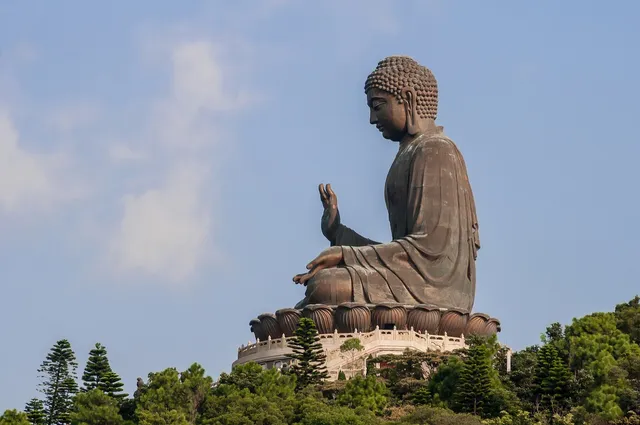
On Lantau Island, the 34-meter bronze Tian Tan Buddha has sat serenely above a monastery courtyard since 1993, reachable by the Ngong Ping 360 cable car — a 25-minute, 5.7-kilometer ride over sea, airport and forested ridges that is an attraction in itself. Pair the statue with Po Lin Monastery's vegetarian kitchen and the Wisdom Path steel steles on the hillside.
Good to know · Reach the cable car on the MTR to Tung Chung; standard-cabin return tickets cost around HK$300 as of September 2026 (glass-floor Crystal Cabins cost more) — book online at np360.com.hk ahead, as queues build fast. The Buddha itself is free, open roughly 10 am–5:30 pm, 268 steps up.
No. 4
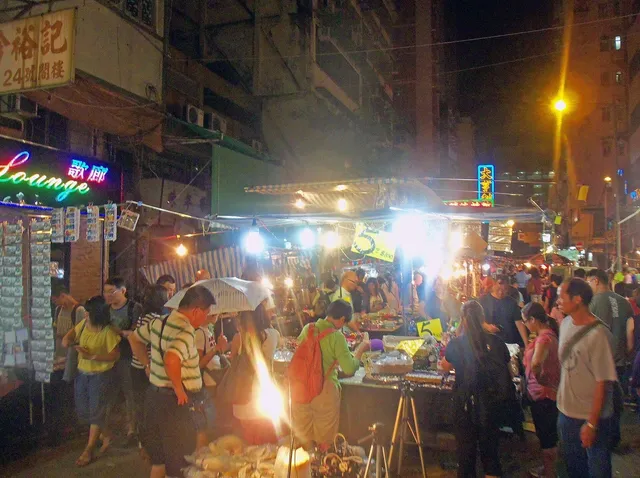
Temple Street Night Market
When the sun sets, Kowloon's Temple Street does what it has done for decades: opens. Stall vendors spread watches and phone cases under canvas, fortune-tellers set up folding chairs, and the first block belongs to open-air cookshops turning out clay pot rice over charcoal and curry fish balls on skewers. It is gritty, loud, and one of the last old-school night markets left in the city.
Good to know · The market runs from around 6 pm to midnight; the sweet spot is 7–10 pm. Take the MTR to Jordan or Yau Ma Tei. Come hungry — the dai pai dong food stalls are the point — and expect to bargain lightly on the non-food stalls.
No. 5
Hong Kong's Neighbourhoods
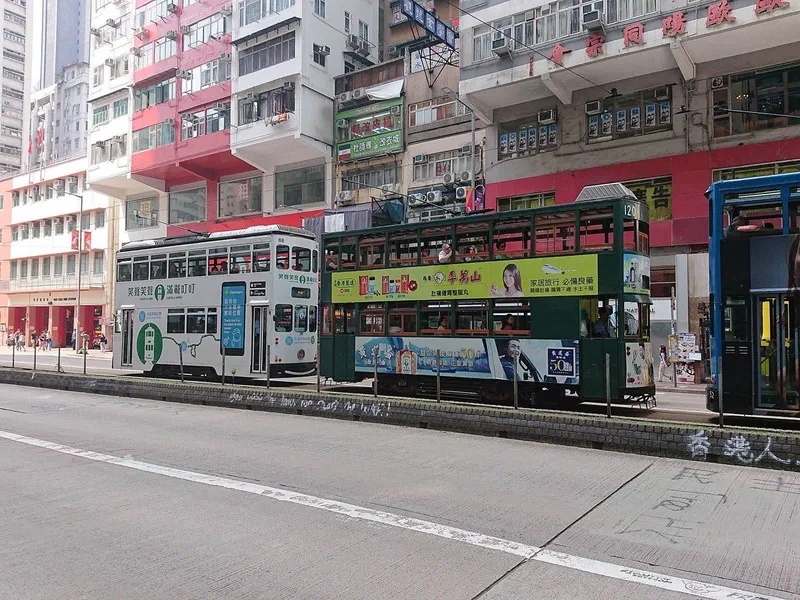
Hong Kong rewards block-by-block wandering. Central stacks glass towers against colonial remnants and hillside escalators; SoHo and Sheung Wan layer bars, antiques and dried-seafood shops; Mong Kok holds record-setting population density, sneaker streets and market chaos; Sham Shui Po stays resolutely local with electronics stalls and the city's cheapest excellent food. Threaded through all of it: cha chaan teng diners pouring milk tea.
Good to know · No tickets, just an Octopus card and time. A classic day: morning dim sum in Central, the Mid-Levels escalator uphill, Sheung Wan's antiques streets after lunch, then the MTR to Sham Shui Po for street food and Mong Kok's markets into the evening.
See it in motion
Some places earn a moving picture
Stills can't show how this place moves — the drift, the light show, the crowd flow. We picked a recent, high-quality walkthrough rather than a promotional cut.
A Symphony of Lights
HONG KONG · YouTube · plays on click
Embedded via YouTube's official player (privacy-enhanced mode). Video: A Symphony of Lights by HONG KONG. Not affiliated with China Travel Copilot; screened for quality and accuracy on 2026-09-28.
Most visitors arrive in Hong Kong expecting a China primer and find something closer to a city-state: its own border, its own currency, its own internet rules, and an energy entirely its own. That independence is the practical gift. English is an official language, credit cards and Google work without ceremony, and the city’s greatest hits — a funicular to a mountaintop view, a ferry crossing, a cable car to a giant bronze Buddha, a night market that has not been renovated into obedience — can all be strung together without a guide. Then there is the setting: mountains rise straight out of the sea, and one of the densest skylines on the planet presses against the water. Give it three or four days, eat relentlessly, ride the ferries, and let it reset your sense of what a city can be.
A Bit of History
Hong Kong’s modern story begins with a war fought over a drug. When Qing China moved to stamp out the opium trade in 1839, Britain responded with gunboats; the 1842 Treaty of Nanking ceded Hong Kong Island as a crown colony. Kowloon followed in 1860 after the Second Opium War, and in 1898 Britain leased the much larger New Territories for 99 years — a deadline that, a century later, set the clock for the whole colony’s return.
The city grew as a free port: no tariffs, ships from everywhere, banks to finance them. Refugees shaped it just as much. Repeated waves fleeing unrest and war on the mainland — most dramatically after 1949 — doubled the population and seeded the manufacturing boom of the 1950s–70s, when “Made in Hong Kong” meant textiles, plastics and toys. When manufacturing moved north to Shenzhen in the 1980s, Hong Kong pivoted to finance and logistics and became the gateway for capital moving in and out of China.
The 99-year lease expired at midnight on June 30, 1997, and all of it — island, Kowloon, New Territories — transferred to the People’s Republic as a Special Administrative Region under the formula “one country, two systems”: Beijing handles defense and foreign affairs, while Hong Kong keeps its own common-law legal system, its own immigration borders and its own currency, an arrangement nominally set to run until 2047. The political turbulence of 2019–20 and the national security law that followed have narrowed political freedoms, and honest guidebooks should say so — but for a traveler, the daily practicalities that matter (separate border, separate money, open internet) remain very much in force. Hong Kong today is a paradox worth experiencing: politically part of one system, operationally still another.
Culture & Daily Life
Hong Kong is Cantonese China with its own accent — literally and figuratively. Cantonese is the street language and English the co-official second, so signs, menus and announcements run bilingual and a traveler with no Chinese gets around comfortably. The dominant cultural institution, though, is the cha chaan teng, the Hong Kong-style diner: fast, loud, slightly brusque, serving milk tea brewed strong and strained through cloth, pineapple buns (no pineapple — just a crackly cookie crust), and set meals that fuse Spam, instant noodles and eggs into something uniquely local. Eat in one at least once; it is the city in miniature.
Daily life is vertical and compressed. Roughly seven million people fit into a developed footprint squeezed between mountains and sea, which is why the MTR runs with Swiss punctuality, why most residents have never owned a car, and why apartment views are a competitive sport. Markets remain part of the rhythm — morning wet markets with fish still flexing on ice, afternoon flower and jade markets, evening temple street stalls. Temples thread through the towers: burn incense at Man Mo Temple under its giant hanging coils, or watch locals divine fortunes with bamboo sticks at Wong Tai Sin.
Social life follows the seasons. Mid-Autumn Festival fills parks with lanterns, and Wednesday nights belong to horse racing at Happy Valley, where office workers drink beer in the stands and bet small sums with total seriousness. Etiquette is easy: queue everywhere, stand right on escalators, and know that tipping is not expected the way it is back home — ten percent at nicer restaurants at most.
Nature & Day Trips
Here is the fact that surprises everyone: by the government’s own figures, about 70 percent of Hong Kong’s land is open countryside — country parks, ridges and islands — much of it reachable by MTR. You can hike a mountain ridge in the morning and be at a Michelin-starred dim sum table by one.
The signature walk is the Dragon’s Back on Hong Kong Island, a rolling ridge trail between towering condos and the South China Sea that is routinely called one of the world’s best urban hikes, ending near the beaches of Shek O. Easier options circle Victoria Peak (the flat Lugard Road loop has the harbour view without any ticket) or climb Lion Rock, the crag that lends its name to the city’s old “Lion Rock spirit” ethos. Out in Sai Kung in the east, beaches, seafood villages and the hexagonal columns of the UNESCO Global Geopark make a full day.
Two cross-border day trips tempt people, and both involve borders. Macau is an hour by ferry or an hour and a half by bus bridge — passport required, because it is a separate territory with its own immigration. Shenzhen is minutes away by rail, but crossing means clearing mainland Chinese immigration, with everything that implies (see Getting There & Around). For most itineraries, the islands suffice: Lantau’s Big Buddha fills a day, and the outlying islands of Cheung Chau and Lamma offer car-free seafood villages an hour from Central.
Food & Drink
Hong Kong is one of the great eating cities on earth, and its range runs from street snacks to one of the highest concentrations of Michelin stars anywhere — but the soul of it is democratic. Dim sum is the ritual: on weekends, families claim tables for yum cha (“drink tea”) while carts and order sheets deliver har gow shrimp dumplings, siu mai, rice noodle rolls and egg tarts in bamboo steamers. Go at 11 am on a Saturday and watch the city do its liturgy.
Roast meats are the other pillar: goose, pork and char siu hanging in shop windows, chopped to order over rice or noodles. Wonton noodles — springy, alkaline, under a handful of shrimp dumplings in a clean broth — are a local obsession with decades-old specialist shops. Add curry fish balls and egg waffles from street carts, and clay pot rice in winter.
Geographically: Central and SoHo skew international and upscale; Sheung Wan and Sham Shui Po do the best cheap traditional eating; Temple Street and Mong Kok handle the night-market circuit; Kowloon City is the insiders’ food neighborhood. A filling local meal costs HK$60–120; dim sum can be less; and a milk tea plus pineapple bun at a cha chaan teng is pocket change. Do as locals do: eat early, eat often, and never skip the roast goose.
Top Sights
Victoria Peak
Every city keeps one viewpoint as its postcard, and Hong Kong’s has been the Peak since the 1880s, when colonial officials hauled themselves up here to escape the summer heat. The ride up is half the pleasure: the Peak Tram, opened in 1888 and one of the world’s oldest funiculars, pulls you up a gradient so steep that the skyscrapers alongside appear to tip sideways. At the top, the view is the whole argument for the trip — the island’s towers directly below, Kowloon’s density across the harbour, mountains behind.
The paid option is Sky Terrace 428 at Peak Tower, a rooftop platform at 428 meters; the Sky Pass bundling return tram and terrace costs from around HK$148 as of September 2026 (check thepeak.com.hk for current prices, and book online — the ticket queue can be brutal). The free alternative many locals prefer: walk five minutes past the tower to Lugard Road, where a flat path loops the mountainside with arguably better views. Come near sunset, stay for the lights, and wear a layer — it is genuinely cooler up top.
Victoria Harbour
Hong Kong’s harbor is the city’s stage, and experiencing it costs almost nothing. The Star Ferry has been crossing since the 1880s; the eight-minute ride between Tsim Sha Tsui and Central remains one of the great cheap thrills in travel, a few Hong Kong dollars for the best seat at the best show, especially at dusk when both banks switch on. Pay with your Octopus card or buy a token at the pier.
Nightly at 8 pm, weather permitting, the Symphony of Lights turns the skyline into a coordinated laser-and-searchlight performance across dozens of buildings — free, ten-odd minutes, and best watched from the Tsim Sha Tsui promenade near the Avenue of Stars, where the Hong Kong Island skyline plays the title role. For a bigger dose, harbor cruises run every evening, from bare-bones to dinner boats. And by day, the harbour is simply the backdrop for everything else — it anchors the view from the Peak, the ferries, and half the postcards you will inevitably buy.
Big Buddha (Ngong Ping)
On Lantau Island’s uplands sits the Tian Tan Buddha, a 34-meter bronze figure completed in 1993, seated facing north over the sea — one of the largest outdoor seated Buddhas anywhere. The approach is the event: the Ngong Ping 360 cable car lifts you from the town of Tung Chung on a 5.7-kilometer, 25-minute glide over the airport channel, forested ridges and the South China Sea before the Buddha appears above the village. Standard-cabin return tickets run around HK$300 as of September 2026; glass-floor Crystal Cabins cost more and sell out first. Book online at np360.com.hk before you go — the walk-up queue on nice weekends can stretch past an hour.
The statue itself is free to visit: 268 steps up, daily roughly 10 am–5:30 pm. Beside it, the active Po Lin Monastery serves a good vegetarian lunch, and a short walk leads to the Wisdom Path, a modern monument of steel steles arranged in an infinity pattern. Windy days occasionally suspend the cable car — check the status page. Allow a half day via the MTR to Tung Chung.
Temple Street Night Market
By day, Temple Street in Yau Ma Tei is an ordinary Kowloon thoroughfare. Around 6 pm it transforms: canvas stalls roll out under the glow, and one of Hong Kong’s last classic night markets runs until midnight. The southern end belongs to fortune-tellers with their folding tables and to Cantonese opera buskers; the middle sells the usual market inventory — watches, phone accessories, souvenirs — lightly and good-naturedly bargained.
The reason to come is the northern block of dai pai dong cookshops, where clay pot rice bubbles over charcoal and the aroma of wok-fried seafood and curry fish balls hangs over the tables. Claim a seat, order a clay pot, and eat dinner as street theater — this is Hong Kong’s oldest-style open-air dining, and increasingly rare in a sanitized city. Go between 7 and 10 pm for full effect; take the MTR to Jordan or Yau Ma Tei and follow the crowds and the smell of charcoal.
Hong Kong’s Neighbourhoods
Hong Kong’s neighborhoods each run a different operating system, and hopping between them is the best entertainment in the city. Central is the moneyed core: glass towers over colonial remnants, the Mid-Levels escalator pouring commuters downhill each morning, and up the hill SoHo’s bars plus Tai Kwun, a beautifully restored colonial police compound turned galleries and restaurants, and PMQ, a design and craft hub. Neighboring Sheung Wan slows the tempo — antiques shops on Hollywood Road, dried seafood and ginseng stores that perfume entire streets.
Across the harbour, Mong Kok holds the title of one of the densest places on earth, and it feels like it, gloriously: the Ladies Market, Sneaker Street, goldfish and flower markets, and wall-to-wall neon advertising congee and roast goose. One MTR stop north, Sham Shui Po stays resolutely local — electronics stalls, fabric markets, and the best cheap street food in the city with none of the performance. Stitch the day together the local way: breakfast and milk tea at a cha chaan teng, MTR between districts, and no fixed plan after dark.
Getting There & Around
Hong Kong International Airport is one of Asia’s best hubs; the Airport Express train covers the trip to Central in about 24 minutes. Buy an Octopus card on arrival — a physical card at the airport or MTR counter, or a digital one added straight to Apple Wallet — and it covers MTR, buses, trams, ferries and convenience stores. Taxis are metered and, since a 2025 rule change, required to accept electronic payments including Octopus. The historic double-decker trams on Hong Kong Island and the Star Ferry cost mere pocket change.
Now the part that confuses everyone: Hong Kong’s border is separate from mainland China’s. Mainland visa-free policies do not apply here. The good news: most Western passports — US, Canadian, Australian, most EU — get Hong Kong visa-free for around 90 days on arrival (UK passport holders get 180). The catch: crossing into the mainland means clearing full mainland immigration, which requires a Chinese visa (ideally multiple-entry if you plan to cross more than once) or qualifying for the mainland’s visa-free transit — which works only if the mainland sits between two other destinations, not on a Hong Kong round-trip. The simple fix: put Hong Kong at the start or the end of your mainland trip, not the middle.
Money follows the same logic: Hong Kong uses the Hong Kong dollar (pegged near 7.8 to the US dollar), not the renminbi — mainland cash won’t spend here. Credit cards are widely accepted, and AlipayHK (or international Alipay) works at most QR-code shops. Connectivity is the one place Hong Kong inverts the mainland rules: Google, Instagram and WhatsApp all work normally, no VPN needed — but the mainland eSIM or data plan you bought for China often does not include Hong Kong, so check before you cross.
Where to Stay
First-timers face a classic fork. The Kowloon side — around Tsim Sha Tsui and Jordan — puts you facing the famous island skyline across the water, steps from the Star Ferry, the promenade and Temple Street, with the widest range of mid-range rooms; this is the pick for most first visits. Hong Kong Island’s Central and Sheung Wan districts are slicker and pricier but put you amid the best food, bars and the neighborhoods worth wandering, suiting travelers who plan long evenings out. For budget and local energy, look at Mong Kok or Sham Shui Po: smaller rooms, but night markets at the doorstep and unbeatable eating. Rooms everywhere are compact by Western standards — book slightly larger categories than you would at home, and harbor-view rooms command a real premium worth paying exactly once.